
Overview & Design Features
The Infiniti VQ25HR engine is a highly acclaimed 2.5-liter (2496cc) naturally aspirated V6 gasoline engine, manufactured by Nissan. Part of the renowned VQ engine series, which has consistently featured on Ward’s 10 Best Engines list, the “HR” designation stands for “High Response” or “High Revolution,” indicating a performance-oriented evolution from earlier VQ models. This engine represents a significant engineering achievement, balancing power, efficiency, and refinement in a compact package. Its design emphasizes smooth power delivery and a broad torque curve, making it a popular choice for luxury sport sedans.
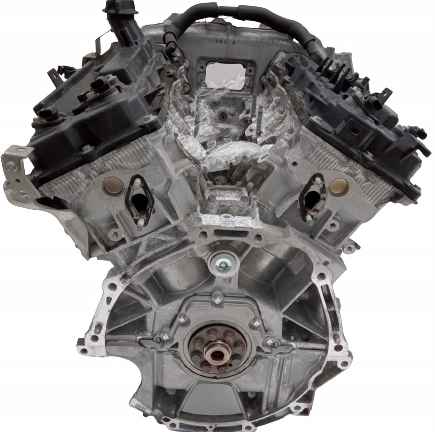
At its core, the VQ25HR features an all-aluminum cylinder block and cylinder heads, contributing to its low weight and efficient heat dissipation. The engine employs a multi-point electronic fuel injection system, optimized for precise fuel delivery and combustion. A key technological highlight is the incorporation of Nissan’s Continuously Variable Valve Timing Control System (CVTCS) on both intake and exhaust camshafts. This advanced variable valve timing system dynamically adjusts valve overlap and lift, enhancing performance across the RPM range, improving fuel economy, and reducing emissions. The design also includes a silent timing chain, engineered for durability and reduced operational noise.
The VQ25HR engine was primarily deployed in various Nissan and Infiniti models, predominantly in the Japanese Domestic Market (JDM) and specific international markets. Key vehicles include the Infiniti G25 (V36 chassis) from approximately 2010 to 2012, and the Infiniti M25 (Y51 chassis) from 2010 to 2014. It also powered several Nissan models, such as the Nissan Fuga (Y50/Y51 generations) and the Nissan Skyline (V36 generation), serving as a core powertrain option for these luxury and sport-oriented vehicles during their production runs.
Technical Specifications
| Displacement (cc) | 2496 |
| Max Power (hp (kW) @ RPM) | 218 hp (162 kW) @ 6400 rpm |
| Max Torque (Nm (kg*m) @ RPM) | 253 Nm (25.8 kg*m) @ 4800 rpm |
| Fuel Type | Premium Unleaded (95 RON or higher) |
| Fuel Consumption (l/100 km) | 9.5 – 10.5 (Combined, varies by vehicle) |
| Engine Type | V6, DOHC, Naturally Aspirated |
| Compression Ratio | 10.3:1 |
| Cylinder Bore (mm) | 85.0 |
| Piston Stroke (mm) | 73.3 |
| Valvetrain | DOHC (Double Overhead Cam) |
| Valves per Cylinder | 4 |
| Additional Info | Aluminum block/heads, Multi-point electronic fuel injection, CVTCS on intake and exhaust camshafts, Silent timing chain. |
Common Problems & Reliability
- Camshaft and Crankshaft Position Sensor Failures: A relatively common issue across the VQ engine family, these sensors can fail prematurely, leading to rough idling, stalling, reduced power, and check engine lights. Replacements are generally straightforward and parts are readily available.
- Valve Cover Gasket Leaks: Over time and mileage, the rubber valve cover gaskets can harden and crack, leading to oil leaks, often into the spark plug wells. This can cause misfires and a burning oil smell. Replacement involves removing the valve covers and can be labor-intensive due to engine bay access.
- Oil Consumption: While generally less severe than some VQ35DE variants, some VQ25HR engines can exhibit increased oil consumption at higher mileages. This is often exacerbated by neglected oil changes or worn PCV (Positive Crankcase Ventilation) valves. Regular monitoring of oil levels and timely changes are crucial for managing this.
With proper maintenance and timely addressing of minor issues, the VQ25HR engine is capable of achieving a realistic service life of 250,000 to 300,000 kilometers (155,000 to 186,000 miles) or more before requiring a major overhaul. Its fundamental design is robust, with the timing chain often outlasting the vehicle itself when oil change intervals are respected.
Maintenance Tips & Service Schedule
Adhering to a stringent maintenance schedule is paramount for the longevity and performance of the VQ25HR engine:
- Engine Oil & Filter: Replace every 8,000-10,000 kilometers (5,000-6,000 miles) or every 6 months, whichever comes first. Use a high-quality 5W-30 full synthetic engine oil that meets API SN or SP specifications. Regularly check oil levels between changes.
- Spark Plugs: Replace iridium-tipped spark plugs every 100,000-105,000 kilometers (60,000-65,000 miles). Use manufacturer-recommended OEM or equivalent iridium plugs to ensure optimal ignition performance.
- Engine Air Filter: Inspect at every oil change and replace every 30,000-45,000 kilometers (18,000-28,000 miles), or more frequently in dusty environments.
- Coolant Flush: Perform a coolant flush and refill with genuine Nissan Long Life Antifreeze/Coolant (or equivalent silicate-free, ethylene glycol-based coolant) every 96,000 kilometers (60,000 miles) or 5 years.
- Timing Chain: The VQ25HR utilizes a robust timing chain designed for the life of the engine. Regular oil changes are crucial for its longevity. Inspection for noise or wear is generally only necessary at very high mileages (200,000+ km) or if unusual engine noises develop.
- Accessory Drive Belts: Inspect at every major service and replace every 100,000 kilometers (60,000 miles) or if signs of cracking, fraying, or excessive wear are present.
Conclusion
The Infiniti VQ25HR engine stands as a testament to Nissan’s engineering prowess, offering a blend of smooth power, refined operation, and respectable fuel efficiency. For a used vehicle buyer, this engine represents a generally safe and reliable choice, provided the vehicle has a documented history of consistent maintenance. While it has some known minor issues typical of high-mileage engines, none are inherently catastrophic if addressed promptly. Its robust construction and widespread parts availability contribute to its long-term viability. A pre-purchase inspection by a qualified mechanic is always recommended to assess the specific condition of any VQ25HR-equipped used vehicle.