
Overview & Design Features
The Lexus 2AR-FSE is a sophisticated 2.5-liter (2493 cc) inline four-cylinder gasoline engine, a prominent member of Toyota’s AR engine family. Engineered by Lexus for enhanced performance and fuel efficiency, this naturally aspirated unit represents a significant evolutionary step in internal combustion technology. Its historical significance lies in its role as a versatile power unit, serving both as a primary engine in specific Lexus models and as the combustion component within advanced hybrid powertrains, demonstrating Lexus’s commitment to diverse engineering solutions.
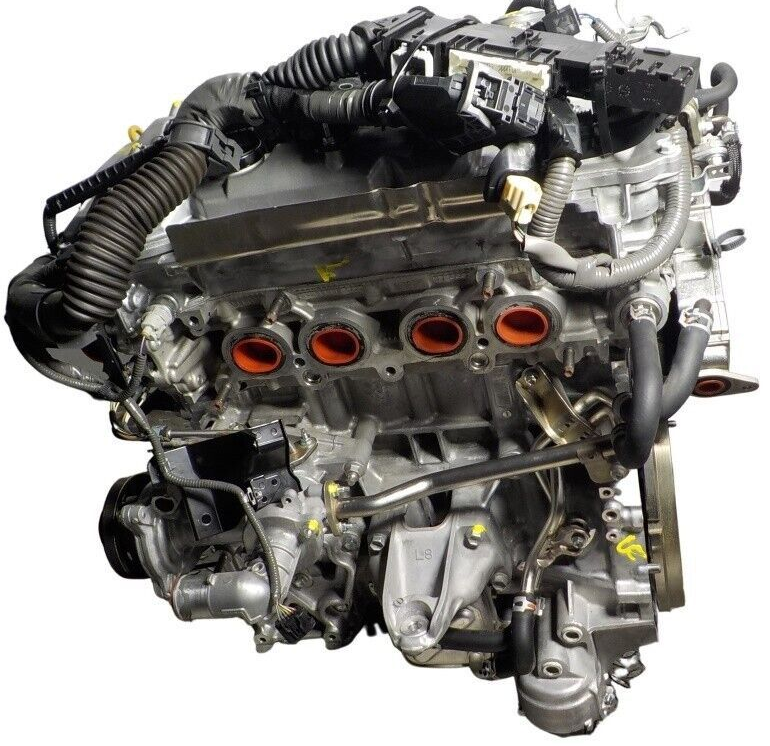
Core engineering features include an aluminum cylinder block and cylinder head, contributing to its lightweight design and improved thermal management. A hallmark of the 2AR-FSE is the implementation of Lexus’s advanced D-4S fuel injection system, which seamlessly integrates both direct (into the combustion chamber) and port (into the intake manifold) fuel injection. This dual injection strategy optimizes fuel atomization and combustion efficiency across the entire RPM range, while simultaneously mitigating carbon buildup on intake valves, a common concern with direct injection-only systems. Furthermore, the engine incorporates VVT-iW (Variable Valve Timing intelligent Wide) on the intake camshaft and VVT-i (Variable Valve Timing intelligent) on the exhaust camshaft, allowing for precise control over valve overlap. VVT-iW uniquely enables the engine to operate on an Atkinson cycle at light loads for improved fuel economy, transitioning to an Otto cycle for maximum power output.
The 2AR-FSE engine was strategically deployed in various Lexus models, primarily within markets outside North America where it served as a robust and efficient powertrain option. Notable applications include the Lexus IS 300h (as part of a hybrid system), Lexus GS 300h (also hybrid), and the Lexus ES 250 in regions like Australia, China, and parts of Asia, typically spanning production years from 2013 onwards. These deployments underscore its flexibility and suitability for a range of luxury sedan applications.
Technical Specifications
| Displacement (cc) | 2493 cc |
| Max Power (hp (kW) @ RPM) | 203 hp (152 kW) @ 6600 RPM |
| Max Torque (Nm (kg*m) @ RPM) | 243 Nm (24.8 kg*m) @ 4000-5000 RPM |
| Fuel Type | Gasoline (Recommended RON 95 / Premium) |
| Fuel Consumption (l/100 km) | 7.0 l/100 km (Combined, Lexus ES 250 application) |
| Engine Type | Inline 4-cylinder, DOHC, 16-valve |
| Compression Ratio | 13.0:1 |
| Cylinder Bore (mm) | 90.0 mm |
| Piston Stroke (mm) | 98.0 mm |
| Valvetrain | DOHC, 16-valve, VVT-iW (intake) and VVT-i (exhaust) |
| Valves per Cylinder | 4 |
| Additional Info | D-4S (Combined Direct and Port Fuel Injection), Aluminum Block and Cylinder Head, Atkinson Cycle Capable (via VVT-iW) |
Common Problems & Reliability
The 2AR-FSE engine generally upholds Lexus’s reputation for exceptional reliability; however, certain areas warrant attention. Due to its D-4S dual-injection system, carbon buildup on the intake valves is significantly mitigated compared to pure direct injection engines, but it remains a potential concern over very high mileage. Periodic inspection or professional cleaning may be required if symptoms such as rough idling or reduced performance manifest. Another potential, albeit less common, issue involves the VVT-i actuators or solenoids, which can experience wear or clogging over extended periods, potentially leading to diagnostic trouble codes or inconsistent valve timing. Lastly, some instances of minor oil consumption have been reported in the broader AR engine family at higher mileages; while typically not severe in the FSE variant, regular oil level checks are prudent. Under proper maintenance and typical driving conditions, the 2AR-FSE is engineered for a long service life, with many units expected to exceed 250,000 kilometers (150,000 miles) before requiring any major overhaul.
Maintenance Tips & Service Schedule
Optimal longevity and performance from the 2AR-FSE engine are ensured through adherence to a rigorous maintenance schedule. Engine oil and filter changes are critical; a fully synthetic 0W-20 viscosity oil is recommended every 10,000 kilometers (6,000 miles) or annually, whichever comes first. Spark plugs, typically iridium-tipped, require replacement every 100,000 kilometers (60,000 miles). The engine utilizes a robust timing chain, which is designed for the life of the engine and generally does not require routine replacement; however, inspection of the chain tensioner and guides may be advisable at very high mileages (e.g., beyond 250,000 km) if abnormal noises are present. Coolant flushes using Lexus Super Long Life Coolant (SLLC, pink formula) are recommended every 160,000 kilometers (100,000 miles) or ten years initially, then every 80,000 kilometers (50,000 miles) or five years. Periodically utilizing a high-quality fuel system cleaner can help maintain injector health and minimize deposits in the D-4S system.
Conclusion
The Lexus 2AR-FSE engine stands as a testament to advanced engineering within the compact four-cylinder segment. Its blend of D-4S injection, VVT-iW, and Atkinson cycle capability delivers a compelling combination of efficiency and refined power delivery. For a used vehicle buyer, the 2AR-FSE represents a generally safe and reliable choice, backed by Lexus’s strong reputation for durability. With diligent adherence to its straightforward maintenance schedule, this engine is well-positioned to provide many years of dependable service.