
Overview & Design Features
The Lexus G16E-GTS, a highly acclaimed turbocharged inline three-cylinder engine, represents a pinnacle of compact performance engineering. Developed by Toyota’s Gazoo Racing division, this 1.6-liter (1618cc) powertrain made its debut as a cornerstone for modern high-performance hot hatchbacks, challenging conventional notions of what a three-cylinder engine can achieve. While primarily associated with Toyota’s GR models, its advanced design and potent output align with the performance aspirations often seen in premium sports vehicles, demonstrating robust engineering capable of delivering exceptional power-to-weight ratios.
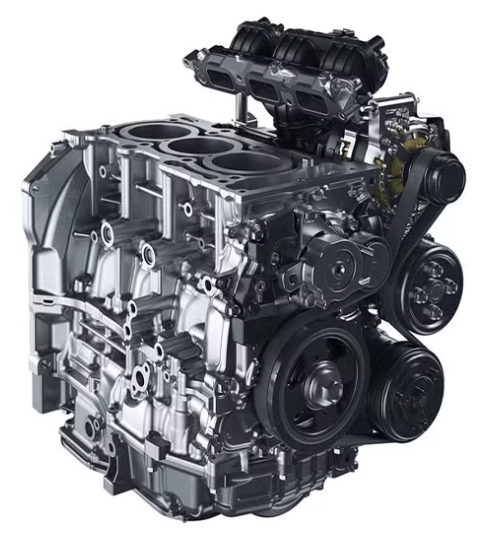
At its core, the G16E-GTS features an open-deck die-cast aluminum cylinder block and a lightweight aluminum cylinder head, contributing to its impressive power-to-weight ratio. Fuel delivery is handled by Toyota’s advanced D-4ST system, integrating both direct injection (DI) for high-load efficiency and port injection (PI) for optimized combustion and reduced carbon buildup at lower RPMs. The valvetrain utilizes a Dual Overhead Camshaft (DOHC) configuration with 12 valves, incorporating intelligent Variable Valve Timing (VVT-i) on both intake and exhaust sides for broad torque delivery and improved fuel efficiency. Forced induction comes via a single-scroll ball-bearing turbocharger, optimized for quick spool-up and sustained boost, complemented by an efficient air-to-liquid intercooler.
This potent powertrain was specifically designed for high-performance applications within Toyota’s Gazoo Racing (GR) lineup. Its primary deployments include the Toyota GR Yaris, introduced in 2020, and the Toyota GR Corolla, launched in 2022. In both vehicles, the engine serves as the exclusive powerplant, providing the necessary output for rally-inspired driving dynamics and track-focused performance trims.
Technical Specifications
| Specification | Value |
|---|---|
| Displacement | 1618 cc |
| Max Power | 300 hp (224 kW) @ 6500 RPM |
| Max Torque | 400 Nm (40.8 kg*m) @ 3000-5500 RPM |
| Fuel Type | Premium Unleaded (RON 98 recommended) |
| Fuel Consumption (combined) | 8.5 – 9.0 l/100 km (varies by vehicle and driving conditions) |
| Engine Type | Inline 3-cylinder, DOHC, Turbocharged |
| Compression Ratio | 10.5:1 |
| Cylinder Bore | 87.5 mm |
| Piston Stroke | 89.7 mm |
| Valvetrain | DOHC, 12-valve, VVT-i |
| Valves per Cylinder | 4 |
| Additional Info | D-4ST direct and port fuel injection, single-scroll ball-bearing turbocharger, forged connecting rods, lightweight aluminum block and head. Output for GR Yaris is typically 268 hp (200 kW) and 370 Nm. |
Common Problems & Reliability
The G16E-GTS is renowned for its robust construction, designed to withstand high performance demands. However, as with any high-strung engine, certain areas require attention. Carbon buildup on intake valves can occur over time due to the direct injection system, though the supplementary port injection helps mitigate this issue. Regular spirited driving and quality fuel can help keep deposits at bay. Another potential area of concern for performance engines is the longevity of the turbocharger bearings, especially if oil change intervals are neglected or aggressive driving is constant without proper cool-down. While generally robust, high heat and pressure can stress associated components like seals and hoses over prolonged track use.
Given its relatively recent introduction, widespread long-term common issues are still emerging, but early indications point towards a durable design. With meticulous maintenance and responsible operation, the G16E-GTS is expected to achieve a service life of approximately 200,000 to 250,000 kilometers (125,000 to 155,000 miles) before requiring significant overhaul, which is commendable for a high-output three-cylinder engine.
Maintenance Tips & Service Schedule
Proactive and precise maintenance is crucial for preserving the performance and longevity of the G16E-GTS. Engine oil and filter changes should be performed every 5,000-7,500 kilometers (3,000-5,000 miles) when subjected to spirited driving or track use, or every 10,000 kilometers (6,000 miles) under normal conditions. Always use a high-quality synthetic oil, typically 0W-20 or 5W-30, meeting API SN/SP or ILSAC GF-6 standards, as specified in the owner’s manual.
Spark plugs require replacement every 30,000-45,000 kilometers (20,000-30,000 miles) to maintain optimal ignition performance. The timing chain is designed for the engine’s lifetime; however, regular inspections for wear or noise are advisable during major service intervals, typically beyond 150,000 kilometers (90,000 miles). Coolant flushes are recommended every 3-5 years or 60,000-100,000 kilometers (36,000-60,000 miles) using manufacturer-approved long-life coolant. Air filters, cabin filters, and differential/transfer case fluids should also be serviced according to the manufacturer’s specified intervals.
Conclusion
The G16E-GTS engine stands as a testament to modern automotive engineering, delivering exceptional power and efficiency from a compact package. For a used vehicle buyer, it represents a highly desirable choice, provided the vehicle has a documented history of diligent maintenance. Its robust design and performance pedigree make it a thrilling and generally reliable powerplant, particularly when paired with the acclaimed GR models. Buyers should prioritize examples with comprehensive service records and be prepared to adhere to a stringent maintenance schedule, especially if planning spirited driving or track excursions, to fully enjoy and preserve this remarkable engine.