
Overview & Design Features
The Lexus 2UZ-FE is a 4.7-liter (4664 cc) naturally aspirated V8 internal combustion engine, part of Toyota’s UZ engine family. Primarily designed for heavy-duty applications, this robust powerplant was manufactured by Toyota Motor Corporation and saw extensive use in Lexus and Toyota trucks and SUVs. Its design prioritizes durability, low-end torque, and reliability, establishing a reputation as a workhorse engine capable of immense mileage under proper care. The 2UZ-FE succeeded the 1UZ-FE in specific applications, offering increased displacement for enhanced towing and hauling capabilities.
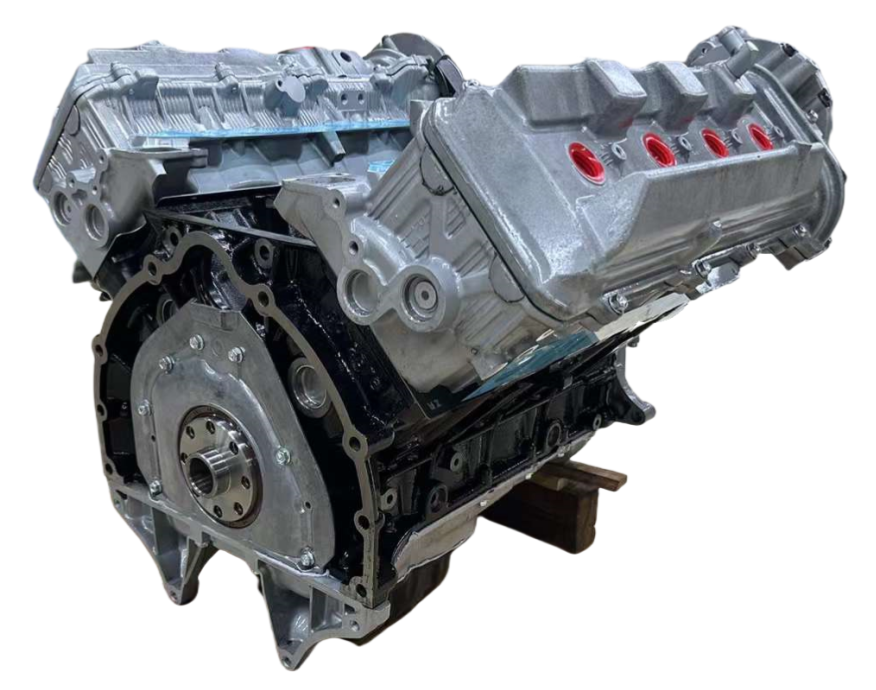
Engineered with a 90-degree V8 configuration, the 2UZ-FE features a cast iron cylinder block, distinguishing it from its all-aluminum UZ siblings and contributing to its robust nature. Aluminum cylinder heads house four valves per cylinder, operated by a single overhead camshaft (SOHC) per bank, utilizing rocker arms. Fuel delivery is managed by sequential multi-port fuel injection (SMPI). Early iterations featured a fixed valve timing system, while models produced from 2005 onwards incorporated Toyota’s Variable Valve Timing with intelligence (VVT-i) system, enhancing both power output and fuel efficiency across the RPM range by optimizing intake valve timing.
This engine was widely deployed across several prominent Lexus and Toyota models. It powered the Lexus LX 470 from 1998 to 2007 and the Lexus GX 470 from 2003 to 2009. On the Toyota side, it served in the Land Cruiser (J100 and J200 series) from 1998 to 2007, the Tundra pickup truck from 2000 to 2009, and the Sequoia SUV from 2001 to 2009. Its consistent use in these heavy-duty, off-road capable vehicles underscores its design purpose and capabilities.
Technical Specifications
| Displacement (cc) | 4664 |
| Max Power (hp (kW) @ RPM) | 271 (202) @ 5400 (VVT-i models) |
| Max Torque (Nm (kg*m) @ RPM) | 427 (43.5) @ 3400 (VVT-i models) |
| Fuel Type | Unleaded gasoline (RON 91 recommended) |
| Fuel Consumption (l/100 km) | 14-18 (combined, depending on vehicle and driving conditions) |
| Engine Type | 90-degree V8 |
| Compression Ratio | 10.0:1 (VVT-i models) |
| Cylinder Bore (mm) | 94.0 |
| Piston Stroke (mm) | 84.0 |
| Valvetrain | SOHC, 4 valves per cylinder |
| Valves per Cylinder | 4 |
| Additional Info | Cast iron block, aluminum heads, Sequential Multi-Port Fuel Injection (SMPI), VVT-i on later models (2005+) |
Common Problems & Reliability
- Secondary Air Injection Pump Failure: On later models (typically 2005 and newer, particularly in cold climates), the secondary air injection pump and associated switching valves are prone to failure. This often triggers a check engine light with codes P0418, P0419, P0412, P0415, P041B. Replacement can be costly due to part expense and labor involved in accessing components.
- Valley Plate Coolant Leaks: The plastic valley plate, situated beneath the intake manifold, utilizes O-rings and gaskets that can degrade over time, leading to coolant leaks into the valley. While not catastrophic, this leak can cause coolant loss and requires removal of the intake manifold for repair, making it a moderately labor-intensive job.
- Starter Motor Location: The starter motor is positioned in the “V” of the engine, directly under the intake manifold. While the starter itself is generally reliable, its eventual replacement is a significant labor undertaking, often necessitating removal of the intake manifold and other ancillary components.
The 2UZ-FE engine is renowned for its exceptional reliability and longevity. With diligent maintenance, it is common for these engines to exceed 300,000 miles (480,000 km) without requiring a major overhaul, and many examples are known to reach or surpass 500,000 miles (800,000 km). Its cast iron block and conservative tuning contribute significantly to its robust service life.
Maintenance Tips & Service Schedule
- Engine Oil: Perform oil and filter changes every 5,000 to 7,500 miles (8,000 to 12,000 km) or every 6 months, whichever comes first. Use a high-quality synthetic 5W-30 motor oil meeting API SN or higher specifications. Frequent oil changes are paramount for engine longevity.
- Timing Belt: The 2UZ-FE utilizes a timing belt, not a chain. This critical component must be replaced every 90,000 to 100,000 miles (145,000 to 160,000 km) or every 7-8 years. It is highly recommended to replace the water pump, tensioner, and idler pulleys concurrently with the timing belt, as these components have a similar service life and are easily accessible during the timing belt service.
- Spark Plugs: Iridium-tipped spark plugs are typically installed from the factory and should be replaced every 100,000 to 120,000 miles (160,000 to 190,000 km). Inspect ignition coils for signs of degradation during plug replacement.
- Coolant Flush: Perform a coolant system flush and refill every 30,000 to 50,000 miles (48,000 to 80,000 km) or every 3-5 years using Toyota Super Long Life Coolant (SLLC) or an equivalent long-life ethylene glycol-based coolant.
- Air Filter: Inspect and replace the engine air filter every 15,000 to 30,000 miles (24,000 to 48,000 km) or as needed, depending on driving conditions.
Conclusion
The Lexus 2UZ-FE engine stands as a testament to Toyota’s engineering prowess in creating highly durable and reliable powertrains. Its robust cast iron construction, combined with a relatively low-stress design, contributes to an exceptional service life that often extends well beyond typical expectations. While specific known issues like secondary air injection system failures and valley plate leaks exist, these are generally manageable and do not detract from the engine’s overall reputation for bulletproof reliability. For a used vehicle buyer prioritizing long-term dependability, towing capacity, and a smooth V8 power delivery, a Lexus or Toyota vehicle equipped with a properly maintained 2UZ-FE engine represents an unequivocally safe and highly recommended choice.