
Overview & Design Features
The Lexus 2GR-FXS is a 3.5-liter (3456 cc) V6 gasoline engine, a prominent member of Toyota’s GR engine family, specifically engineered for hybrid powertrain applications within the Lexus brand and other premium Toyota vehicles. Introduced in the late 2000s, this naturally aspirated unit is distinguished by its integration into advanced hybrid systems, operating primarily on an Atkinson cycle to maximize fuel efficiency and minimize emissions without sacrificing performance in its intended luxury segments. Its design emphasizes a balance of power delivery, refinement, and environmental responsibility, making it a cornerstone for Lexus’s hybrid offerings.
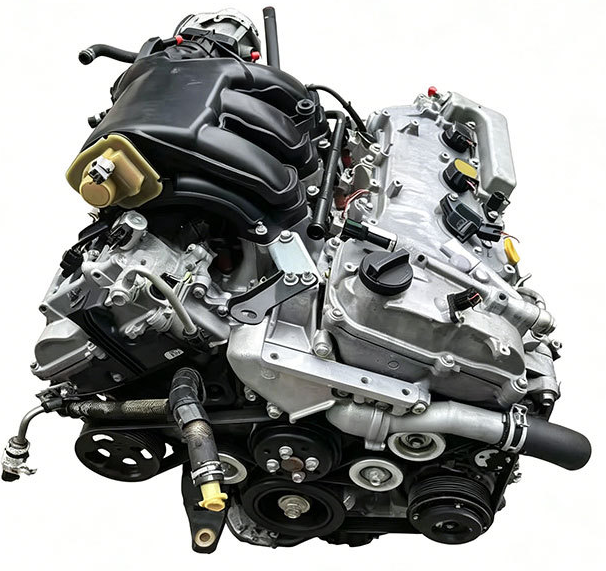
Constructed with an aluminum alloy cylinder block and heads, the 2GR-FXS features a lightweight yet robust architecture. It employs Toyota’s sophisticated D-4S fuel injection system, which intelligently combines both direct and port fuel injection. This configuration helps mitigate carbon buildup on the intake valves (a common concern with direct injection) while optimizing combustion across various operating conditions. The engine utilizes dual overhead camshafts (DOHC) and incorporates an advanced version of variable valve timing, VVT-iW (Variable Valve Timing intelligent-Wide) on the intake camshafts and VVT-i on the exhaust camshafts. VVT-iW allows for a broader range of intake valve timing, facilitating the engine’s ability to switch seamlessly between Otto and Atkinson cycles, significantly enhancing thermal efficiency during light-load cruising.
This specific iteration of the GR engine has seen extensive deployment in luxury hybrid models. Key applications include the Lexus RX 450h (AL10 and AL20 generations, 2009-Present), the Lexus GS 450h (L10 generation, 2012-2020), the Lexus LC 500h (Z100 generation, 2017-Present), and the flagship Lexus LS 500h (XF50 generation, 2017-Present). Its integration into these vehicles underscores its role as a high-performance, efficient core component of Lexus’s commitment to hybrid technology, often paired with an E-CVT transmission and electric motor-generators to achieve combined system outputs significantly higher than the engine alone.
Technical Specifications
| Specification | Value |
|---|---|
| Displacement (cc) | 3456 |
| Max Power (hp (kW) @ RPM) | 295 (220) @ 6600 (Lexus LS 500h application) |
| Max Torque (Nm (kg*m) @ RPM) | 350 (35.7) @ 4800 (Lexus LS 500h application) |
| Fuel Type | Premium Unleaded (91 AKI / 95 RON) |
| Fuel Consumption (l/100 km) | Approx. 6.8 (Combined, varies by vehicle model) |
| Engine Type | V6, DOHC, 24-valve, Atkinson Cycle, D-4S Fuel Injection |
| Compression Ratio | 13.0:1 |
| Cylinder Bore (mm) | 94.0 |
| Piston Stroke (mm) | 83.0 |
| Valvetrain | Dual Overhead Camshaft (DOHC) with VVT-iW (Intake) and VVT-i (Exhaust) |
| Valves per Cylinder | 4 |
| Additional Info | Aluminum block and heads, Roller Rockers, Electronic Throttle Control |
Common Problems & Reliability
The Lexus 2GR-FXS engine generally exhibits high levels of reliability, consistent with Toyota and Lexus engineering standards. However, like any complex powerplant, certain issues can arise over its lifespan. One potential area of concern, common to many direct injection engines, is the accumulation of carbon deposits on the intake valves. While the D-4S system’s port injectors help to wash the valves during certain operating conditions, prolonged driving predominantly under direct injection can still lead to buildup, potentially affecting engine smoothness and performance over high mileage. Periodic inspection and, if necessary, professional intake valve cleaning (e.g., walnut blasting) can address this.
Another area that has seen occasional reports relates to the VVT-iW actuators. Although uncommon, a noisy VVT-iW actuator or issues with its internal components can occur, potentially leading to diagnostic trouble codes or rough idling. Additionally, some owners have reported oil consumption at higher mileages, often linked to PCV (Positive Crankcase Ventilation) valve issues or worn piston rings. Regular monitoring of oil levels and timely PCV valve replacement are preventative measures. Water pump leaks are also known to occur on some GR series engines as they age, typically manifesting as a coolant drip near the front of the engine.
Under proper and diligent maintenance, the 2GR-FXS engine is built for longevity. A realistic expected service life before requiring a major overhaul typically exceeds 250,000 to 300,000 miles (400,000 to 480,000 km). Many units surpass these figures with consistent adherence to the manufacturer’s service schedule and proactive attention to any emerging symptoms.
Maintenance Tips & Service Schedule
- Engine Oil: Perform oil and filter changes every 5,000 to 10,000 miles (8,000 to 16,000 km) or every 6-12 months, whichever comes first. The manufacturer typically specifies a low-viscosity, fully synthetic oil such as 0W-20 to ensure optimal hybrid system efficiency and cold-start protection.
- Spark Plugs: Replace iridium-tipped spark plugs every 60,000 to 100,000 miles (96,000 to 160,000 km). Adhering to this interval helps maintain combustion efficiency and prevents misfires.
- Engine Air Filter: Inspect the engine air filter at every service interval and replace it every 15,000 to 30,000 miles (24,000 to 48,000 km), or more frequently in dusty environments, to ensure proper air-fuel mixture and engine protection.
- Coolant Flush: The engine uses Toyota Super Long Life Coolant (SLLC), which typically has a very long service life. Perform the first coolant flush at 100,000 miles (160,000 km) or 10 years, and subsequent flushes every 50,000 miles (80,000 km) or 5 years. This includes both the engine and inverter cooling systems.
- Timing Chain: The 2GR-FXS utilizes a maintenance-free timing chain, designed to last the life of the engine under normal conditions. Regular oil changes are crucial for the longevity of the timing chain and its tensioners. No scheduled replacement is typically required.
- Fuel System Cleaning: While the D-4S system helps, consider using a high-quality fuel system cleaner periodically (e.g., every 15,000 to 30,000 miles) to help maintain injector cleanliness and prevent carbon buildup.
- PCV Valve: Inspect and replace the PCV valve if it shows signs of clogging (e.g., oil consumption, rough idle). This is a relatively inexpensive component that contributes significantly to engine health.
Conclusion
The Lexus 2GR-FXS engine stands out as a highly sophisticated and generally reliable powertrain, particularly for those seeking a premium hybrid vehicle. Its advanced Atkinson cycle operation, D-4S fuel injection, and VVT-iW technologies contribute to impressive fuel efficiency without compromising the smooth, refined power delivery expected of a Lexus. While minor issues like potential carbon buildup or VVT-iW actuator noise can occur at high mileages, these are typically manageable. For a used vehicle buyer, the 2GR-FXS represents a safe and robust choice, provided that a comprehensive service history is available and previous maintenance has been diligently performed. Its durability, coupled with Lexus’s reputation for quality, makes it an excellent long-term proposition.