
Overview & Design Features
The Lexus M20A-FKS is a 2.0-liter (1987 cc) naturally aspirated inline four-cylinder gasoline engine, a prominent member of Toyota’s New Global Architecture (TNGA) Dynamic Force Engine family. Introduced in 2018, this engine represents a significant advancement in internal combustion technology, emphasizing high thermal efficiency, responsive power delivery, and reduced emissions. Its deployment in luxury compact SUVs like the Lexus UX 200 showcases its blend of sophisticated engineering with everyday usability, marking a commitment by Lexus to refine conventional powertrain options alongside hybrid offerings.
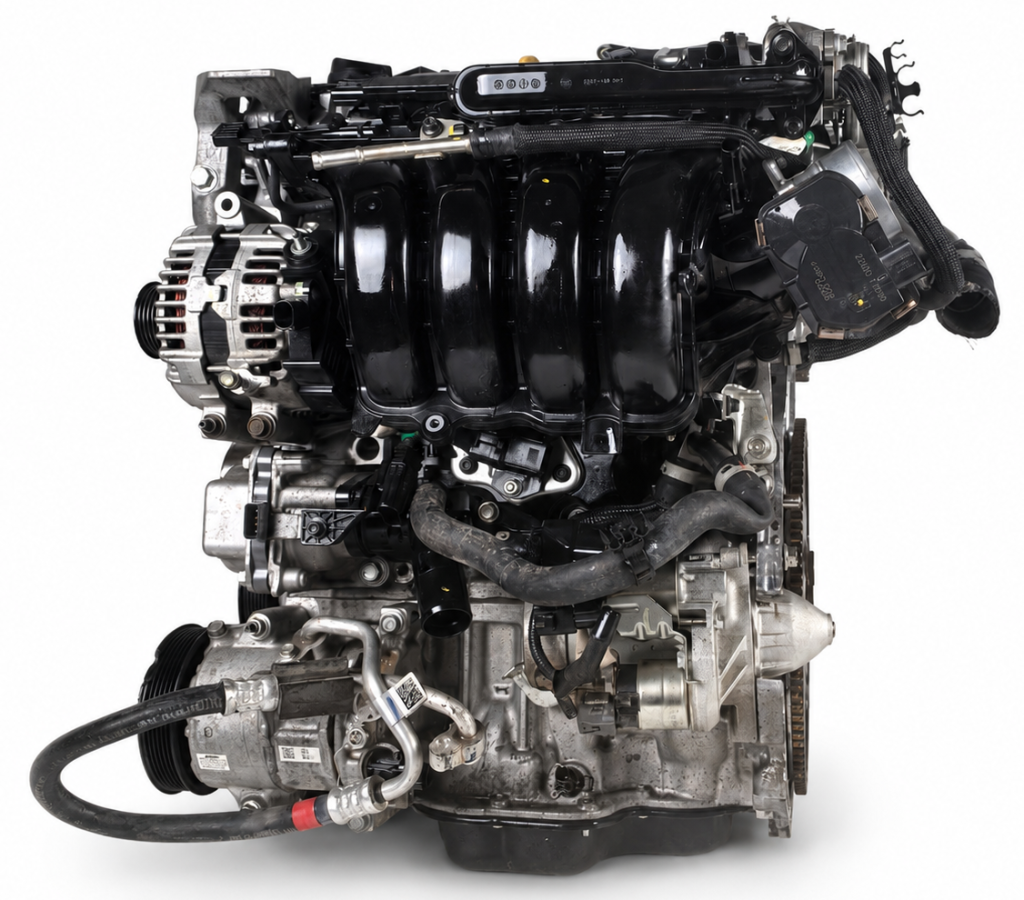
Engineered for efficiency and performance, the M20A-FKS features an all-aluminum construction for both its cylinder block and cylinder head, contributing to weight reduction and improved thermal management. A key technological highlight is the D-4S fuel injection system, which seamlessly combines both port and direct fuel injection, optimizing fuel delivery across the entire RPM range for enhanced power and reduced particulate emissions. The valvetrain incorporates Dual VVT-i (Variable Valve Timing with intelligence), specifically VVT-iE (electronic) on the intake camshaft and VVT-i (hydraulic) on the exhaust camshaft, allowing for precise valve timing adjustments. Further refinements include a high compression ratio of 13.0:1, laser-clad valve seats, an electric water pump, and a variable capacity oil pump, all contributing to its impressive 40% thermal efficiency.
This particular iteration of the Dynamic Force Engine primarily found its application in the Lexus UX 200, offered from its debut in 2018 onwards. It serves as the base engine for front-wheel-drive variants of the UX series, typically paired with a Direct Shift-CVT (Continuously Variable Transmission) to maximize its efficiency and provide a smooth driving experience. While the M20A-FKS forms the basis for engines found in various Toyota models globally (such as the Corolla, C-HR, and RAV4 in non-hybrid configurations), its specific tuning and branding under Lexus reflect its role in the premium compact SUV segment.
Technical Specifications
| Displacement (cc) | 1987 cc |
| Max Power (hp (kW) @ RPM) | 169 hp (126 kW) @ 6600 RPM |
| Max Torque (Nm (kg*m) @ RPM) | 205 Nm (20.9 kg*m) @ 4800 RPM |
| Fuel Type | Gasoline (Premium Unleaded Recommended) |
| Fuel Consumption (l/100 km) | ~6.0 – 7.0 l/100km (Combined, Lexus UX 200 FWD) |
| Engine Type | Inline-4, Naturally Aspirated, Dynamic Force Engine |
| Compression Ratio | 13.0:1 |
| Cylinder Bore (mm) | 80.5 mm |
| Piston Stroke (mm) | 97.6 mm |
| Valvetrain | DOHC, 16-valve |
| Valves per Cylinder | 4 |
| Additional Info | Dual VVT-i (VVT-iE intake, VVT-i exhaust), D-4S direct/port injection, electric water pump, variable capacity oil pump, high-speed combustion technology |
Common Problems & Reliability
- Carbon Buildup: As with many direct-injection engines, the M20A-FKS can be susceptible to carbon deposits on the intake valves over extended mileage. The D-4S system, incorporating port injection, helps mitigate this issue by washing the intake valves with fuel, but it does not entirely eliminate the potential for buildup. Symptoms can include reduced performance, rough idle, and decreased fuel economy, typically appearing after 100,000 km.
- Minor Oil Consumption: Modern, tightly-toleranced engines, particularly those with low-viscosity oils and extended service intervals, can exhibit minor oil consumption. While not typically a defect, careful monitoring of oil levels between scheduled changes is recommended, especially in vehicles subjected to aggressive driving or high-mileage use.
- VVT-i Actuator Wear: While generally robust, the VVT-i (especially the VVT-iE component) actuators are complex components. Over very high mileage or due to infrequent oil changes, wear could potentially lead to issues such as check engine lights, rough idling, or reduced power. This is not a widespread issue but represents a potential point of long-term wear for complex variable valve timing systems.
Under a regimen of diligent maintenance and typical driving conditions, the Lexus M20A-FKS engine is engineered for exceptional longevity. An expected service life of 250,000 kilometers (approximately 155,000 miles) or more before requiring a major overhaul is realistic, reflecting Lexus’s reputation for durability.
Maintenance Tips & Service Schedule
- Engine Oil & Filter: Adherence to the manufacturer’s recommended service interval of 10,000 km (6,000 miles) or 6 months, whichever comes first, is critical. Use only synthetic engine oil with a viscosity grade of 0W-16 or 0W-20, as specified by Lexus, to ensure proper lubrication and efficiency for this high-precision engine.
- Spark Plugs: Replacement of iridium-tipped spark plugs is typically recommended every 100,000 km (60,000 miles). Using genuine Lexus or specified OEM-equivalent plugs is advised for optimal combustion and longevity.
- Timing Chain: The M20A-FKS utilizes a timing chain, which is designed for the life of the engine under normal operating conditions. Regular oil changes are paramount to prevent premature wear. Inspection for slack or noise can be considered at 150,000-200,000 km intervals if any concerns arise.
- Coolant Flush: The Super Long Life Coolant (SLLC) has an initial service life of 160,000 km (100,000 miles) or 10 years, followed by subsequent changes every 80,000 km (50,000 miles) or 5 years. Use only genuine Toyota SLLC (pink) to maintain system integrity.
- Air Filter & Cabin Air Filter: Inspection and replacement of the engine air filter and cabin air filter should occur annually or every 30,000 km (18,000 miles), depending on driving conditions, to ensure optimal engine performance and cabin air quality.
- Fuel System Cleaner: Periodic use of a high-quality fuel system cleaner can help mitigate potential carbon buildup issues associated with direct injection, supporting optimal fuel atomization and combustion efficiency.
Conclusion
The Lexus M20A-FKS engine stands as a testament to modern naturally aspirated powertrain engineering, offering a compelling balance of efficiency, smooth operation, and reliable performance within the Lexus UX 200. Its advanced features, including the D-4S injection and sophisticated VVT-iE system, contribute to a refined driving experience. For a used vehicle buyer, this engine generally represents a safe and reliable choice, provided the vehicle has a documented history of consistent and proper maintenance. Its robust design, coupled with Lexus’s reputation for durability, suggests a long and trouble-free operational life when adherence to the manufacturer’s service recommendations is maintained.