
Overview & Design Features
The IVECO F2CE9684A is a prominent heavy-duty diesel engine developed by FPT Industrial (Fiat Powertrain Technologies), a brand under the CNH Industrial group, with IVECO being a major beneficiary. This engine belongs to the renowned Cursor 9 series, known for its robustness, efficiency, and compliance with stringent emission standards. With a displacement of 8.7 liters (8700 cc) and an inline-six cylinder configuration, the F2CE9684A is engineered for demanding commercial vehicle applications, offering a balance of power, torque, and operational economy. Its historical significance lies in its role as a workhorse for modern long-haul and construction vehicles, embodying FPT’s commitment to advanced diesel technology.
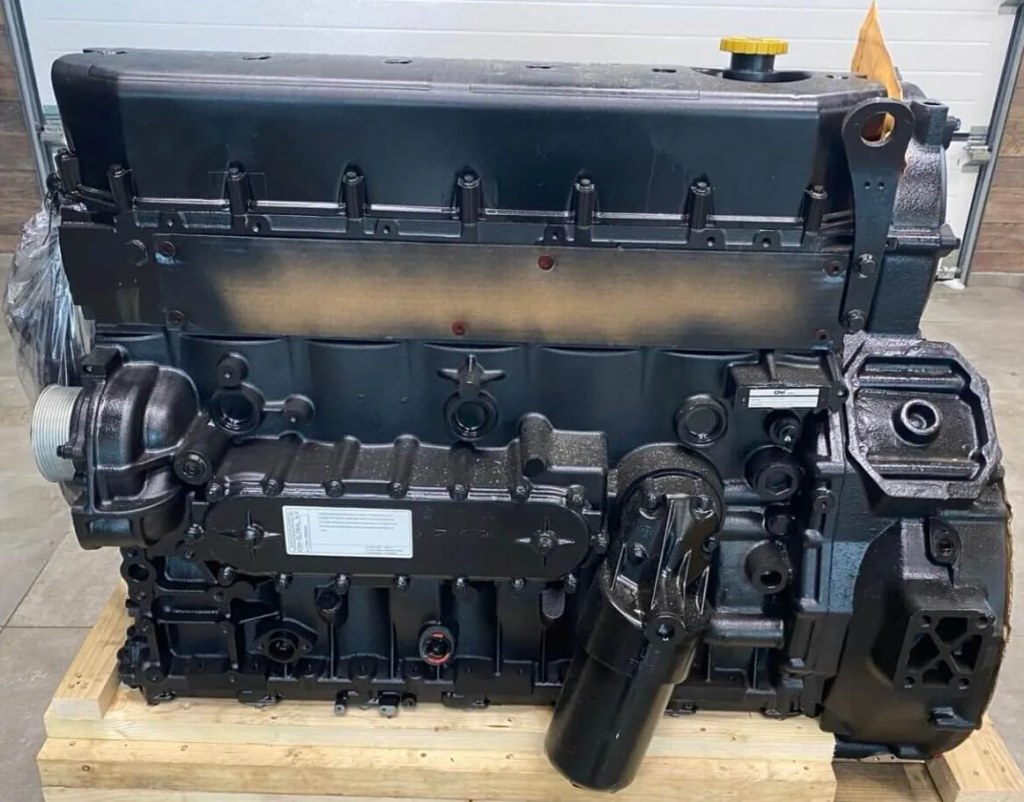
Core engineering features of the F2CE9684A include a robust cast-iron cylinder block and cylinder head, designed for extreme durability and thermal stability inherent to heavy-duty operations. Fuel delivery is managed by a sophisticated common-rail direct injection system, providing precise fuel atomization and combustion control, crucial for both performance and emissions compliance. The engine incorporates a variable geometry turbocharger (VGT) to optimize boost pressure across the entire RPM range, enhancing responsiveness and fuel efficiency. Exhaust gas recirculation (EGR) and selective catalytic reduction (SCR) with a diesel particulate filter (DPF) are integral components of its Euro VI emissions compliance strategy, minimizing nitrogen oxides and particulate matter emissions effectively. The valvetrain features a single overhead camshaft (SOHC) design, actuating four valves per cylinder for improved breathing and combustion efficiency.
The IVECO F2CE9684A engine has been extensively deployed across a range of heavy-duty commercial vehicles. Primarily, it powers various models of the IVECO Stralis, IVECO Trakker, and more recently, the IVECO S-Way. It can be found in configurations ranging from tractor units for long-distance transport to rigid trucks for distribution and construction. Production years typically span from the mid-2010s onwards, especially as Euro VI regulations became standard in European markets, underscoring its role in modern heavy commercial transport.
Technical Specifications
| Specification | Value |
|---|---|
| Displacement (cc) | 8700 |
| Max Power (hp (kW) @ RPM) | 360 hp (265 kW) @ 1650-2200 RPM (Typical) |
| Max Torque (Nm (kg*m) @ RPM) | 1650 Nm (168 kg*m) @ 1200-1500 RPM (Typical) |
| Fuel Type | Diesel |
| Fuel Consumption (l/100 km) | Refer to specific vehicle configuration and operational data |
| Engine Type | Inline 6-cylinder, Turbocharged, Intercooled, Common Rail Diesel |
| Compression Ratio | 17.0:1 |
| Cylinder Bore (mm) | 117 |
| Piston Stroke (mm) | 135 |
| Valvetrain | SOHC (Single Overhead Camshaft) |
| Valves per Cylinder | 4 |
| Additional Info | Euro VI Emissions Compliant (EGR, SCR, DPF) |
Common Problems & Reliability
The IVECO F2CE9684A engine, being a modern heavy-duty diesel, is generally considered reliable when maintained correctly. However, specific mechanical weak points are associated with its complex emissions control systems. Failures of the Exhaust Gas Recirculation (EGR) valve or cooler are not uncommon, often leading to reduced engine performance, increased exhaust temperatures, and fault codes. Blockages within the Diesel Particulate Filter (DPF) system are also a frequent concern, particularly in vehicles operating with frequent short trips or insufficient regeneration cycles, necessitating forced regenerations or DPF cleaning/replacement. Furthermore, components of the Selective Catalytic Reduction (SCR) system, such as the AdBlue injector or NOx sensors, can experience issues, leading to derated engine power or emission warnings. Turbocharger longevity is typically high, but seal degradation or bearing wear can occur at very high mileages.
Under proper care, including adherence to recommended service intervals and using manufacturer-specified fluids, the F2CE9684A engine exhibits a robust design capable of achieving a realistic expected service life of 800,000 to 1,000,000 kilometers before requiring a major overhaul. This longevity is typical for well-engineered heavy-duty diesel engines in their intended applications.
Maintenance Tips & Service Schedule
Proactive maintenance is paramount for the longevity and reliability of the F2CE9684A engine. Adherence to manufacturer service intervals is critical. Engine oil and filter changes should be performed every 60,000 to 80,000 kilometers or annually, whichever comes first, utilizing a fully synthetic low-ash API CK-4 or ACEA E6/E9 engine oil with a viscosity such as 5W-30 or 10W-40, depending on climate and manufacturer specification. Fuel filters, including a primary water separator and secondary fine filter, require replacement every 40,000 to 60,000 kilometers to protect the common-rail injection system. Air filter elements should be inspected regularly and replaced as per manufacturer guidelines or more frequently in dusty environments.
The coolant system requires attention every two to three years or 200,000 to 300,000 kilometers, involving a full flush and refill with a long-life, heavy-duty OAT (Organic Acid Technology) coolant. The overhead camshaft (SOHC) utilizes a gear-driven timing system, eliminating the need for timing belt replacement; however, valve lash adjustment should be checked and performed as specified, typically every 200,000 to 300,000 kilometers. Regular monitoring of the AdBlue consumption and ensuring system integrity are also essential for emissions compliance. Diagnostic checks for fault codes should be part of routine maintenance to identify and address potential issues with the emissions control systems before they escalate.
Conclusion
The IVECO F2CE9684A engine represents a highly capable and generally reliable powertrain for heavy commercial applications. Its robust construction and sophisticated design make it a durable choice for demanding operations. While the complexity of its Euro VI emissions systems introduces potential failure points related to EGR, DPF, and SCR components, these issues are often manageable through diligent maintenance and proper operational practices. For a used vehicle buyer, this engine is a safe and reliable choice, provided a comprehensive service history is available, indicating consistent adherence to manufacturer-specified maintenance. A pre-purchase inspection focusing on the condition of the emissions control systems, turbocharger, and overall engine health is strongly recommended to ensure long-term operational satisfaction.