
Overview & Design Features
The IVECO Tector4 engine family represents a cornerstone of CNH Industrial’s powertrain offerings, specifically designed for medium-duty commercial vehicles. Primarily known for its application in the IVECO Eurocargo and certain Daily models, the Tector4 designation typically refers to the inline-four-cylinder variants, notably the 4.5-liter displacement. It is engineered to deliver a crucial balance of power, fuel efficiency, and durability for its target market of trucks, buses, and various industrial applications across global markets since its introduction in the early 2000s, evolving through successive emission standards.
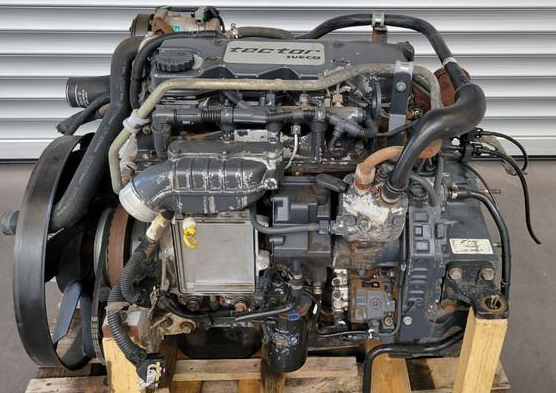
Tector4 engines feature a robust cast iron cylinder block, providing structural rigidity and excellent durability under heavy loads. Cylinder heads are often cast iron for enhanced robustness, though specific variants may utilize aluminum. Fuel delivery is managed by a sophisticated Common Rail Direct Injection system, ensuring precise fuel atomization and combustion efficiency. This system, coupled with turbocharging and intercooling, optimizes power output and torque delivery across a broad RPM range. The valvetrain typically employs a Single Overhead Camshaft (SOHC) design with four valves per cylinder, promoting efficient gas flow and improved volumetric efficiency. Later iterations incorporate advanced emission control technologies such as Exhaust Gas Recirculation (EGR), Diesel Particulate Filters (DPF), and Selective Catalytic Reduction (SCR) systems to meet stringent Euro emission standards.
The IVECO Tector4 engine, primarily in its 4.5-liter inline-four configuration, has served as a core powertrain for the IVECO Eurocargo series, from its early generations (e.g., Euro III, Euro IV) through to more recent models compliant with Euro VI standards. It also found applications in heavier variants of the IVECO Daily light commercial vehicle, particularly in chassis cab and minibus configurations. Beyond on-road vehicles, the Tector4 engine powers various industrial and off-highway machinery, including agricultural equipment and construction vehicles under the CNH Industrial umbrella, demonstrating its adaptability and rugged design from approximately 2000 onwards.
Technical Specifications
| Specification | Value (Representative 4.5L Euro VI Variant) |
|---|---|
| Displacement (cc) | 4485 |
| Max Power (hp (kW) @ RPM) | 180 hp (132 kW) @ 2200 RPM |
| Max Torque (Nm (kg*m) @ RPM) | 610 Nm (62.2 kg*m) @ 1300-1800 RPM |
| Fuel Type | Diesel |
| Fuel Consumption (l/100 km) | Refer to specific vehicle and operating conditions, typically 15-25 l/100 km in Eurocargo applications |
| Engine Type | Inline-4, Turbocharged Diesel, Intercooled |
| Compression Ratio | 17.5:1 |
| Cylinder Bore (mm) | 104 |
| Piston Stroke (mm) | 132 |
| Valvetrain | SOHC |
| Valves per Cylinder | 4 |
| Additional Info | Common Rail Direct Injection, Variable Geometry Turbocharger (VGT), EGR, DPF, SCR (for Euro VI variants) |
Common Problems & Reliability
- EGR Valve and DPF Issues: Like many modern diesel engines, the Tector4 can experience issues with its emission control systems. The Exhaust Gas Recirculation (EGR) valve can accumulate carbon deposits, leading to reduced performance and error codes. Diesel Particulate Filters (DPF) may become clogged, particularly in vehicles primarily used for short-haul or stop-and-go driving, preventing proper regeneration cycles.
- Fuel Injector Wear: The high-pressure Common Rail Direct Injection system, while highly efficient, relies on precise and well-maintained components. Over time, or due to poor fuel quality, fuel injectors can wear, leading to compromised fuel atomization, reduced efficiency, increased emissions, or misfires. Regular fuel filter replacement is critical in mitigating this issue.
- Turbocharger Wear: While generally robust, the turbocharger’s lifespan is directly linked to oil quality and maintenance. Inadequate oil changes, using incorrect oil specifications, or frequent heavy-duty cycles can accelerate wear on turbocharger bearings, potentially leading to reduced boost pressure, oil consumption, or catastrophic failure.
Under proper maintenance and typical commercial operation, the IVECO Tector4 engine is engineered for longevity. A realistic expected service life before requiring a major overhaul is often between 500,000 km and 700,000 km, with some units exceeding this mileage when meticulously cared for.
Maintenance Tips & Service Schedule
- Engine Oil and Filter: Perform oil and filter changes every 30,000 km to 50,000 km, or annually, whichever comes first, for most commercial applications. Always use manufacturer-approved heavy-duty diesel engine oil (e.g., ACEA E6/E7, API CK-4) with the recommended viscosity (e.g., 5W-30, 10W-40) to ensure optimal lubrication and protection for the turbocharger and critical engine components.
- Fuel Filters: The precise operation of the Common Rail system necessitates clean fuel. Replace fuel filters every 30,000 km to 60,000 km, or more frequently if operating in regions with questionable fuel quality.
- Air Filter: Inspect and replace the air filter every 60,000 km, or more frequently in dusty operating environments, to ensure proper airflow and prevent particulate ingress into the engine.
- Coolant System: Flush and replace engine coolant every 3-5 years or 250,000 km using long-life coolant specifically designed for heavy-duty diesel engines. Regular inspection of hoses and connections for leaks is also recommended.
- DPF Maintenance: Monitor the Diesel Particulate Filter’s condition via diagnostic tools. Ensure that active regeneration cycles are completed. If the vehicle operates predominantly in urban environments, manual or forced regenerations may be necessary. Professional DPF cleaning may be required at higher mileages to restore efficiency.
- AdBlue (SCR) System: For Euro VI variants, consistently ensure the AdBlue tank is topped up with genuine product. Avoid contamination and monitor the system for potential crystallization issues in the dosing unit or lines.
Conclusion
The IVECO Tector4 engine is generally a reliable and durable powertrain, particularly when considering its commercial vehicle origins and design for extended service life. It represents a solid choice for a used vehicle buyer seeking a robust workhorse engine. However, potential buyers should be fully aware of the complexities and associated maintenance costs of modern diesel emission systems, such as EGR, DPF, and SCR, which can be expensive to repair if neglected. A comprehensive pre-purchase inspection by a qualified specialist is highly advisable, with particular attention paid to the fuel injection system, turbocharger, and the complete emission control system, to ensure a well-maintained example is acquired.