
Overview & Design Features
The GM Chevrolet Straight-6 250 cubic inch engine, commonly associated with both Chevrolet and GMC vehicles, stands as a foundational powerplant from the General Motors era of robust, no-frills engineering. Introduced in 1966 as an evolution of earlier Chevrolet straight-six designs, this 4.1-liter (4097 cc) inline-six engine was engineered for economy, durability, and ease of maintenance. Its widespread adoption across a vast array of light-duty trucks, vans, and passenger cars cemented its reputation as a reliable workhorse, reflecting a period when mechanical simplicity was paramount.
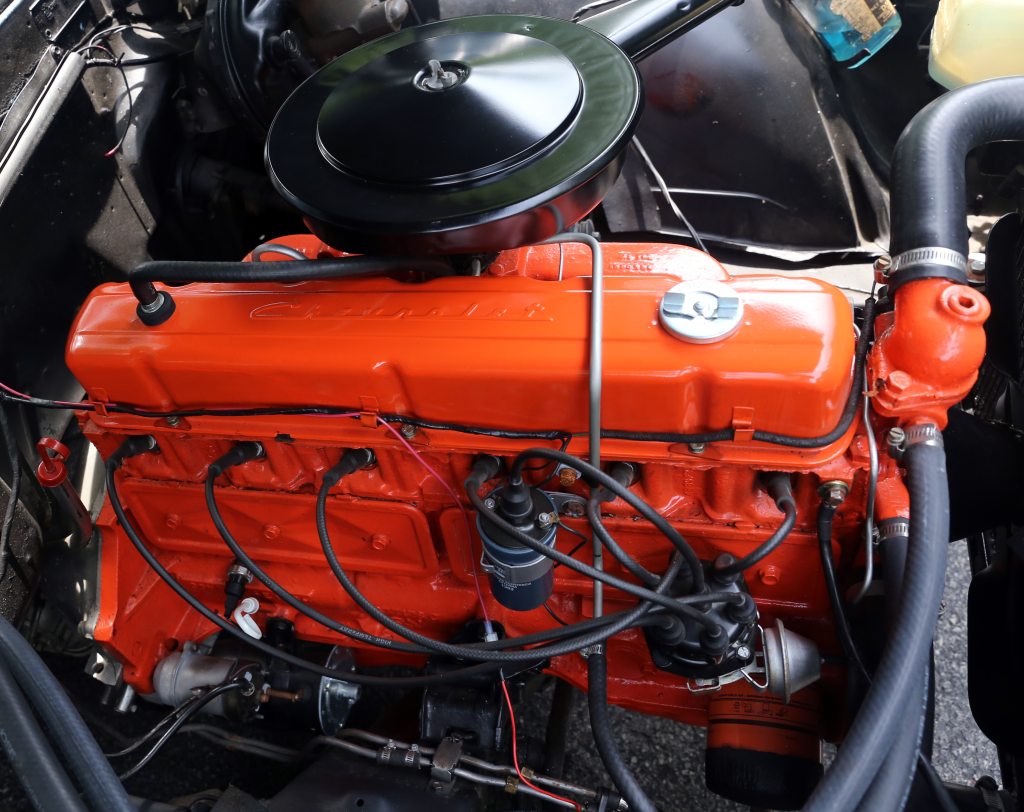
Engineered with a focus on longevity, the 250ci Straight-6 features a heavy-duty cast iron block and cylinder head, a configuration chosen for its thermal stability and structural integrity. It employs a traditional overhead valve (OHV) pushrod valvetrain, actuating two valves per cylinder. Fuel delivery was primarily via a single-barrel or, less commonly, a two-barrel carburetor, providing straightforward, reliable operation. While not a performance-oriented engine, its torque characteristics at lower RPMs made it highly suitable for daily driving, hauling, and commercial applications, prioritizing sustained output over peak power.
This engine saw extensive deployment throughout its production run, which spanned from 1966 into the late 1980s in some applications. It was a common sight in numerous Chevrolet and GMC C/K series pickup trucks, Suburban SUVs, and G-series vans. Passenger car lines such as the Chevrolet Chevelle, Nova, Camaro (base models), Impala, Malibu, and Pontiac Ventura also frequently featured the 250ci Straight-6, particularly in trims emphasizing economy and durability over outright performance.
Technical Specifications
| Specification | Value |
|---|---|
| Displacement (cc) | 4097 cc (250 cu in) |
| Max Power (hp (kW) @ RPM) | 100-155 hp (75-116 kW) @ 3600-4200 RPM (Gross figures varied significantly by year and application. Later net ratings were lower.) |
| Max Torque (Nm (kg*m) @ RPM) | 250-325 Nm (25.5-33.1 kg*m) @ 1600-2400 RPM (Gross figures varied significantly by year and application. Later net ratings were lower.) |
| Fuel Type | Gasoline (unleaded for later models, leaded acceptable for earlier) |
| Fuel Consumption (l/100 km) | Highly variable based on vehicle, transmission, and driving conditions; typically 15-20 l/100 km in truck applications. |
| Engine Type | Inline-6, Naturally Aspirated |
| Compression Ratio | 8.5:1 – 9.0:1 (variable by year) |
| Cylinder Bore (mm) | 98.43 mm (3.875 in) |
| Piston Stroke (mm) | 89.66 mm (3.53 in) |
| Valvetrain | Overhead Valve (OHV), Pushrod |
| Valves per Cylinder | 2 |
| Additional Info | Cast iron block and cylinder head, carbureted fuel system (single or two-barrel). |
Common Problems & Reliability
The GM Chevrolet Straight-6 250 is renowned for its inherent reliability and robustness, a testament to its simple, durable design. However, like any engine of its vintage, specific issues can arise over time. Common mechanical weak points include oil leaks, particularly from the rear main seal, valve cover gaskets, and oil pan gasket, which can necessitate replacement with modern sealing materials. Carburetor wear and tuning issues are also frequent, leading to rough idling, poor fuel economy, or difficult starting. Exhaust manifolds may develop cracks due to thermal cycling, resulting in exhaust leaks and increased noise. Sticky lifters or rocker arm wear can occur if regular oil changes are neglected or incorrect oil viscosity is used, presenting as valvetrain noise. Despite these potential issues, the engine’s fundamental design and heavy-duty components contribute to an impressive service life. With proper maintenance, a 250ci Straight-6 can routinely achieve 200,000 miles (approximately 320,000 km) or more before requiring a major overhaul, with many examples exceeding this figure.
Maintenance Tips & Service Schedule
Maintaining the GM Chevrolet Straight-6 250 involves straightforward procedures crucial for maximizing its longevity. Engine oil and filter should be changed every 3,000-5,000 miles (5,000-8,000 km) using a conventional 10W-30 or 10W-40 motor oil, adjusted for climate. Spark plugs, ideally copper core, should be replaced every 15,000-30,000 miles (24,000-48,000 km) to ensure optimal ignition. The cooling system, including radiator fluid, should be flushed and refilled with an ethylene glycol-based coolant every 2-3 years or 30,000-50,000 miles (48,000-80,000 km). Air and fuel filters require regular inspection and replacement, especially crucial for carbureted systems to prevent contamination and maintain proper air-fuel mixture. The timing chain, while not a service item like a belt, should be inspected for excessive slack or noise at higher mileages, typically above 100,000 miles, as part of a comprehensive inspection. Regular checks of belts, hoses, and fluid levels are also essential to prevent premature component failure.
Conclusion
The GM Chevrolet Straight-6 250 represents an exceptionally reliable and durable engine choice, particularly for a used vehicle buyer prioritizing longevity, mechanical simplicity, and ease of repair over modern performance or fuel efficiency. Its robust cast iron construction and time-proven OHV design make it highly tolerant of diverse operating conditions and amenable to home maintenance. While it may not offer brisk acceleration or impressive fuel economy by contemporary standards, its strong torque output and remarkable resistance to catastrophic failure establish it as a safe and practical option for classic truck, van, or passenger car enthusiasts seeking a dependable powerplant capable of many more years of service with diligent care.