
Overview & Design Features
The GMC L56 is a 6.5-liter (395 cubic inches) turbocharged V8 diesel engine developed by Detroit Diesel for General Motors. Introduced in 1994 as a successor to the naturally aspirated 6.2-liter engine, this powerplant balanced towing capability and fuel economy for light-duty applications. It served as a critical evolutionary step in GM’s light truck lineup, introducing electronic fuel control to adapt to modern performance demands.
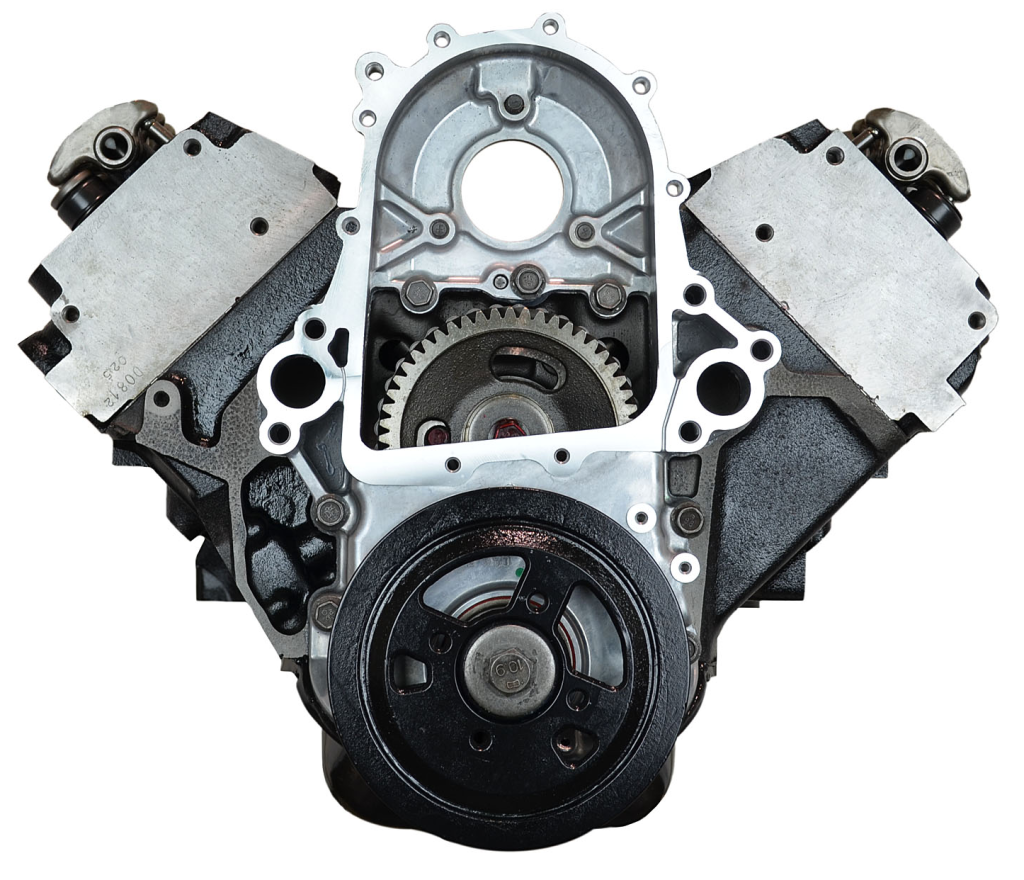
From an engineering perspective, the L56 features a heavy-duty cast iron cylinder block and cylinder heads. It utilizes an indirect injection (IDI) fuel system centered around a Stanadyne DS4 electronic rotary injection pump, combined with a wastegated turbocharger to optimize manifold pressure. The valvetrain consists of an overhead valve (OHV) configuration with two valves per cylinder, driven by a chain-operated camshaft and pushrods. This variant is distinguished by its factory-installed exhaust gas recirculation (EGR) system, designed to comply with light-duty emissions standards.
This engine was utilized in General Motors’ light-duty trucks and sport utility vehicles from 1994 through 2000. Notable models include the GMC Sierra 1500, GMC Yukon, Chevrolet Suburban 1500, and Chevrolet Tahoe. Typically mated to the 4L80-E four-speed automatic transmission, the L56 targeted consumer-grade towing and utility.
Technical Specifications
| Displacement (cc) | 6,489 cc |
| Max Power (hp (kW) @ RPM) | 180 hp (134 kW) @ 3,400 RPM |
| Max Torque (Nm (kg*m) @ RPM) | 488 Nm (49.8 kg*m) @ 1,800 RPM |
| Fuel Type | Diesel |
| Fuel Consumption (l/100 km) | Approx. 14.0 l/100 km (combined) |
| Engine Type | Turbocharged V8 Diesel (Indirect Injection) |
| Compression Ratio | 20.2:1 |
| Cylinder Bore (mm) | 101.6 mm |
| Piston Stroke (mm) | 100.1 mm |
| Valvetrain | OHV (Overhead Valve), 2 valves per cylinder |
| Valves per Cylinder | 2 |
| Additional Info | Equipped with Stanadyne DS4 electronic injection pump and light-duty EGR system. |
Common Problems & Reliability
While the L56 offers reliable service under moderate loads, it suffers from several well-documented design vulnerabilities. The most notorious failure point is the Pump Mounted Driver (PMD) on the Stanadyne DS4 injection pump. Mounted in the engine valley, the PMD is subjected to intense thermal cycles, leading to transistor failure, engine stalling, or a complete no-start condition. Another critical weak point is the deterioration of the outer rubber ring on the harmonic balancer. When this damper fails, it ceases to absorb torsional vibrations, often resulting in a broken crankshaft.
Additionally, the L56 engine block and cylinder heads are prone to thermal cracking. Small cracks frequently develop between the valve seats or in the pre-combustion chambers due to inadequate cooling. High-mileage units also risk web cracking near the main bearing caps. Despite these vulnerabilities, a properly managed L56 engine can achieve a realistic service life of 250,000 to 300,000 miles (approximately 400,000 to 480,000 km) before requiring a major overhaul, provided that thermal stress is minimized and preventative upgrades are installed.
Maintenance Tips & Service Schedule
Preserving the operational integrity of the GMC L56 requires a specialized maintenance routine. Oil changes must be performed every 3,000 to 5,000 miles (5,000 to 8,000 km) using high-quality 15W-40 heavy-duty diesel engine oil to minimize valvetrain and bearing wear. The fuel filter should be replaced every 10,000 to 15,000 miles (16,000 to 24,000 km) to safeguard the sensitive electronic injection pump from moisture and contamination.
The cooling system demands proactive attention. Coolant flushes are recommended every 2 years or 30,000 miles (48,000 km). To mitigate catastrophic engine failure, the harmonic balancer and pulley must be inspected at 100,000-mile (160,000 km) intervals and replaced if rubber degradation is present. Additionally, relocating the PMD to a cooler location, such as the front bumper, using an aftermarket heat sink is a highly recommended upgrade to eliminate heat-induced stalling.
Conclusion
The GMC L56 remains a viable option for classic truck enthusiasts and budget-conscious buyers seeking moderate towing capabilities. While it does not deliver the raw torque of contemporary direct-injected diesel engines, its mechanical simplicity and parts availability make it highly serviceable. For a used vehicle buyer, the L56 is a relatively safe choice, provided the previous owner has documented thermal management, PMD relocation, and harmonic balancer replacement.