
Overview & Design Features
The GMC L68 engine is a legendary member of the General Motors big-block V8 family, specifically representing the high-performance 427 cubic inch (7.0-liter) generation. Produced during the peak of the muscle car era in the late 1960s, this powerplant is renowned for its exceptional torque delivery, iconic “Tri-Power” induction system, and robust casting. Positioned as a more street-friendly alternative to the high-maintenance, solid-lifter L71 variant, the L68 offered a balance of daily drivability and ferocious straight-line performance within the GM corporate hierarchy.
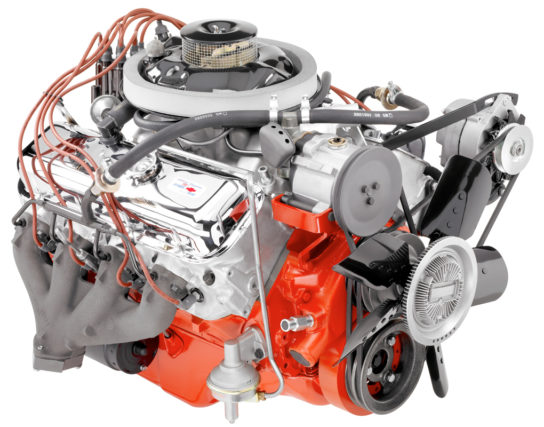
Engineering features of the L68 center around a heavy-duty cast-iron cylinder block utilizing two-bolt main bearing caps and cast-iron cylinder heads with oval-shaped intake ports. This design was specifically chosen to maximize intake air velocity at lower engine speeds, resulting in superior low-to-mid-range torque compared to rectangular-port designs. The hallmark of the L68 is its progressive “Tri-Power” fuel delivery system, featuring three two-barrel Holley carburetors mounted on a specialized intake manifold. During standard cruising, the engine runs solely on the center two-barrel carburetor for optimized fuel economy, while the two outer carburetors engage via vacuum diaphragms under heavy acceleration. The valvetrain uses a conventional overhead valve (OHV) configuration with hydraulic lifters, which eliminates the need for periodic valve adjustments required by solid-lifter performance engines.
The L68 was officially produced and deployed between 1967 and 1969. Although primarily utilized in high-performance packages for vehicles like the Chevrolet Corvette, this corporate big-block engine represents the peak of GM’s powertrain engineering of the era. This technology laid the groundwork for heavy-duty truck and performance applications across the General Motors and GMC lineups during the late twentieth century.
Technical Specifications
| Displacement (cc) | 6,997 cc (427 cubic inches) |
| Max Power (hp (kW) @ RPM) | 400 hp (298 kW) @ 5,400 RPM |
| Max Torque (Nm (kg*m) @ RPM) | 624 Nm (63.6 kg*m) @ 3,600 RPM |
| Fuel Type | Leaded high-octane gasoline (requires modern lead substitute or valve seat modification) |
| Fuel Consumption (l/100 km) | Approximately 21.4 l/100 km (combined cycle, driving style dependent) |
| Engine Type | Naturally aspirated 90-degree V8 |
| Compression Ratio | 10.25:1 |
| Cylinder Bore (mm) | 107.95 mm (4.25 inches) |
| Piston Stroke (mm) | 95.5 mm (3.76 inches) |
| Valvetrain | OHV (Pushrod, 16 valves, hydraulic lifters) |
| Valves per Cylinder | 2 |
| Additional Info | Features cast-iron oval-port cylinder heads and Tri-Power triple Holley carburetors |
Common Problems & Reliability
The L68 is fundamentally a highly durable engine due to its over-engineered cast-iron construction, but it does possess distinct historical vulnerabilities. The primary mechanical challenge lies in the Tri-Power carburetor setup. Over time, vacuum leaks in the secondary carburetor diaphragms or misalignments in the progressive throttle linkage can lead to erratic idling, fuel-rich running conditions, or hesitation during acceleration. Tuning and synchronizing three carburetors requires specialized mechanical expertise that is increasingly rare today.
Another area of concern is valvetrain wear. Because this engine was designed in the era of leaded fuels, running an unmodified L68 on modern unleaded gasoline can cause accelerated valve seat recession. Additionally, the flat-tappet camshaft is highly susceptible to rapid wear if operated without modern zinc-heavy motor oils. If properly maintained, modified with hardened valve seats, and run on appropriate modern additives, the L68 can easily achieve a service life of 150,000 miles before requiring a major bottom-end overhaul.
Maintenance Tips & Service Schedule
Preserving the performance of the L68 demands strict adherence to classic vehicle maintenance schedules. The most critical requirement is the use of high-zinc (ZDDP) motor oil, typically in a 10W-30 or 15W-40 viscosity, to prevent premature wear on the flat-tappet camshaft lobes. Lubrication intervals must not exceed 3,000 miles or six months, whichever occurs first.
- Spark Plugs: Inspect, clean, and gap standard copper spark plugs every 10,000 miles.
- Cooling System: Flush the radiator annually and maintain a 50/50 coolant mix containing corrosion inhibitors to protect the massive cast-iron engine block.
- Fuel System: Periodically inspect the carburetor linkage and vacuum lines for leaks. Install a high-quality fuel filter to prevent debris from clogging the small carburetor jets.
- Valves: If the cylinder heads have not been upgraded to hardened seats, use a lead-substitute fuel additive during every fill-up.
Conclusion
For collectors and vintage car enthusiasts, the GMC L68 big-block engine is an incredibly desirable powertrain option. It offers exceptional torque and a unique mechanical aesthetic that modern engines cannot replicate. While it requires specialized knowledge to tune the progressive Tri-Power carburetors and demands specific oil additives, its robust construction makes it a highly reliable classic powerplant when properly cared for.