
Overview & Design Features
The GMC Vortec 4300 L35 is a venerated 4.3-liter (4300 cc) 90-degree V6 internal combustion engine, primarily produced by General Motors’ Powertrain division for its light truck and SUV lineup. Developed as a direct descendant of the small-block Chevrolet V8 architecture, effectively a 5.7-liter V8 with the two center cylinders removed, it maintained much of the V8’s robust design while offering a more compact footprint and improved fuel efficiency for smaller applications. Introduced around 1996, the L35 variant represented a significant evolution in power delivery and emissions control for the 4.3L Vortec family, establishing itself as a workhorse powertrain for millions of vehicles.
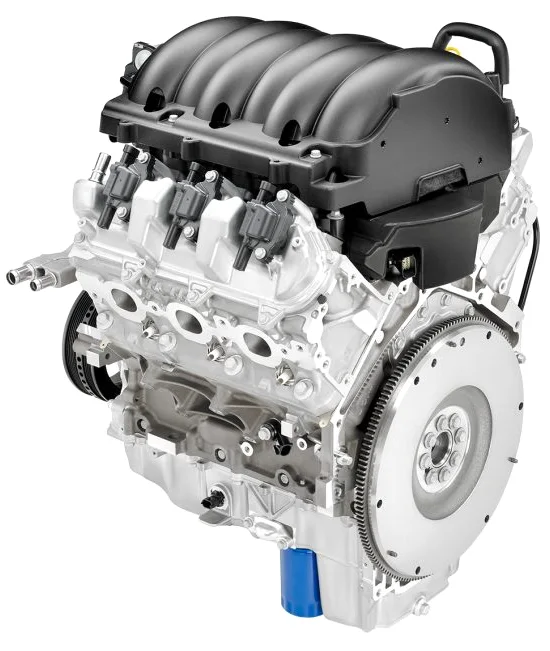
Engineering features of the L35 include a durable cast iron block and cast iron cylinder heads, ensuring longevity and thermal stability under varying loads. The engine utilizes a pushrod-actuated Overhead Valve (OHV) valvetrain with two valves per cylinder, a proven and reliable design characteristic of GM’s small-block philosophy. A key technological advancement for the L35 was the implementation of Sequential Multi-Port Fuel Injection (SFI), commonly known as the “spider” injector assembly, which replaced earlier Throttle Body Injection (TBI) and Central Port Injection (CPI) systems, offering more precise fuel delivery and improved emissions. Furthermore, a balance shaft was incorporated to mitigate the inherent vibrations of a 90-degree V6 engine, enhancing refinement.
The Vortec 4300 L35 engine saw widespread deployment across a broad range of General Motors vehicles. It was a primary engine option for the Chevrolet S-10 and GMC Sonoma compact pickup trucks, the Chevrolet Blazer and GMC Jimmy SUVs, and the Chevrolet Astro and GMC Safari mid-size vans. Additionally, it powered certain configurations of the Chevrolet C/K 1500 series and later the Chevrolet Silverado and GMC Sierra 1500 light-duty trucks, particularly in standard cab and short-bed variants, serving as an economical yet capable alternative to V8 options during its production run, which largely spanned from 1996 to 2002 before being succeeded by later Vortec iterations.
Technical Specifications
| Displacement (cc) | 4300 cc (4.3L) |
| Max Power (hp (kW) @ RPM) | 190 hp (142 kW) @ 4400 RPM |
| Max Torque (Nm (kg*m) @ RPM) | 339 Nm (34.6 kg*m) @ 2800 RPM |
| Fuel Type | Gasoline (Regular Unleaded, 87 Octane) |
| Fuel Consumption (l/100 km) | 12-15 l/100 km (Combined cycle, vehicle dependent) |
| Engine Type | 90-degree V6, OHV |
| Compression Ratio | 9.2:1 |
| Cylinder Bore (mm) | 101.6 mm |
| Piston Stroke (mm) | 88.4 mm |
| Valvetrain | Pushrod, Overhead Valve (OHV) |
| Valves per Cylinder | 2 |
| Additional Info | Sequential Multi-Port Injection (SFI), Cast Iron Block & Heads, Balance Shaft |
Common Problems & Reliability
The Vortec 4300 L35 is generally regarded as a robust and long-lived engine, but it is not without its specific vulnerabilities, largely attributable to its age and the technology employed during its production. One of the most common issues involves the Sequential Multi-Port Injection (SFI) “spider” assembly. Over time, the plastic lines and poppet nozzles within this system can crack or clog, leading to misfires, rough idle, poor fuel economy, and occasionally fuel leaks, presenting diagnostic challenges due to its location within the intake manifold. Replacement of the entire spider assembly is typically required.
Another prevalent concern is the failure of the intake manifold gaskets. Both the upper and lower intake manifold gaskets are susceptible to deterioration, leading to external coolant leaks, oil consumption, or internal coolant leaks that can contaminate the engine oil. Early detection and replacement are critical to prevent more severe engine damage. Lastly, wear of the distributor gear or failure of the crankshaft position sensor can cause intermittent stalling or difficulty starting, a common ailment across many GM engines of this era.
With diligent maintenance and timely addressing of these known issues, the Vortec 4300 L35 engine is realistically expected to achieve a service life of 250,000 to 300,000 miles (approximately 400,000 to 480,000 kilometers) before requiring a major overhaul.
Maintenance Tips & Service Schedule
- Engine Oil & Filter: Regular oil changes are paramount. Engine oil should be replaced every 5,000 to 7,500 kilometers (3,000 to 4,500 miles) or every 6 months, whichever comes first. A 5W-30 viscosity conventional or synthetic blend oil is generally recommended, adhering to API service categories specified in the owner’s manual.
- Spark Plugs: Spark plugs should be inspected and replaced every 80,000 to 100,000 kilometers (50,000 to 60,000 miles). Using high-quality AC Delco or equivalent platinum-tipped plugs is advisable for optimal performance and longevity.
- Coolant System: The engine cooling system should be flushed and refilled with an appropriate long-life coolant every 5 years or 150,000 kilometers (100,000 miles). Regular inspection of hoses and the thermostat is also recommended.
- Fuel Filter: To prevent fuel system restrictions and strain on the fuel pump, the in-line fuel filter should be replaced every 50,000 kilometers (30,000 miles).
- PCV Valve: The Positive Crankcase Ventilation (PCV) valve should be inspected at every oil change and replaced if it becomes clogged or sticks, typically every 50,000 to 80,000 kilometers.
- Serpentine Belt: The serpentine belt should be inspected for cracks or fraying at every service interval and replaced as needed, generally every 80,000 to 100,000 kilometers.
Conclusion
The GMC Vortec 4300 L35 engine represents a chapter of robust, dependable American engineering. Its common issues are well-documented and typically manageable, posing little threat to an informed owner. For a used vehicle buyer, an L35-equipped vehicle can be a safe and reliable choice, provided the engine exhibits a clear history of consistent maintenance. Its strong torque characteristics, simplicity of design, and widespread availability of parts make it an economical option for light-duty truck and SUV applications. An L35 engine with good service records, minimal oil consumption, and smooth operation indicates a power plant capable of many more years of service, confirming its reputation as a true workhorse.