
Overview & Design Features
The Cadillac HT-4100, a designation meaning “High Technology 4.1-liter,” was General Motors’ first compact V8 engine for front-wheel-drive applications, introduced in 1982. Developed by the Cadillac division, this engine represented a significant departure from previous Cadillac V8 designs. It aimed to address increasing demands for improved fuel economy and reduced vehicle weight, aligning with emerging automotive trends of the early 1980s. Its introduction marked a pivotal, albeit controversial, moment in Cadillac’s engineering history, intended to modernize the brand’s powertrain offerings.
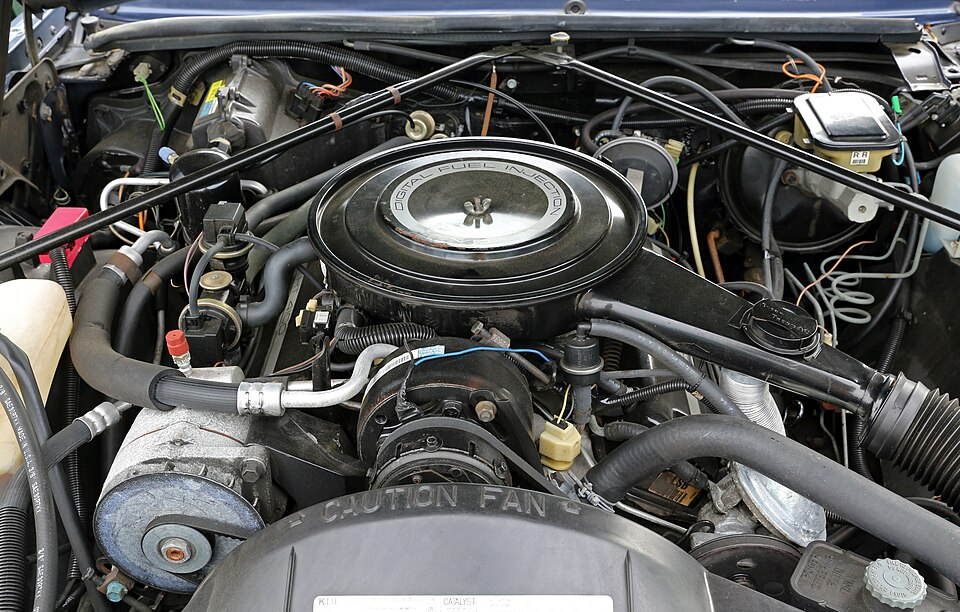
Core engineering features of the HT-4100 included an all-new design utilizing an aluminum cylinder block for weight reduction, paired with traditional cast iron cylinder heads. This combination was chosen for cost efficiency and manufacturing familiarity. Fuel delivery was primarily managed through a throttle body injection (TBI) system, a rudimentary electronic fuel injection approach for the era, which provided better fuel metering than carburetors but lacked the precision of later multi-port systems. The valvetrain consisted of a conventional overhead valve (OHV) pushrod design, employing two valves per cylinder. This architecture, while robust, limited the engine’s ability to achieve high RPM power output.
The Cadillac HT-4100 engine was predominantly deployed across several Cadillac models during its production run from 1982 to 1987. Key vehicles utilizing this engine included the 1982-1985 Cadillac DeVille and Fleetwood, the 1982-1985 Cadillac Eldorado and Seville, and the 1986-1987 Cadillac DeVille and Fleetwood (though often replaced by the 4.5L V8 in later years of some models). Specific trims for these models that featured the HT-4100 typically included standard V8 offerings across the luxury and personal luxury segments.
Technical Specifications
| Displacement (cc) | 4087 (4.1 L) |
| Max Power (hp (kW) @ RPM) | 135 hp (101 kW) @ 4400 RPM (varied slightly by year/application) |
| Max Torque (Nm (kg*m) @ RPM) | 271 Nm (27.6 kg*m) @ 2000 RPM (varied slightly by year/application) |
| Fuel Type | Gasoline (Unleaded Recommended) |
| Fuel Consumption (l/100 km) | Approximately 13-16 (Combined City/Highway, model dependent) |
| Engine Type | V8, OHV |
| Compression Ratio | 8.5:1 |
| Cylinder Bore (mm) | 88.0 |
| Piston Stroke (mm) | 84.0 |
| Valvetrain | Pushrod |
| Valves per Cylinder | 2 |
| Additional Info | Aluminum Block, Cast Iron Heads, Throttle Body Injection (TBI) |
Common Problems & Reliability
The HT-4100 engine developed a reputation for several significant mechanical weaknesses that impacted its long-term reliability. The primary issue stemmed from the use of an aluminum block with cast iron heads. The differing thermal expansion rates of these materials, coupled with a design flaw in the head bolts that allowed coolant to corrode the bolt threads, frequently led to head gasket failure and loosening of the head bolts. This often resulted in external and internal coolant leaks, overheating, and cylinder bore distortion, severely compromising engine integrity.
Another prevalent problem was oil consumption and leaks. Piston ring design and material choices often contributed to elevated oil consumption over time. Furthermore, aging gaskets and seals, particularly around the valve covers, oil pan, and intake manifold, were prone to hardening and cracking, leading to numerous external oil leaks that could go unnoticed or become persistent. The intake manifold gaskets were also susceptible to coolant leaks, compounding cooling system issues. These factors collectively meant that, without specific preventative measures or significant repairs, the HT-4100 often required major overhaul work well before 100,000 miles (approximately 160,000 km) and sometimes much earlier, depending on usage and maintenance.
Maintenance Tips & Service Schedule
Proactive and meticulous maintenance is critical for extending the service life of an HT-4100 engine. Regular oil changes are paramount, recommended every 3,000 miles (5,000 km) or every 3 months, using a high-quality 5W-30 or 10W-30 motor oil, depending on climate conditions. Consistent monitoring of oil and coolant levels is essential, and any discernible drop in either should prompt immediate investigation.
The cooling system demands particular attention. Coolant flushes should be performed every 2 years or 30,000 miles (48,000 km) using the manufacturer-specified silicate-based green coolant. Inspection of all cooling system components, including hoses, radiator, and water pump, should be routine. Spark plugs should be replaced every 30,000 miles (48,000 km) to maintain optimal ignition. While the engine uses a timing chain (which typically outlasts belts), it should be inspected for excessive slack during major service intervals, particularly if unusual noises are present. Addressing any oil or coolant leaks promptly, even minor ones, can prevent more significant problems from developing. Considering the engine’s known weaknesses, an oil analysis program can provide early warnings of internal wear or coolant contamination.
Conclusion
For a used vehicle buyer, the Cadillac HT-4100 engine presents a challenging proposition. Its historical record of significant reliability issues, particularly regarding head gasket integrity and coolant intrusion, means that a vehicle equipped with this engine should be approached with extreme caution. While examples with low mileage and impeccable, documented service histories exist, they are rare. Unless specific, known issues have been comprehensively addressed through costly preventative measures or prior repairs, the HT-4100 is generally not considered a safe and reliable choice for long-term, trouble-free ownership. Prospective buyers must be prepared for potential significant mechanical investment or prioritize the vehicle’s historical significance over practical daily reliability.