
Overview & Design Features
The Oldsmobile Rocket 350, officially known as the Oldsmobile 350 cubic inch V8, is a significant small-block engine produced by the Oldsmobile division of General Motors. Introduced in 1968 and produced through 1980, this engine quickly established itself as a robust and versatile powerplant within the GM lineup. With a displacement of 5.7 liters (350 cubic inches) and an overhead valve (OHV) V8 configuration, it became a workhorse across various Oldsmobile models and found application in other GM marques, known for its strong torque output and durability, characteristic of the era’s American V8s.
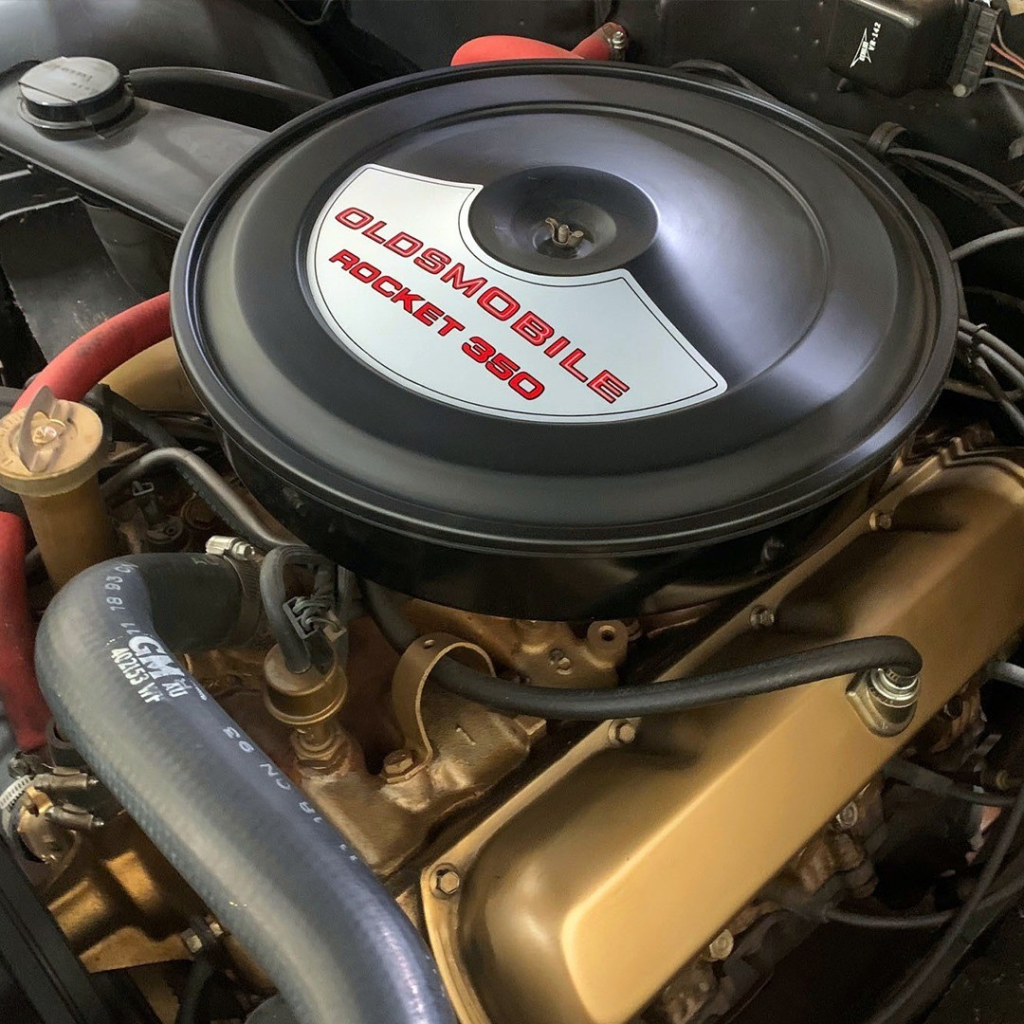
Engineered with a focus on reliability and torque, the Rocket 350 featured a sturdy cast-iron block and cylinder heads. Its valvetrain utilized a conventional pushrod design with hydraulic lifters, ensuring low maintenance and consistent operation. Fuel delivery was primarily via carburetors throughout its production run, ranging from two-barrel to four-barrel setups, though later versions saw the introduction of Throttle Body Injection (TBI) in some applications towards the end of its life cycle. The engine’s deep-skirt block design provided excellent crankshaft support, contributing to its reputation for longevity.
The Oldsmobile Rocket 350 was extensively deployed across a wide array of General Motors vehicles. Its primary applications included numerous Oldsmobile models such as the Cutlass, 442, Vista Cruiser, Delta 88, and Toronado. Beyond Oldsmobile, it was also found in various Pontiac, Chevrolet, and Buick vehicles, particularly during periods of inter-divisional engine sharing within GM. Production years spanned from 1968 to 1980, serving as a popular choice for performance-oriented trims, daily drivers, and even light-duty trucks during its tenure.
Technical Specifications
| Displacement (cc) | 5735 cc (350 cu in) |
| Max Power (hp (kW) @ RPM) | 160-310 hp (119-231 kW) @ 3600-5400 RPM (varies significantly by year/emissions) |
| Max Torque (Nm (kg*m) @ RPM) | 325-475 Nm (33-48 kg*m) @ 2400-3200 RPM (varies significantly by year/emissions) |
| Fuel Type | Gasoline (Petrol) |
| Fuel Consumption (l/100 km) | 12-18 l/100 km (average, varies by vehicle, tuning, and driving conditions) |
| Engine Type | V8, OHV, Naturally Aspirated |
| Compression Ratio | 8.0:1 to 10.5:1 (varies by year/application) |
| Cylinder Bore (mm) | 101.6 mm (4.00 in) |
| Piston Stroke (mm) | 88.9 mm (3.50 in) |
| Valvetrain | Pushrod, Overhead Valve (OHV), Hydraulic Lifters |
| Valves per Cylinder | 2 |
| Additional Info | Cast iron block and heads, 5 main bearings, 90-degree V-angle |
Common Problems & Reliability
- Exhaust Manifold Bolts: A prevalent issue with the Oldsmobile Rocket 350, as with many cast-iron V8s of its era, involves corroded or broken exhaust manifold bolts. Heat cycles and dissimilar metals lead to bolt fatigue and breakage, resulting in exhaust leaks and ticking sounds.
- Valve Stem Seals: With age and mileage, the original rubber valve stem seals tend to harden and crack, leading to increased oil consumption, particularly noticeable as a puff of blue smoke on startup or during deceleration. Replacement requires cylinder head removal or specialized tools to compress valve springs in situ.
- Timing Chain Stretch/Nylon Gears: Early versions of the Oldsmobile 350 often utilized a timing chain with nylon-coated cam gears. Over time, the nylon material can degrade, crack, or separate from the gear, leading to excessive timing chain slack, retarded valve timing, reduced performance, and potential engine damage if the chain jumps. Later revisions typically used all-metal gears.
Under proper and diligent maintenance, the Oldsmobile Rocket 350 engine is capable of delivering an impressive service life. A realistic expected service life before requiring a major overhaul, such as ring replacement or bearing work, typically ranges between 150,000 to 200,000 miles (approximately 240,000 to 320,000 km). Many examples are still operational today, a testament to their robust construction.
Maintenance Tips & Service Schedule
- Engine Oil and Filter: Regular oil changes are paramount. Engine oil should be replaced every 3,000 to 5,000 miles (4,800 to 8,000 km) or every 6 months, whichever comes first. A 10W-30 or 10W-40 viscosity oil is generally recommended for typical operating temperatures, often a ZDDP-fortified oil for flat-tappet camshaft protection.
- Spark Plugs: Spark plugs should be inspected and replaced every 30,000 miles (48,000 km) to maintain optimal ignition and fuel efficiency.
- Coolant System Flush: The cooling system should be flushed and refilled with a fresh 50/50 coolant mixture every 2-3 years or 30,000 miles (48,000 km) to prevent corrosion and maintain cooling efficiency. Inspect hoses and belts concurrently.
- Timing Chain Inspection: For engines with unknown service history, or if engine noise (e.g., rattling) is present, the timing chain and gears should be inspected. Replacement, especially if nylon-coated gears are present, is a preventative measure often recommended around 60,000-80,000 miles (96,000-128,000 km) to avoid catastrophic failure.
- Ignition System: Distributor cap, rotor, and ignition wires should be inspected periodically and replaced as part of a tune-up schedule, typically every 30,000-50,000 miles (48,000-80,000 km).
Conclusion
The Oldsmobile Rocket 350 stands as a testament to the robust engineering of its era. For a used vehicle buyer, this engine can be a surprisingly safe and reliable choice, provided the specific unit has received consistent and proper maintenance throughout its life. Its strong, simple design contributes to its longevity and ease of repair for experienced mechanics or dedicated enthusiasts. While potential buyers should be aware of common age-related issues such as valve stem seals and timing chain components, these are generally well-documented and manageable. With its enduring power and classic V8 character, a well-maintained Oldsmobile Rocket 350 offers a dependable and enjoyable driving experience for those seeking a vintage American powerplant.