
Overview & Design Features
The Cadillac GM V-8 425 is a naturally aspirated, overhead valve (OHV) V8 internal combustion engine produced by the General Motors Cadillac division. Introduced in 1977, this engine represented a pivotal moment for Cadillac, serving as a transitional power unit that bridged the gap between the colossal 500 cubic inch V8 and the smaller 368 cubic inch V8 that followed. With a displacement of 425 cubic inches (6.96 liters), the 425 V8 was designed to meet evolving fuel economy and emissions standards of the late 1970s while still delivering the smooth, commanding power expected of a Cadillac.
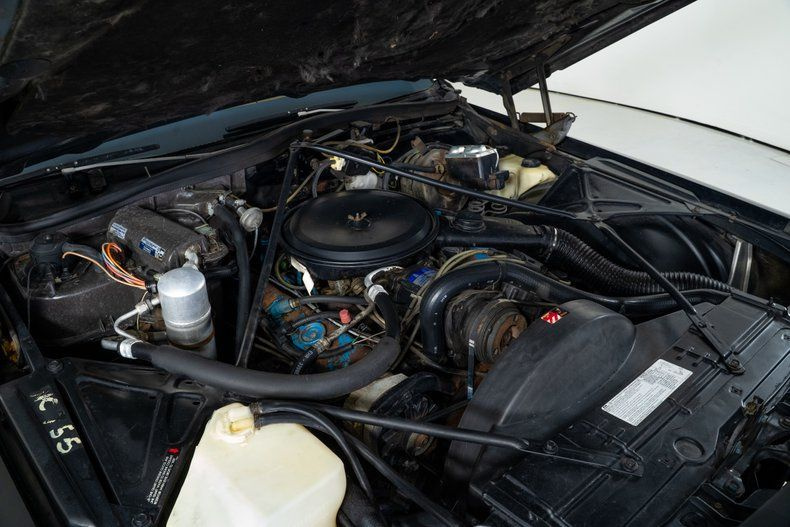
The 425 V8 engine utilizes a robust cast iron block and cast iron cylinder heads, characteristic of GM’s durable V8 architecture from that era. It features a traditional pushrod valvetrain with two valves per cylinder and hydraulic lifters, ensuring quiet operation and requiring minimal adjustment over its lifespan. Initial versions were equipped with a Rochester Quadrajet four-barrel carburetor, known for its strong performance and relatively efficient cruising. Later iterations incorporated an electronic feedback carburetor system designed to improve emissions control and fuel efficiency by working with an oxygen sensor and an electronic control module, marking an early step towards computerized engine management.
This engine was widely deployed across Cadillac’s full-size luxury lineup during its production run from 1977 to 1979. Key models that received the 425 V8 included the Cadillac Coupe de Ville, Sedan de Ville, Fleetwood Brougham, Eldorado, and Seville. It was the standard engine for most of these models, offering a balance of performance and efficiency suitable for the luxury cruisers of its time before further downsizing efforts took hold in the early 1980s.
Technical Specifications
| Displacement (cc) | 6960 |
| Max Power (hp (kW) @ RPM) | 180 (134) @ 3600 |
| Max Torque (Nm (kg*m) @ RPM) | 434 (44.2) @ 2000 |
| Fuel Type | Gasoline (Unleaded Regular) |
| Fuel Consumption (l/100 km) | 17 (Combined Estimate) |
| Engine Type | V8, Naturally Aspirated, OHV |
| Compression Ratio | 8.2:1 |
| Cylinder Bore (mm) | 107.95 |
| Piston Stroke (mm) | 95.25 |
| Valvetrain | OHV, Pushrod, Hydraulic Lifters |
| Valves per Cylinder | 2 |
| Additional Info | Cast Iron Block & Heads, Rochester Quadrajet Carburetor (early models), Electronic Feedback Carburetor (later models) |
Common Problems & Reliability
The Cadillac 425 V8 is generally considered a robust and durable engine, characteristic of its era. However, specific mechanical weak points and typical high-mileage failures should be acknowledged. Oil leaks are common, particularly around the valve covers, oil pan, and rear main seal, largely due to aging gaskets and seals. These leaks, while often not catastrophic, require attention to prevent significant fluid loss and potential undercarriage contamination.
Carburetor issues represent another frequent concern. The Rochester Quadrajet carburetor, especially the later electronic feedback versions, can develop problems with proper tuning, fuel delivery, or vacuum leaks due to age and wear. This can lead to rough idling, poor fuel economy, or hesitant acceleration. Regular maintenance and, in some cases, a professional rebuild are often necessary for optimal performance.
Lastly, the timing chain is a component that experiences wear over extended mileage. Early GM V8s often used single-row timing chains which are prone to stretching, leading to retarded ignition timing, reduced performance, and potential engine noise. While not as critical as an interference engine, excessive stretch can affect valve timing and overall engine efficiency. Under proper care and consistent maintenance, a 425 V8 can reliably achieve a service life of 150,000 to 200,000 miles (240,000 – 320,000 km) before requiring a major overhaul.
Maintenance Tips & Service Schedule
Maintaining the Cadillac 425 V8 effectively requires adherence to a regular schedule, factoring in the engine’s age and design. Oil changes should be performed every 3,000 miles (5,000 km) or every 3 months, whichever comes first, using a conventional 10W-30 or 10W-40 motor oil. Given its flat-tappet camshaft, using oil with adequate Zinc Dialkyldithiophosphate (ZDDP) content is crucial to prevent camshaft wear.
Spark plugs should be replaced every 30,000 miles (50,000 km) to ensure efficient combustion. A coolant flush is recommended every 2-3 years or 30,000 miles (50,000 km) to maintain cooling system integrity and prevent corrosion. The fuel filter should be replaced annually or every 15,000 miles (24,000 km), and the air filter annually or every 12,000 miles (20,000 km).
For carburetor-equipped engines, a professional carburetor inspection and tune-up is advisable every 25,000-50,000 miles, or whenever performance issues arise. The timing chain should be inspected during major services and considered for preventative replacement around 100,000-120,000 miles (160,000-190,000 km), potentially upgrading to a double-roller chain for enhanced longevity.
Conclusion
The Cadillac GM V-8 425 engine represents a blend of traditional American V8 power and early attempts at emissions control. For a used vehicle buyer, it can be a safe and reliable choice, provided the specific vehicle has a documented history of consistent maintenance. Its inherent durability means that many examples continue to run well today. However, potential buyers should be prepared for the realities of owning an engine from this era, including managing minor oil leaks, addressing carburetor tuning, and considering preventative timing chain maintenance. With proper care and a willingness to address age-related components, the 425 V8 offers a rewarding driving experience characterized by its smooth power delivery and classic Cadillac luxury.