
Overview & Design Features
The Cadillac LS6 is a high-performance, naturally aspirated 5.7-liter (5665 cc) V8 engine, a distinguished member of General Motors’ Gen III small-block architecture. Developed by GM’s powertrain division, this engine represents a significant evolution of the renowned LS1, specifically engineered for enhanced power output and durability. Its historical significance stems from its deployment in performance-oriented vehicles, providing a robust blend of power and refined characteristics suitable for luxury sports applications.
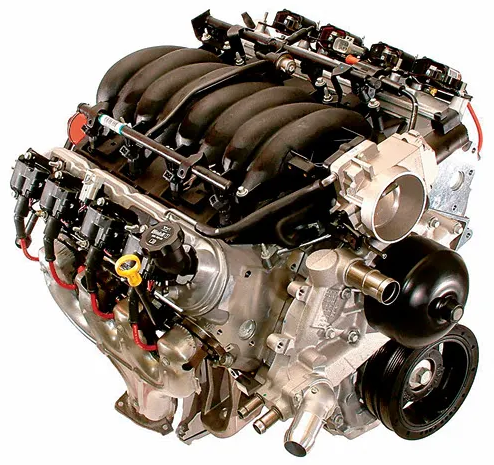
At its core, the LS6 features an all-aluminum cylinder block and heads, contributing to its favorable power-to-weight ratio and efficient heat dissipation. The engine employs a deep-skirt block design with six-bolt main bearing caps, ensuring exceptional structural rigidity. Cylinder heads utilize an improved port design, promoting superior airflow compared to its predecessors. Fuel delivery is managed by sequential port fuel injection (SFI), optimizing combustion efficiency. The valvetrain operates as an overhead valve (OHV) pushrod system, a hallmark of GM’s small-block philosophy, featuring two valves per cylinder and fixed valve timing, balancing simplicity with high performance.
This specific iteration of the LS6 engine was notably deployed in the 2004-2005 Cadillac CTS-V, where it generated 400 horsepower. It also powered the Chevrolet Corvette C5 Z06 from 2001 to 2004, initially producing 385 horsepower and later upgraded to 405 horsepower. The Cadillac application specifically leveraged the engine’s potent output to establish the brand’s performance credentials in the luxury sport sedan segment.
Technical Specifications
| Displacement (cc) | 5665 cc (5.7 L) |
| Max Power (hp (kW) @ RPM) | 400 hp (298 kW) @ 6000 RPM |
| Max Torque (Nm (kg*m) @ RPM) | 536 Nm (54.6 kg*m) @ 4400 RPM |
| Fuel Type | Premium Unleaded (91+ RON) |
| Fuel Consumption (l/100 km) | Approximately 13-15 L/100 km (combined average, highly variable) |
| Engine Type | V8, OHV, Pushrod |
| Compression Ratio | 10.5:1 |
| Cylinder Bore (mm) | 99.0 mm |
| Piston Stroke (mm) | 92.0 mm |
| Valvetrain | OHV, 2 Valves per Cylinder |
| Valves per Cylinder | 2 |
| Additional Info | Aluminum block and heads, Sequential Port Fuel Injection (SFI), improved oiling system |
Common Problems & Reliability
The Cadillac LS6 engine is largely considered robust; however, certain areas warrant attention.
- Oil Consumption: While not a universal issue, some LS6 engines may exhibit higher-than-average oil consumption, particularly under hard driving or at higher mileages. This can often be attributed to piston ring design or PCV (Positive Crankcase Ventilation) system inefficiencies. Regular oil level checks are critical.
- Harmonic Balancer Failure: The harmonic balancer, responsible for dampening crankshaft vibrations, can develop a wobble over time, leading to premature wear of engine accessories and potential belt ejection. Inspection for radial runout or cracking is recommended during routine maintenance.
- Valve Spring Fatigue: Although the LS6 utilizes improved valve springs compared to its LS1 counterpart, aggressive driving or extended high-RPM operation can eventually lead to valve spring fatigue, potentially resulting in misfires or, in severe cases, valve float. Upgraded springs are a common aftermarket enhancement for vehicles subjected to track use.
Under proper care and adherence to service schedules, the Cadillac LS6 engine exhibits a commendable service life, often exceeding 200,000 miles (approximately 320,000 km) before requiring a major overhaul.
Maintenance Tips & Service Schedule
Effective maintenance is paramount for the longevity and performance of the Cadillac LS6 engine.
- Engine Oil: Utilize a high-quality synthetic 5W-30 engine oil. Oil and filter changes should be performed every 5,000-7,500 miles (8,000-12,000 km) or every 6 months, whichever occurs first. Regular oil level checks, especially between service intervals, are crucial given potential oil consumption.
- Spark Plugs: Iridium-tipped spark plugs are specified and typically have a long service life. Replacement is generally recommended every 100,000 miles (160,000 km), or sooner if misfires or reduced fuel efficiency are observed.
- Coolant System: The cooling system requires Dex-Cool extended-life coolant. A full coolant flush and refill should be performed every 5 years or 100,000 miles (160,000 km). Regular inspection of hoses, clamps, and the radiator for leaks or deterioration is also advised.
- Air Filter: Inspect the engine air filter annually and replace as needed, typically every 15,000-30,000 miles (24,000-48,000 km), depending on driving conditions.
- Fuel Filter: The fuel filter on LS6 applications is generally considered a non-serviceable component housed within the fuel tank for the life of the vehicle, though some external variants may exist in specific models. Consult the vehicle’s service manual for specific recommendations.
- Accessory Drive Belt: Inspect the serpentine belt for cracks or fraying every 30,000 miles (48,000 km) and replace if signs of wear are evident.
Conclusion
The Cadillac LS6 engine stands as a highly regarded powerhouse, offering robust performance and generally strong reliability. Its all-aluminum construction and well-engineered design contribute to its durability. While vigilance regarding potential oil consumption and harmonic balancer wear is advisable, these issues are typically manageable. For a used vehicle buyer seeking a high-performance engine with a proven track record, the LS6 represents a reliable choice, provided the vehicle has received consistent and appropriate maintenance throughout its service life. Its blend of power, accessible maintenance, and sturdy build quality makes it a desirable option.