
Overview & Design Features
The Cadillac LY7 is a 3.6-liter (3564 cc) naturally aspirated 60-degree V6 engine, part of General Motors’ acclaimed High Feature (HFV6) engine family. Introduced in the mid-2000s, this powerplant represented a significant advancement for Cadillac, moving towards more sophisticated, overhead camshaft designs compared to earlier pushrod V6 engines. Its development focused on delivering a blend of respectable power output, improved fuel efficiency for its era, and reduced noise, vibration, and harshness (NVH), aligning with Cadillac’s luxury aspirations. The LY7 served as a cornerstone engine for several Cadillac models, establishing a modern performance baseline for the brand.
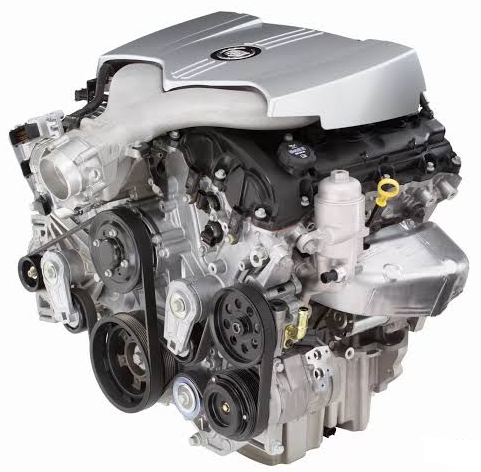
Engineering highlights of the LY7 include an all-aluminum construction for both the cylinder block and cylinder heads, contributing to a lighter overall engine weight and improved thermal management. It features dual overhead camshafts (DOHC) per bank, actuating four valves per cylinder, for a total of 24 valves. Critical to its performance and efficiency is the continuously variable valve timing (VVT) system, which independently adjusts both intake and exhaust camshafts across the operating range. Fuel delivery is managed by a multi-port fuel injection (PFI) system, ensuring precise fuel atomization and mixture control, while a sophisticated electronic throttle control provides responsive acceleration and smooth operation.
The LY7 engine found its primary applications within the Cadillac lineup during its production years. It was prominently featured in the 2004-2007 Cadillac CTS (Sport Luxury Sedan), the 2004-2007 Cadillac SRX (Luxury Crossover SUV), and the 2005-2007 Cadillac STS (Luxury Sedan). This engine often served as the standard V6 option or a mid-range offering, providing robust performance for daily driving and highway cruising across these luxury segments.
Technical Specifications
| Specification | Value |
|---|---|
| Displacement (cc) | 3564 cc (3.6 L) |
| Max Power (hp (kW) @ RPM) | 255 hp (190 kW) @ 6000 RPM (varies slightly by application) |
| Max Torque (Nm (kg*m) @ RPM) | 340 Nm (34.7 kg*m / 250 lb-ft) @ 3200 RPM (varies slightly by application) |
| Fuel Type | Gasoline (minimum 87 octane recommended) |
| Fuel Consumption (l/100 km) | Typically 10.7-11.2 l/100 km combined (varies by vehicle and driving conditions) |
| Engine Type | 60-degree V6, naturally aspirated |
| Compression Ratio | 10.2:1 |
| Cylinder Bore (mm) | 94 mm |
| Piston Stroke (mm) | 85.6 mm |
| Valvetrain | Dual Overhead Camshafts (DOHC) with Variable Valve Timing (VVT) |
| Valves per Cylinder | 4 |
| Additional Info | Aluminum block and heads, Port Fuel Injection (PFI), coil-on-plug ignition |
Common Problems & Reliability
While generally robust, the Cadillac LY7 engine is known for a few specific issues that owners should be aware of, particularly in higher mileage examples. The most widely reported concern involves the timing chain system. Due to design or material specifications, timing chains in the LY7 can stretch prematurely, typically manifesting between 80,000 to 120,000 miles. This stretching leads to incorrect camshaft timing, triggering diagnostic trouble codes (DTCs) such as P0008, P0009, P0016, P0017, P0018, and P0019, and can result in reduced performance or engine damage if left unaddressed. Replacement is a labor-intensive and costly repair.
Another common issue is elevated oil consumption. This can be attributed to several factors, including the PCV (Positive Crankcase Ventilation) system design and potential wear of piston rings over time. Regular monitoring of oil levels is critical to prevent engine damage due to low oil. Additionally, some LY7 engines may develop oil leaks from components such as the front cover gasket or valve cover gaskets, which, while less critical than timing chain issues, require attention to avoid fluid loss and potential contamination of other components. Under proper and diligent maintenance, an LY7 engine can reliably achieve 150,000 to 200,000 miles before requiring a major overhaul, though the timing chain replacement is often a prerequisite for reaching the higher end of this range.
Maintenance Tips & Service Schedule
Optimal maintenance is paramount for extending the service life and reliability of the Cadillac LY7 engine. Adherence to a strict maintenance schedule can mitigate common issues.
- Engine Oil: Utilize a high-quality 5W-30 synthetic blend or full synthetic engine oil. Oil and filter changes should be performed every 5,000-7,500 miles (8,000-12,000 km) or every 6-12 months, whichever comes first. Regular oil level checks between intervals are crucial due to potential oil consumption.
- Spark Plugs: Replace iridium-tipped spark plugs every 100,000 miles (160,000 km). Use OEM-specified plugs for proper performance.
- Coolant: Perform a cooling system flush and refill with DEX-COOL extended-life coolant every 5 years or 100,000 miles (160,000 km).
- Timing Chain: While not a scheduled replacement, vigilance for timing chain noise (rattling) or check engine light activation with timing-related DTCs is essential. If issues arise, prompt inspection and replacement of the timing chains, guides, and tensioners are necessary.
- Air Filter: Inspect the engine air filter annually and replace as needed, typically every 30,000 miles (48,000 km) or sooner in dusty conditions.
- Accessory Drive Belt: Inspect the serpentine belt for cracks or wear every 50,000 miles (80,000 km) and replace as necessary, often around 60,000-80,000 miles.
Conclusion
The Cadillac LY7 engine, while offering strong performance and smooth operation for its applications, presents a mixed verdict for used vehicle buyers. Its all-aluminum construction and advanced DOHC VVT system were modern for its time. However, the known propensity for timing chain stretch and potential for increased oil consumption necessitates a thorough pre-purchase inspection and a clear understanding of its maintenance history. If a vehicle equipped with the LY7 has documented evidence of timing chain service or exhibits no symptoms, and diligent maintenance is continued, it can still serve as a reasonably reliable choice. Buyers should budget for potential future timing chain replacement if not already addressed, considering it a significant but manageable expense for an otherwise capable luxury V6 engine.