
From 2011 to 2019, the company produced the 2.0-liter Land Rover 204PT or 2.0 GTDi turbo engine, which was fitted on a number of its models, including Jaguar vehicles under the AJ200 index. A comparable power unit, designated B4204T6 on Volvo and TPWA index on Ford, was installed. This turbocharged engine is part of the EcoBoost series.
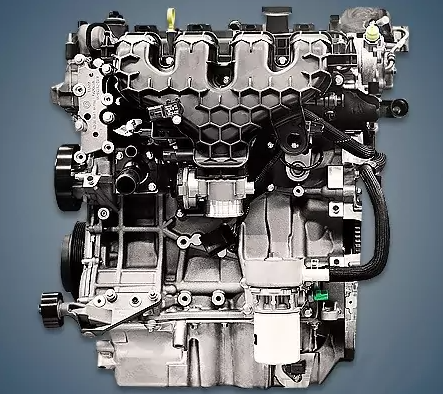
Specifications
| Production years | 2011-2019 |
| Displacement, cc | 1999 |
| Fuel system | direct injection |
| Power output, hp | 200 – 240 |
| Torque output, Nm | 300 – 340 |
| Cylinder block | aluminum R4 |
| Block head | aluminum 16v |
| Cylinder bore, mm | 87.5 |
| Piston stroke, mm | 83.1 |
| Compression ratio | 10.0 |
| Features | intercooler |
| Hydraulic lifters | no |
| Timing drive | chain |
| Phase regulator | Ti-VCT |
| Turbocharging | BorgWarner K03 |
| Recommended engine oil | 5W-30 |
| Engine oil capacity, liter | 5.5 |
| Fuel type | petrol |
| Euro standards | EURO 4/5 |
| Fuel consumption, L/100 km (for Land Rover Freelander 2 Si4 2014) — city — highway — combined |
13.5 7.5 9.6 |
| Engine lifespan, km | ~220 000 |
The engine was installed on:
- Land Rover Discovery Sport 1 (L550) in 2015 – 2019;
- Land Rover Freelander 2 (L359) in 2012 – 2014;
- Land Rover Range Rover Evoque 1 (L538) in 2011 – 2018.
Disadvantages of the Land Rover 204PT engine
Fuel quality is crucial for this direct injection turbo unit.
Low-quality gasoline frequently causes detonation and piston destruction.
The turbine will be destroyed if exhaust manifold welds burst.
The motor’s unreliable Ti-VCT phase regulators are another weakness.
Additionally, leaks from beneath the rear crankshaft oil seal are fairly frequent.