
The first generation Freelander, Rover 75, and MG ZT were equipped with the 2.0-liter Land Rover 204D3 or Freelander 2.0 TD4 engine, which was manufactured between 2000 and 2006 under the 204D2 index. The Bosch Common Rail system replaced the distribution injection pump found in the engine’s initial iterations.
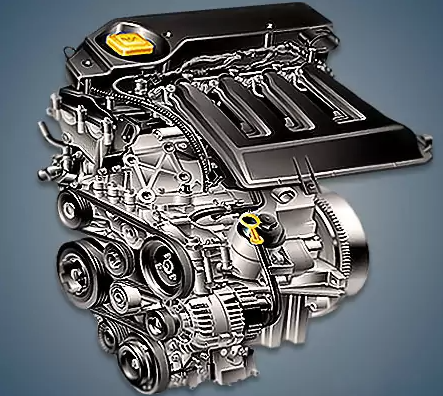
204D3, 256T, and 306D1 are jointly developed engines with BMW.
Specifications
| Production years | 2000-2006 |
| Displacement, cc | 1951 |
| Fuel system | Common Rail |
| Power output, hp | 109 – 112 |
| Torque output, Nm | 260 |
| Cylinder block | cast iron R4 |
| Block head | aluminum 16v |
| Cylinder bore, mm | 84 |
| Piston stroke, mm | 88 |
| Compression ratio | 18.0 |
| Features | DOHC |
| Hydraulic lifters | yes |
| Timing drive | chain |
| Phase regulator | no |
| Turbocharging | Garrett GT1749V |
| Recommended engine oil | 5W-40 |
| Engine oil capacity, liter | 6.8 |
| Fuel type | diesel |
| Euro standards | EURO 3 |
| Fuel consumption, L/100 km (for Land Rover Freelander 2004) — city — highway — combined |
9.1 6.7 7.6 |
| Engine lifespan, km | ~300 000 |
| Weight, kg | 178 |
The engine was installed on:
- Land Rover Freelander 1 (L314) in 2000 – 2006.
Disadvantages of the Land Rover 204D3 engine
This engine has higher fuel quality requirements than Rover diesels; the fuel pressure regulator on the rail is the Common Rail Bosch’s weak point;
Swirl flaps on the intake manifold frequently come loose and fall into the cylinders;
The crankshaft damper pulley needs to be replaced about every 100,000 kilometers; in units of this family, the crankshaft may suddenly burst at high mileage.