
Only the well-liked second-generation Land Rover Range Rover SUV was equipped with the 2.5-liter Land Rover 256T or Range Rover II 2.5 TD engine, which was built between 1994 and 2002. There was only one version of this power unit, which had a 136 horsepower and 270 Nm capacity.
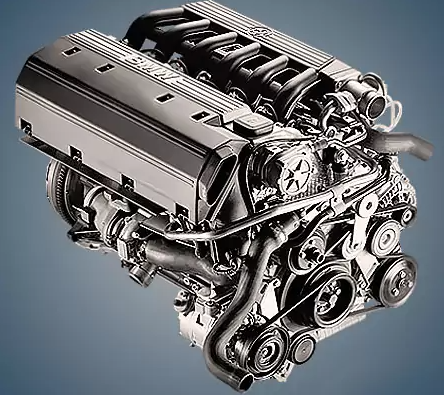
The 204D3, 256T, and 306D1 are jointly developed engines with BMW.
Specifications
| Production years | 1994-2002 |
| Displacement, cc | 2497 |
| Fuel system | prechambers |
| Power output, hp | 136 |
| Torque output, Nm | 270 |
| Cylinder block | cast iron R6 |
| Block head | aluminum 12v |
| Cylinder bore, mm | 80 |
| Piston stroke, mm | 82.8 |
| Compression ratio | 22.0 |
| Features | intercooler |
| Hydraulic lifters | yes |
| Timing drive | chain |
| Phase regulator | no |
| Turbocharging | Mitsubishi TD04-11G-4 |
| Recommended engine oil | 5W-40 |
| Engine oil capacity, liter | 8.7 |
| Fuel type | diesel |
| Euro standards | EURO 1/2 |
| Fuel consumption, L/100 km (for Range Rover II 2000) — city — highway — combined |
11.5 8.2 9.4 |
| Engine lifespan, km | ~300 000 |
The engine was installed on:
- Land Rover Range Rover 2 (P38A) in 1994 – 2002.
Disadvantages of the Land Rover 256T engine
The cylinder head here frequently cracks, and this diesel engine is terrified of overheating;
Chain stretching may cause the valve timing to deviate closer to 150,000 km;
Cracks frequently form in the turbine’s hot section at roughly the same mileage;
Here, saving oil results in the injection pump plunger pair wearing down quickly;
A booster pump failure is typically indicated by a difficult cold start.