
From 2009 to 2014, the company assembled the 5.0-liter Land Rover 508PN gasoline engine and installed it on well-known SUVs like the Range Rover, Range Rover Sport, and Discovery 4. Under its own AJ133 index, this power unit was fitted to Jaguar vehicles.
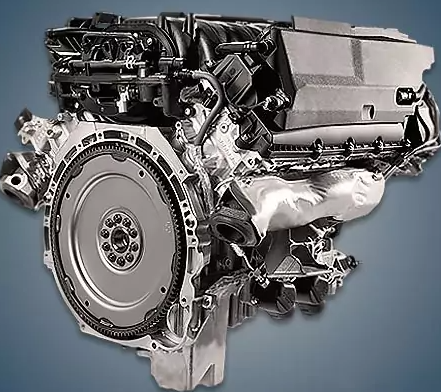
306PS, 428PS, 448PN, 508PN, and 508PS are the AJ-V8 series.
Specifications
| Production years | 2009-2014 |
| Displacement, cc | 4999 |
| Fuel system | direct injection |
| Power output, hp | 375 – 385 |
| Torque output, Nm | 510 – 515 |
| Cylinder block | aluminum V8 |
| Block head | aluminum 32v |
| Cylinder bore, mm | 92.5 |
| Piston stroke, mm | 93 |
| Compression ratio | 11.5 |
| Features | DOHC |
| Hydraulic lifters | no |
| Timing drive | chain |
| Phase regulator | on both shafts |
| Turbocharging | no |
| Recommended engine oil | 5W-20 |
| Engine oil capacity, liter | 8.0 |
| Fuel type | petrol |
| Euro standards | EURO 5 |
| Fuel consumption, L/100 km (for Land Rover Discovery 4 2012) — city — highway — combined |
19.8 10.7 14.1 |
| Engine lifespan, km | ~400 000 |
| Weight, kg | 210 |
The engine was installed on:
- Land Rover Discovery 4 (L319) in 2009 – 2013;
- Land Rover Range Rover 3 (L322) in 2009 – 2012;
- Land Rover Range Rover Sport 1 (L320) in 2009 – 2013.
Disadvantages of the Land Rover 508PN engine
The atmospheric model worries a little less frequently and is more dependable than a motor with a compressor;
The most well-known issue is timing chain stretching that approaches 100,000 kilometers;
Loss of intake or exhaust valve seats occurs infrequently but occasionally; throttle or injector contamination is the most common cause of floating engine speeds;
The water pump and the constantly leaking heat exchanger are two more engine weak points.