
The company’s biggest and priciest SUVs were equipped with the 4.4-liter diesel Land Rover 448DT or Range Rover 4.4 TDV8 engine, which was manufactured between 2010 and 2020. This motor and Ford Power Stroke diesels were assembled at the company’s Mexican facility.
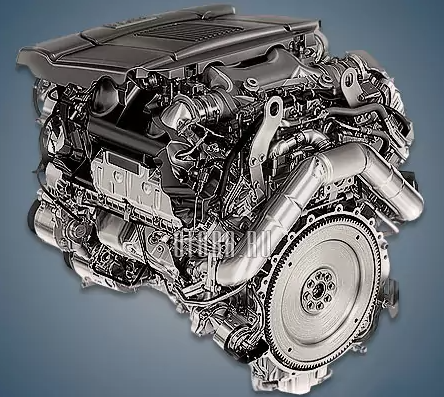
The 224DT, 276DT, 306DT, 368DT, and 448DT engines are jointly developed with Ford.
Specifications
| Production years | 2010-2020 |
| Displacement, cc | 4367 |
| Fuel system | Common Rail |
| Power output, hp | 313 – 339 |
| Torque output, Nm | 700 – 740 |
| Cylinder block | cast iron V8 |
| Block head | aluminum 32v |
| Cylinder bore, mm | 84 |
| Piston stroke, mm | 98.5 |
| Compression ratio | 16.1 |
| Features | DOHC |
| Hydraulic lifters | yes |
| Timing drive | chain |
| Phase regulator | no |
| Turbocharging | Garrett GT1549 + VTC |
| Recommended engine oil | 5W-30 |
| Engine oil capacity, liter | 9.5 |
| Fuel type | diesel |
| Euro standards | EURO 5/6 |
| Fuel consumption, L/100 km (for Range Rover TDV8 2011) — city — highway — combined |
11.5 8.2 9.4 |
| Engine lifespan, km | ~400 000 |
The engine was installed on:
- Land Rover Range Rover 3 (L322) in 2010 – 2012;
- Range Rover 4 (L405) in 2012 – 2020;
- Land Rover Range Rover Sport 2 (L494) in 2014 – 2020.
Disadvantages of the Land Rover 448DT engine
Although this motor is thought to be the most dependable in the line, minor issues may cause you distress;
First-generation diesel engines have a faulty pipeline that drains oil from the turbine;
The displacement of the tension roller causes the drive belt to break even on the earliest engines; air pipes are a major problem because they just tan and crack;
Additionally, a front crankshaft oil seal, an oil pump, and a heat exchanger frequently leak here.