
From 1991 to 1999, the UK produced the 2.0-liter Rover 20T4G turbo engine, which was fitted to charged versions of the company’s well-known models with an index of 200, 400, 600, and 800. Because of the PG1 gearbox’s weakness, engineers had to restrict the engine’s torque.
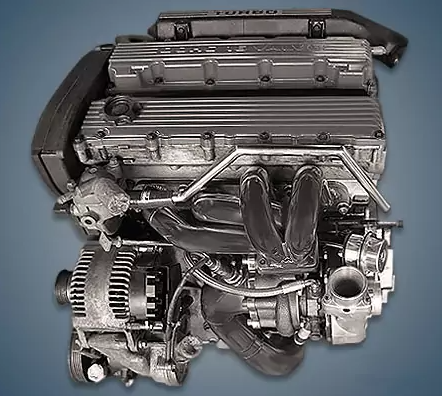
M/T-series engines: 20T4H, 20M4F, and 20T4G.
Specifications
| Production years | 1991-1999 |
| Displacement, cc | 1994 |
| Fuel system | distributed injection |
| Power output, hp | 180 – 200 |
| Torque output, Nm | 216 – 237 |
| Cylinder block | cast iron R4 |
| Block head | aluminum 16v |
| Cylinder bore, mm | 84.45 |
| Piston stroke, mm | 88.9 |
| Compression ratio | 8.5 |
| Features | DOHC |
| Hydraulic lifters | yes |
| Timing drive | belt |
| Phase regulator | no |
| Turbocharging | Garrett TB2555 |
| Recommended engine oil | 5W-30 |
| Engine oil capacity, liter | 5.9 |
| Fuel type | petrol |
| Euro standards | EURO 2 |
| Fuel consumption, L/100 km (for Rover 620 Ti Vitesse 1996) — city — highway — combined |
12.3 8.1 9.7 |
| Engine lifespan, km | ~250 000 |
| Weight, kg | 155.1 |
The engine was installed on:
- Rover 200 II (XW) in 1993 – 1995;
- Rover 400 I (XW) in 1993 – 1995;
- Rover 600 I (RH) in 1994 – 1999;
- Rover 800 I (XS) in 1992 – 1999.
Disadvantages of the Rover 20T4G engine
The cylinder head gasket frequently breaks here, and this turbo engine is terrified of overheating;
Camshaft and seal oil leaks are also frequent;
The unpredictable MEMS fuel injection system causes the owner numerous issues;
The turbine’s hot part frequently cracks, making it unreliable;
The timing belt must be replaced every 100,000 kilometers in accordance with the regulations; otherwise, the valves will bend.