
From 1995 to 2000, the company manufactured the 2.0-liter Rover 20T2R diesel engine, which was installed on the basic modifications of models with an index of 200 in the RF body or 400 in the RT body. The European models of the sixth generation Honda Civic had the same power unit.
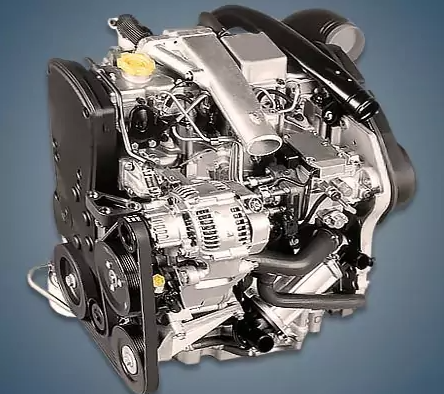
L-series engines: 20T2R and 20T2N.
Specifications
| Production years | 1995-2000 |
| Displacement, cc | 1994 |
| Fuel system | direct injection |
| Power output, hp | 86 |
| Torque output, Nm | 170 |
| Cylinder block | cast iron R4 |
| Block head | aluminum 8v |
| Cylinder bore, mm | 84.45 |
| Piston stroke, mm | 88.9 |
| Compression ratio | 19.5 |
| Hydraulic lifters | yes |
| Timing drive | belt |
| Phase regulator | no |
| Turbocharging | Garrett GT1549S |
| Recommended engine oil | 5W-40 |
| Engine oil capacity, liter | 4.0 |
| Fuel type | diesel |
| Euro standards | EURO 2 |
| Fuel consumption, L/100 km (for Rover 200 1998) — city — highway — combined |
7.8 4.5 5.7 |
| Engine lifespan, km | ~270 000 |
| Weight, kg | 157.4 |
The engine was installed on:
- Rover 200 III (RF) in 1995 – 1999;
- Rover 400 II (RT) in 1995 – 1999;
- Honda Civic 6 (EJ) in 1998 – 2000.
Disadvantages of the Rover 20T2R engine
This diesel engine’s rarity and lack of spare parts are its problems, not its dependability;
Here, a Bosch VP21 mechanical injection pump is utilized instead of an intercooler;
The turbine frequently drives oil up to 100,000 kilometers and has limited resources;
This engine’s short-lived supports and oil cooler tubes are additional weaknesses. The timing belt is made for 100,000 kilometers, and when it breaks, the valves typically bend.