
From 2009 to 2018, the company’s plant assembled the 1.6-liter Peugeot EP6C or 5FS engine, which was installed on numerous well-known concern models, including the 208, 308, 408, 3008, and 5008. This unit had a lower power version with its own index, EP6CB.
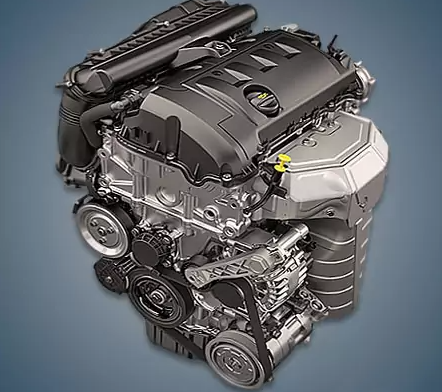
The Prince family of atmospheric engines includes the EP3, EP3C, EP6, EP6C, and EP6CB.
An upgraded version of the EP6 gasoline engine, developed in association with BMW, was unveiled at the start of 2009. This unit is referred to as N16B16A on Mini cars. The design’s fundamental components—an aluminum cylinder block with cast-iron liners, a 16-valve cylinder head with hydraulic compensators, distributed fuel injection, a timing chain, two shafts of Vanos-type phase regulators, and a Valvetronic throttleless control system—remain unchanged.
A new vacuum pump, an even more advanced water pump with an electromagnetic clutch, and a new oil pump with both pressure and flow control were the primary distinctions. In order to comply with the stringent Euro 5 environmental regulations, the motor was fitted with an advanced catalyst; the crankshaft liners were given unique grooves to increase resource efficiency and decrease friction; and the lubricant pressure sensor was eventually transferred from the block head to the oil filter bracket.
Specifications
| Production years | 2009-2018 |
| Displacement, cc | 1598 |
| Fuel system | injector |
| Power output, hp | 120 (5FS and 5FL or VTI 120) 114 – 116 (5FJ and 5FH or VTI 115) |
| Torque output, Nm | 160 |
| Cylinder block | aluminum R4 |
| Block head | aluminum 16v |
| Cylinder bore, mm | 77 |
| Piston stroke, mm | 85.8 |
| Compression ratio | 11.0 |
| Hydraulic lifters | yes |
| Timing drive | chain |
| Phase regulator | yes |
| Turbocharging | no |
| Recommended engine oil | 5W-30, 5W-40 |
| Engine oil capacity, liter | 4.3 |
| Fuel type | petrol |
| Euro standards | EURO 5 |
| Fuel consumption, L/100 km (for Peugeot 3008 2012) — city — highway — combined |
9.2 5.3 6.7 |
| Engine lifespan, km | ~200 000 |
| Weight, kg | 118 |
The engine was installed on:
- Citroen C3 II (A51) in 2009 – 2015;
- Citroen C3 Picasso II in 2009 – 2015;
- Citroen C4 II (B71) in 2010 – 2014;
- Citroen C4 Picasso I (B58) in 2010 – 2013; C4 Picasso II (B78) in 2013 – 2014;
- Citroen C5 II (X7) in 2010 – 2015;
- Citroen DS3 I (A55) in 2010 – 2014;
- Citroen DS4 I (B75) in 2011 – 2015;
- Citroen Berlingo II (B9) in 2010 – 2016;
- Peugeot 208 I (A9) in 2012 – 2015;
- Peugeot 2008 I (A94) in 2013 – 2015;
- Peugeot 308 I (T7) in 2011 – 2015;
- Peugeot 3008 I (T84) in 2009 – 2015;
- Peugeot 408 I (T73) in 2012 – 2017; 408 II (T93) in 2014 – 2018;
- Peugeot 508 I (W2) in 2011 – 2014;
- Peugeot 5008 I (T87) in 2009 – 2015;
- Peugeot Partner II (B9) in 2010 – 2016.
Disadvantages of the Peugeot EP6C engine
Although the timing chain in the updated units has been revised and its resources have increased significantly, it still needs to be replaced at low mileage (it was 50,000 km before, but it is now 100–150 thousand km). The benefit is that there are many inexpensive alternatives available.
The new oil pump, which has the capability to modify the lubricant flow and pressure, frequently wedges, and there is a risk that this could occur in the minimum performance mode. The motor’s liners and possibly the camshaft will then rapidly pull up.
The Valvetronic system’s malfunctions are the subject of numerous complaints on specialized forums. The Vanos phase regulator valves were given a filter as part of the update, but their resource did not rise.
These motors still frequently have an oil burner because of piston rings or valve stem seal wear, lubricant or antifreeze leaks are frequent, valve seat falls are documented, and the pump and thermostat are rarely used.