
From 2010 to 2018, the company produced the 1.6-liter Peugeot EP6CB or 5FK engine, which was limited to a few iterations of the Peugeot Partner and the second generation Citroen Berlingo. According to some sources, a motor that has been modified to meet Euro 6 environmental standards has the EP6F index.
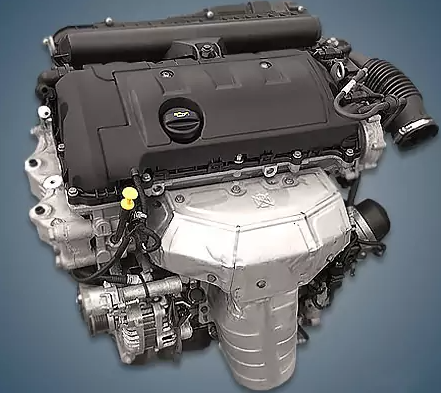
The Prince family of atmospheric engines includes the EP3, EP3C, EP6, EP6C, and EP6CB.
Specifications
| Production years | 2010-2018 |
| Displacement, cc | 1598 |
| Fuel system | distributed injection |
| Power output, hp | 98 |
| Torque output, Nm | 152 |
| Cylinder block | aluminum R4 |
| Block head | aluminum 16v |
| Cylinder bore, mm | 77 |
| Piston stroke, mm | 85.8 |
| Compression ratio | 9.6 |
| Features | DOHC |
| Hydraulic lifters | yes |
| Timing drive | chain |
| Phase regulator | yes |
| Turbocharging | no |
| Recommended engine oil | 5W-30 |
| Engine oil capacity, liter | 4.2 |
| Fuel type | petrol |
| Euro standards | EURO 5/6 |
| Fuel consumption, L/100 km (for Peugeot Partner Tepee 2017) — city — highway — combined |
8.2 5.3 6.4 |
| Engine lifespan, km | ~240 000 |
| Weight, kg | 110 |
The engine was installed on:
- Peugeot Partner II (B9) in 2010 – 2018;
- Citroen Berlingo II (B9) in 2010 – 2018.
Disadvantages of the EP6CB engine
Even though the EP6C engine has been significantly simplified, there are still enough issues with it.
A small resource, typically less than 100,000 km, distinguishes the timing chain and its tensioner.
An oil burner is frequently present, usually as a result of rings or cap wear.
Additionally, every unit in this family is vulnerable to frequent leaks of antifreeze and oil.
A thermostat and a constantly running water pump are two of this motor’s weak points.