
The largest and most potent models of the French company, including the 406 and 605, were equipped with the 3.0-liter Peugeot ES9J4 or XFZ engine, which was manufactured alongside Renault between 1996 and 2000. Due to a minor update in 2000, this engine was given a new index, ES9J4S.
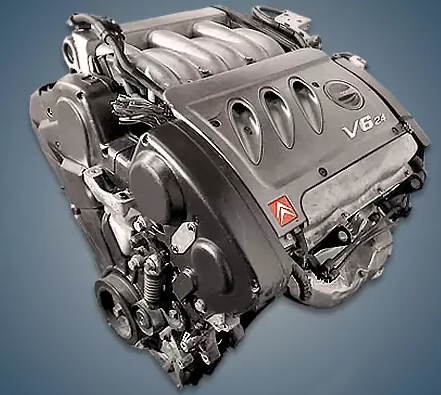
The ES family of engines includes the ES9J4, ES9J4S, and ES9A.
The engine was mounted on:
- Peugeot 406 I (D8/D9) in 1997 – 2000;
- Peugeot 605 I (Y30) in 1996 – 1999;
- Citroen Xantia I (X1/X2) in 1997 – 2000;
- Citroen XM I (Y3/Y4) in 1997 – 2000.
Specifications
| Production years | 1996-2000 |
| Displacement, cc | 2946 |
| Fuel system | injector |
| Power output, hp | 194 |
| Torque output, Nm | 267 |
| Cylinder block | aluminum V6 |
| Block head | aluminum 24v |
| Cylinder bore, mm | 87 |
| Piston stroke, mm | 82.6 |
| Compression ratio | 10.5 |
| Features | no |
| Hydraulic lifters | yes |
| Timing drive | belt |
| Phase regulator | no |
| Turbocharging | no |
| Recommended engine oil | 5W-40 |
| Engine oil capacity, liter | 4.75 |
| Fuel type | petrol |
| Euro standards | EURO 2/3 |
| Fuel consumption, L/100 km (for Peugeot 605 1999) — city — highway — combined |
15.9 8.0 10.9 |
| Engine lifespan, km | ~300 000 |
| Weight, kg | 190 |
Disadvantages of the ES9J4 engine
Numerous electrical issues are the primary cause of the owner’s problems.
Many gaskets and seals leak when there is even a small amount of overheating.
Driving to the last is fraught with overhauls, and timing belt replacement is highly costly.
Candles and coils are quickly rendered inoperable by low-quality gasoline.
Bad fuel cannot be handled by lambda probes, and it is expensive to replace all four of them.