
The company only produced the 2.0-liter Peugeot EW10D or RLZ engine between 2001 and 2004, and it was only used in the Peugeot 406 and Citroen C5, two of the French company’s well-known models. This motor was swiftly discontinued after becoming well-known for its erratic fuel system.
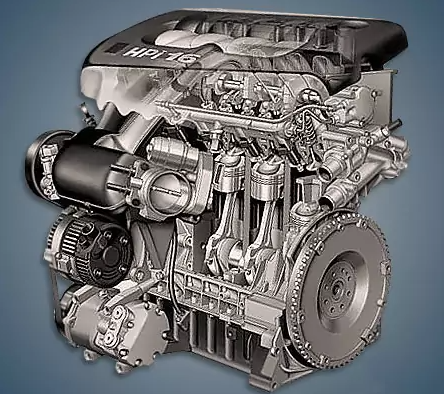
The EW family of engines includes the EW7J4, EW7A, EW10J4, EW10D, EW10A, and EW12J4.
The engine was mounted on:
- Peugeot 406 I (D8/D9) in 2001 – 2004;
- Citroen C5 I (X3/X4) in 2001 – 2003.
Specifications
| Production years | 2001-2004 |
| Displacement, cc | 1997 |
| Fuel system | direct injection |
| Power output, hp | 140 |
| Torque output, Nm | 192 |
| Cylinder block | aluminum R4 |
| Block head | aluminum 16v |
| Cylinder bore, mm | 85 |
| Piston stroke, mm | 88 |
| Compression ratio | 11.4 |
| Features | hpi system |
| Hydraulic lifters | yes |
| Timing drive | belt |
| Phase regulator | at the intake |
| Turbocharging | no |
| Recommended engine oil | 5W-40 |
| Engine oil capacity, liter | 4.25 |
| Fuel type | petrol |
| Euro standards | EURO 4 |
| Fuel consumption, L/100 km (for Peugeot 406 2003) — city — highway — combined |
10.3 6.0 7.5 |
| Engine lifespan, km | ~250 000 |
| Weight, kg | 140 |
Disadvantages of the EW10D engine
This engine’s primary issue is the erratic direct fuel injection system;
Not only does it frequently break, but fixing it calls for a specialized service;
After 70–80 thousand kilometers, the phase regulator frequently fails already;
Oil leaks from beneath the valve covers are a common occurrence for many owners;
Strong vibrations are typically caused by critical wear on the power unit’s pillows.