
From 1999 to 2010, the company produced the 2.0-liter Peugeot EW10J4 or RFN engine, which was fitted to a number of the company’s well-known models, including the 206, 307, 406, 407, 806, and 807. A forced version of the unit with the index EW10J4S or RFK was available for 180 horsepower and 200 Nm.
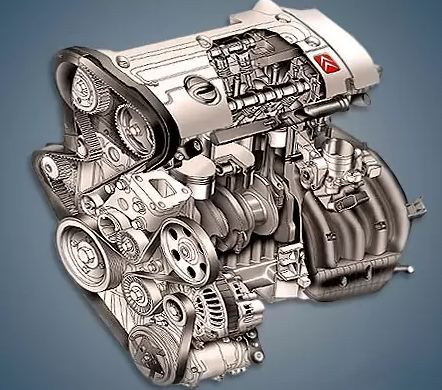
The EW family of engines includes the EW7J4, EW7A, EW10J4, EW10D, EW10A, and EW12J4.
Specifications
| Production years | 1999-2010 |
| Displacement, cc | 1997 |
| Fuel system | injector |
| Power output, hp | 136 |
| Torque output, Nm | 190 |
| Cylinder block | aluminum R4 |
| Block head | aluminum 16v |
| Cylinder bore, mm | 85 |
| Piston stroke, mm | 88 |
| Compression ratio | 10.8 |
| Features | no |
| Hydraulic lifters | yes |
| Timing drive | belt |
| Phase regulator | no |
| Turbocharging | no |
| Recommended engine oil | 5W-40 |
| Engine oil capacity, liter | 4.25 |
| Fuel type | petrol |
| Euro standards | EURO 3 |
| Fuel consumption, L/100 km (for Peugeot 406 2002) — city — highway — combined |
11.5 6.5 8.3 |
| Engine lifespan, km | ~300 000 |
| Weight, kg | 135 |
The engine was installed on:
- Peugeot 206 I (T1) in 1999 – 2004;
- Peugeot 307 I (T5/T6) in 2001 – 2005;
- Peugeot 406 I (D8/D9) in 1999 – 2004;
- Peugeot 407 I (D2) in 2004 – 2006;
- Peugeot 806 I (U60) in 1999 – 2002;
- Peugeot 807 I (V2) in 2002 – 2005;
- Citroen Xsara I (N6/N7) in 1999 – 2003;
- Citroen Xsara Picasso I (N68) in 2003 – 2007;
- Citroen C4 I (B51) in 2004 – 2005;
- Citroen C5 I (X3/X4) in 2000 – 2005.
Disadvantages of the EW10J4 engine
Owners of vehicles equipped with this power unit typically complain about oil waste;
Additionally, grease frequently leaks from beneath the valve cover or presses against the breather;
Failures of ignition system parts, particularly coils, rank second in frequency;
Floating engine speed is caused by contaminated throttle and idle control;
Strong engine vibrations are typically caused by the pillows’ severe wear.