
From 2006 to 2010, the Peugeot EP6DT or 5FX THP 150, a 1.6-liter turbocharged engine, was manufactured. It was fitted to more advanced models like the Citroen C4 and the Peugeot 207 and 308. A 5FT engine derated to 140 horsepower was available for the AL4 automatic transmission in addition to the 150-horsepower 5FX.
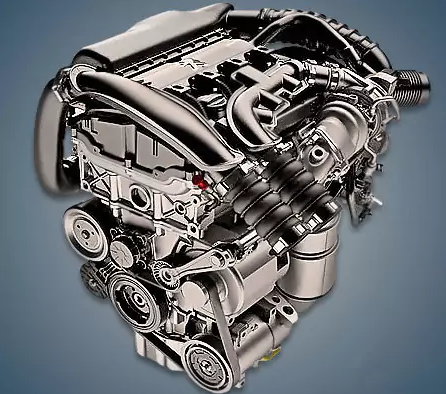
The Prince family of turbo engines includes the EP6DT, EP6DTS, EP6CDT, EP6CDTM, EP6CDTR, EP6CDTX, EP6FDT, EP6FDTM, and EP6FDTR.
The 1.6-liter Prince series turbocharged engine made its debut on the Peugeot 207 CC convertible in 2006. A little later, the 150-horsepower 5FX model with an automatic transmission was upgraded to a 140-horsepower 5FT engine. With an aluminum cylinder block with cast iron liners, an aluminum 16-valve DOHC cylinder head with hydraulic lifters, a timing chain drive, an electric pump, an adjustable oil pump, and a BorgWarner K03 TwinScroll turbine with an intercooler, the design was highly sophisticated.
The turbo engines in this series lacked a Valvetronic system and only had a Vanos phase regulator on the exhaust camshaft rather than both, in contrast to the naturally aspirated engines.
Specifications
| Production years | 2006-2010 |
| Displacement, cc | 1598 |
| Fuel system | direct injection |
| Power output, hp | 140 (5FT or THP 140) 150 (5FX or THP 150) 156 (5FR or THP 156) |
| Torque output, Nm | 240 |
| Cylinder block | aluminum R4 |
| Block head | aluminum 16v |
| Cylinder bore, mm | 77 |
| Piston stroke, mm | 85.8 |
| Compression ratio | 10.5 |
| Hydraulic lifters | yes |
| Timing drive | chain |
| Phase regulator | at the exhaust |
| Turbocharging | TwinScroll |
| Recommended engine oil | 5W-30, 5W-40 |
| Engine oil capacity, liter | 4.25 |
| Fuel type | petrol |
| Euro standards | EURO 4 |
| Fuel consumption, L/100 km (for Peugeot 308 CC 2009) — city — highway — combined |
10.3 5.8 7.2 |
| Engine lifespan, km | ~200 000 |
| Weight, kg | 135 |
The engine was installed on:
- Citroen C4 I (B51) in 2008 – 2010;
- Citroen C4 Picasso I (B58) in 2008 – 2010;
- Peugeot 207 I (A7) in 2006 – 2009;
- Peugeot 308 I (T7) in 2007 – 2009.
Disadvantages of the EP6DT engine
The Prince series’ turbo engines have a rather erratic direct injection system, which is not only fuel-intensive but also prone to fast valve coking. Furthermore, an injection pump that frequently serves less than 50,000 kilometers is utterly unreliable.
In the initial years of production, the timing chain’s components might need to be replaced by 30,000 kilometers.After that, the resource increased marginally, but it was still only 50,000 to 70,000 kilometers. The tensioner, which has already undergone multiple revisions, is the system’s weak point.
These turbo engines frequently use oil from the first few kilometers, but a significant oil burn typically starts after the rings, oil scraper rings, or crankcase ventilation membrane wear. The camshafts will be pulled almost instantly if the lubrication level is neglected.
In addition to the water pump, thermostat, and coolant temperature sensor being unreliable, this unit has an extremely intense thermal regime. Their failure frequently results in valve seat loss or cylinder head cracks.
The vacuum pump frequently wedges, which increases the risk of a camshaft failure and a broken timing chain, the power units in this family frequently experience oil or antifreeze leaks, and coking of the lubricant in the oil supply pipes significantly shortens the turbine life.