
Since 1998, the Cleon plant has assembled the 2.0-liter 16-valve Renault F4R engine, which is still found in some of the company’s models intended for emerging markets. Due to its installation on Duster and Kaptur, this unit has spread widely.
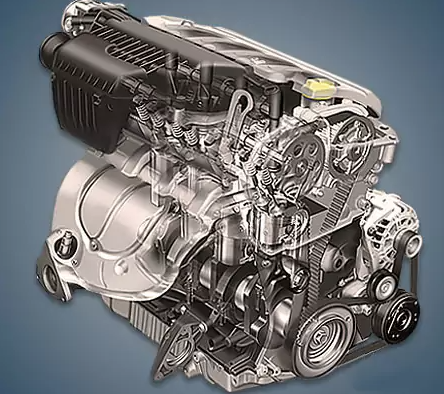
F3P, F4P, F7P, F2R, F3R, F4R, F4Rt, F5R, and F7R are all part of the F-series.
A 2.0-liter power unit with 16 valves made its debut on the Espace 3 model in 1998. It was different from the series’ 8-valve engines in that it had an intake dephaser and an ignition system with separate coils in addition to a cylinder head with two camshafts and hydraulic lifters. A timing belt drive and an in-line, four-cylinder cast-iron block without sleeves are also available.
The forced modification of the unit for sports versions of the Clio is worth writing about separately. This engine was increased to 172 horsepower for the Clio II RS by Mecachrome engineers in 1999, and an even more potent 182 horsepower engine was added to the redesigned Clio II RS in 2004. 197 and 200 horsepower versions of the third-generation Clio were used in sports modifications.
The engine was mounted on:
- Renault Clio 2 (X65) in 1999 – 2005; Clio 3 (X85) in 2006 – 2012;
- Renault Duster 1 (HS) since 2010;
- Renault Kaptur 1 (H5) since 2016;
- Renault Espace 3 (J66) in 1998 – 2002; Espace 4 (J81) in 2002 – 2008;
- Renault Laguna 1 (X56) in 1999 – 2001; Laguna 2 (X74) in 2002 – 2007;
- Renault Megane 1 (X64) in 2001 – 2002; Megane 2 (X84) in 2002 – 2009;
- Renault Scenic 1 (J64) in 1999 – 2003; Scenic 2 (J84) in 2003 – 2008;
- Nissan Terrano 3 (D10) since 2014.
Specifications
| Production years | since 1998 |
| Displacement, cc | 1998 |
| Fuel system | injector |
| Power output, hp | 135 – 140 (1998 – 2009) 135 – 143 (after 2010) 172 – 200 (sports) |
| Torque output, Nm | 185 – 195 (1998 – 2009) 195 (after 2010) 200 – 215 (sports) |
| Cylinder block | cast iron R4 |
| Block head | aluminum 16v |
| Cylinder bore, mm | 82.7 |
| Piston stroke, mm | 93 |
| Compression ratio | 9.8 – 10 (1998 – 2009) 11 – 11.2 (after 2010) 11 – 11.5 (sports) |
| Hydraulic lifters | yes |
| Timing drive | belt |
| Phase regulator | yes |
| Turbocharging | no |
| Recommended engine oil | 5W-30, 5W-40 |
| Engine oil capacity, liter | 5.9 |
| Fuel type | petrol |
| Euro standards | EURO 3/4 (1998 – 2009) EURO 5 (after 2010) EURO 3/4 (sports) |
| Fuel consumption, L/100 km (for Renault Duster 2017) — city — highway — combined |
10.1 6.5 7.8 |
| Engine lifespan, km | ~350 000 |
| Weight, kg | 139 |
Disadvantages of the Renault F4R engine
When switching to EURO 5, the unit’s compression ratio was increased to 11, and eventually to 11.2 overall. The initial versions of the device had a compression ratio of roughly 10 and were thought to be very dependable. Regular use of low-octane gasoline causes piston damage and detonation.
The phase regulator on the intake camshaft is the engine’s troublesome component. It frequently begins to crack before 100,000 kilometers, and replacement is costly.
Oil consumption frequently reaches a liter per 1000 kilometers closer to 100,000 kilometers of run. Piston rings and hardened valve stem seals are typically the cause.
Electrical failures are a constant problem for a generally dependable power unit. The crankshaft position sensor and ignition coils malfunction most frequently.
Many owners of vehicles with these engines deal with the engine’s erratic performance. We advise using specialized tools to clean the nozzles after flushing the throttle.
This power unit’s rear support is another rather meager resource. Additionally, lubricant leaks are frequent, particularly along the rear crankshaft oil seal.