
Since 2014, the Brazilian plant has been producing the 1.0-liter Renault H4D or 1.0 SCe engine, which powers vehicles like the Clio and Twingo, as well as the third-generation Dacia Logan and Sandero. This power unit is referred to as HR10DE on a Nissan vehicle and M281 on Smart.
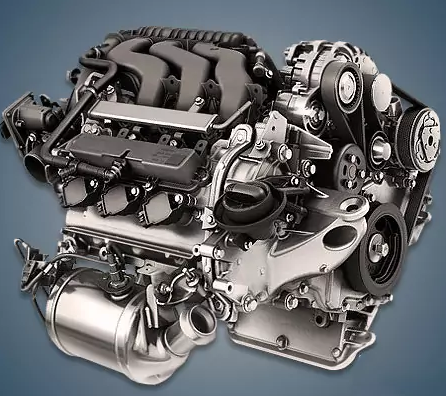
B4A, B4D, H4D, H4M, M4R, M5R, 2TR, V4U, and V4Y are the SCe line.
Specifications
| Production years | since 2014 |
| Displacement, cc | 999 |
| Fuel system | distributed injection |
| Power output, hp | 61 – 73 |
| Torque output, Nm | 91 – 95 |
| Cylinder block | aluminum R3 |
| Block head | aluminum 12v |
| Cylinder bore, mm | 72.2 |
| Piston stroke, mm | 81.3 |
| Compression ratio | 10.5 |
| Features | DOHC |
| Hydraulic lifters | no |
| Timing drive | chain |
| Phase regulator | at the intake |
| Turbocharging | no |
| Recommended engine oil | 5W-30 |
| Engine oil capacity, liter | 3.0 |
| Fuel type | petrol |
| Euro standards | EURO 6 |
| Fuel consumption, L/100 km (for Renault Twingo 2017) — city — highway — combined |
5.6 3.9 4.5 |
| Engine lifespan, km | ~250 000 |
| Weight, kg | 81 |
The engine was installed on:
- Renault Clio 5 (BF) since 2019;
- Renault Twingo 3 (C07) since 2014;
- Dacia Logan 3 (LJI) since 2020;
- Dacia Sandero 3 (BJI) since 2020;
- Nissan Micra 5 (K14) in 2017 – 2019 (as HR10DE);
- Smart Fortwo 3 (C453) in 2014 – 2019 (as M281);
- Smart Forfour 2 (W453) in 2014 – 2019 (as M281).
Disadvantages of the Renault H4D engine
The most important thing is to keep an eye on the cooling system, particularly the rear engine;
A few instances of timing chain replacement on a run of roughly 100,000 kilometers can be found on specialized forums;
Oil consumption happens after 100,000 kilometers because of oil scraper rings; there are no hydraulic lifters, and the valve clearance needs to be adjusted every 100,000 kilometers.