
Only the original Laguna model and the redesigned Safrane were equipped with the 2.0-liter 16-valve Renault N7Q engine, which was manufactured in Sweden between 1995 and 2000. This power unit, designated B4204S, is basically a Volvo engine.
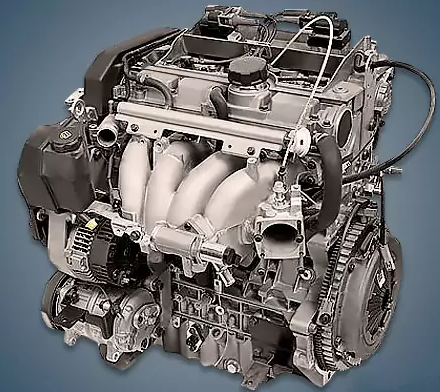
N7U is another member of the N-series.
The engine was mounted on:
- Renault Laguna 1 (X56) in 1995 – 1999;
- Renault Safrane 1 (B54) in 1996 – 2000.
Specifications
| Production years | 1995-2000 |
| Displacement, cc | 1948 |
| Fuel system | injector |
| Power output, hp | 136 – 140 |
| Torque output, Nm | 176 – 182 |
| Cylinder block | aluminum R4 |
| Block head | aluminum 16v |
| Cylinder bore, mm | 83 |
| Piston stroke, mm | 90 |
| Compression ratio | 10.5 |
| Features | DOHC |
| Hydraulic lifters | yes |
| Timing drive | belt |
| Phase regulator | no |
| Turbocharging | no |
| Recommended engine oil | 5W-40 |
| Engine oil capacity, liter | 6.2 |
| Fuel type | petrol |
| Euro standards | EURO 2 |
| Fuel consumption, L/100 km (for Renault Laguna 1998) — city — highway — combined |
12.1 7.1 8.5 |
| Engine lifespan, km | ~300 000 |
| Weight, kg | 143 |
Disadvantages of the Renault N7Q engine
Owners of Renault vehicles with such engines are typically concerned about oil separator grease leaks;
An impressive oil consumption frequently occurs as a result of clogged crankcase ventilation;
This power unit is afraid of overheating, and the gasket breaks through here very quickly; the timing belt does not always serve the necessary 90,000 km, and when it breaks, the valves bend;
The thermostat, fuel pump, pump, and engine mounts are additional weaknesses.