
The V6 PRV lineup includes the 3.0-liter 12-valve Renault Z7X engine. Introduced in 1974, this family of V-shaped 6-cylinder engines included turbocharged models with a volume of 2.5 to 3 liters. The Renault 25, Safrane, Laguna, and Espace models have them under the hood.
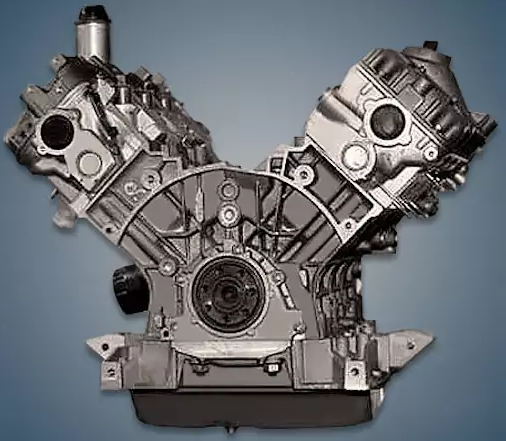
In 1966, engineers from Peugeot-Citroen and Renault started working together to develop a new family of multi-cylinder engines; later, Volvo joined them. Three years later, a joint venture was established in Duvrin, and the first V6 power unit came off the assembly line in 1974.
The V8 engine was originally designed by the engineers, but due to the fuel crisis, two cylinders had to be removed. For this reason, its camber angle is 90° rather than the typical 60° for V6 units. Approximately one million copies had been gathered by 1998.
Supercars and sports vehicles such as the Alpine GT, Helem V6, UMM Alter II, Venturi 260 LM, and of course the DeLorean DMC-12 all used this engine.
Specifications
| Start of production | 1974 |
| Displacement, cc | 2963 |
| Fuel system | injector |
| Power output, hp | 165 – 170 (atmospheric version) 268 (Bi-Turbo version) |
| Torque output, Nm | 230 – 235 (atmospheric version) 365 (Bi-Turbo version) |
| Cylinder block | V6 |
| Valves per cylinder | 2 |
| Cylinder bore, mm | 93 |
| Piston stroke, mm | 72.7 |
| Compression ratio | 9.6 (atmospheric version) 7.6 (Bi-Turbo version) |
| Weight, kg | 190 |
Disadvantages of the Z7X engine
The most common reason for service calls is when a sensor malfunctions and the engine fails to start, stalls, or twitches. Contacts are oxidized, wiring rots, and fuses and relays frequently blow out. particularly if the vehicle is left idle for an extended period of time.
Air leakage through cracks in the vacuum tubes leading to the MAP (Manifold Absolute Pressuresensor) sensor is typically linked to unstable motor operation. Less frequently, a malfunctioning fuel pump or a dirty air damper are to blame.
The power unit frequently trips due to an unreliable ignition system. The coil, distributor, high-voltage wires, or candles could be the cause.