
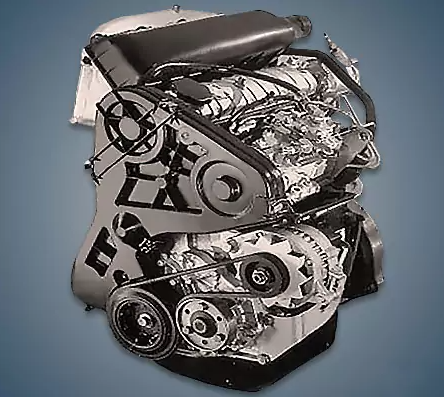
From 1982 until 1994, the company assembled the 1.6-liter Renault F8M or 1.6 D diesel engine, which was fitted to models with indexes 5, 9, and 11 as well as Express and Volvo 340/360. This motor marked the beginning of the French concern’s diesel engine history for passenger cars.
F8Q, F9Q, and F9Qt are additional F-series diesels.
The first engine from the Renault F-series powertrain line was released in 1982 and had a cylinder block without liners and an overhead camshaft. It was a pre-chamber diesel engine with a timing belt drive, a traditional Bosch VE mechanical injection pump, an aluminum 8-valve cylinder head without hydraulic lifters, and a cast-iron block.
The second generation of the device, which had a different valve cover, debuted in 1987. Cylinder head cracking, a proprietary issue with Renault diesels, first surfaced when the cylinder head design was changed to lessen engine noise.
The engine was mounted on:
- Renault 5 (C40) in 1985 – 1996;
- Renault 9 (X42) in 1982 – 1988;
- Renault 11 (B37) in 1982 – 1988;
- Renault Express 1 (X40) in 1985 – 1994;
- Volvo 340 in 1985 – 1991 (as D16);
- Volvo 360 in 1984 – 1989 (as D16).
Specifications
| Production years | 1982-1994 |
| Displacement, cc | 1595 |
| Fuel system | prechambers |
| Power output, hp | 54 – 56 |
| Torque output, Nm | 98 – 102 |
| Cylinder block | cast iron R4 |
| Block head | aluminum 8v |
| Cylinder bore, mm | 78 |
| Piston stroke, mm | 83.5 |
| Compression ratio | 22.5 |
| Hydraulic lifters | no |
| Timing drive | belt |
| Turbocharging | no |
| Recommended engine oil | 10W-40, 15W-40 |
| Engine oil capacity, liter | 5.9 |
| Fuel type | diesel |
| Euro standards | EURO 0 |
| Fuel consumption, L/100 km (for Renault Express 1986) — city — highway — combined |
8.3 5.2 6.4 |
| Engine lifespan, km | ~400 000 |
| Weight, kg | 140 |
Disadvantages of the Renault F8M engine
This family of diesels cannot withstand overheating, and the head of the block frequently causes them. Following the 1987 modernization, the cylinder head also started to crack, usually near the prechambers.
Since the Bosch VE mechanical high-pressure fuel pump is very dependable and rarely has issues, thrust failures are typically caused by nozzles and their sprayers.
At first, there was no difference in the dependability of the pipes in these engines, and in older models, they frequently cracked. Therefore, looking for air leaks is the first step in this diagnosis.
Gaskets and seals are rented out due to aging and frequent overheating in the power unit. Oil typically seeps through the crankshaft oil seals or from beneath the valve cover.
Additionally, there is extremely poor wiring, which is linked to numerous electrical malfunctions.