
From 1999 to 2014, the company produced the Renault G9U or 2.5 DCI, a 2.5-liter diesel engine that was installed on the well-known Master and Trafic minibuses in their second generation. Similar models like the Nissan Interstar, Opel Vivaro, and Movano also had this diesel engine installed.
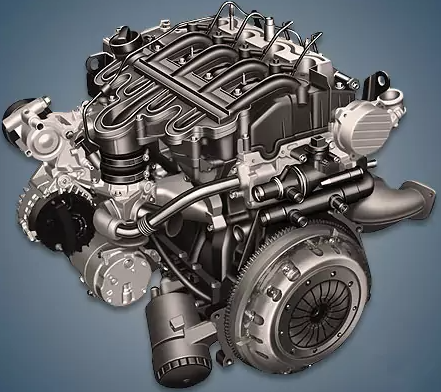
The G8T and G9T are also part of the G-series diesel line.
The second generation of the Renault Master minibus introduced two new diesel engines with the Bosch Common Rail fuel system in 1999: the 2.2-liter G9T and the 2.5-liter G9U. These motors had a combined timing drive in which the crankshaft used gears, one of which had a belt pulley that turned two camshafts in the cylinder head, to rotate the pump and injection pump. Additionally, an oil pump with its own chain drive and a block of balancer shafts were present in the pan.
Other than that, these motors had a fairly standard design: a Garrett GT1752V turbine, an aluminum 16-valve head with hydraulic lifters, and a 4-cylinder cast-iron block.
The engine was mounted on:
- Renault Master 2 (X70) in 1999 – 2010;
- Renault Trafic 2 (X83) in 2001 – 2014;
- Nissan Interstar 2 (X70) in 2003 – 2010;
- Nissan Primastar 1 (X83) in 2003 – 2014;
- Opel / Vauxhall Movano A (X70) in 2003 – 2010;
- Opel Vivaro A (X83) in 2003 – 2011.
Specifications
| Production years | 1999-2014 |
| Displacement, cc | 2463 |
| Fuel system | Common Rail |
| Power output, hp | 100 – 145 |
| Torque output, Nm | 260 – 320 |
| Cylinder block | cast iron R4 |
| Block head | aluminum 16v |
| Cylinder bore, mm | 89 |
| Piston stroke, mm | 99 |
| Compression ratio | 17.1 – 17.8 |
| Hydraulic lifters | yes |
| Timing drive | gears and belt |
| Turbocharging | Garrett GT1752V |
| Recommended engine oil | 5W-30, 5W-40 |
| Engine oil capacity, liter | 8.2 |
| Fuel type | diesel |
| Euro standards | EURO 3/4 |
| Fuel consumption, L/100 km (for Renault Master 2009) — city — highway — combined |
9.6 7.4 8.2 |
| Engine lifespan, km | ~400 000 |
| Weight, kg | 205 |
Disadvantages of the Renault G9U engine
The timing drive’s mechanism for adjusting the gap between its gears is not very reliable; instead, the springs simply burst, accelerating the wear of the gears and causing their fragments to fall into the oil. This frequently results in valves and pistons colliding.
The turbine shaft and its seals rapidly deteriorate with infrequent oil or air filter changes. The lubricant is then forced directly into the engine intake by the turbocharger. The engine may experience spacing if oil enters the combustion chamber at high speeds.
Many instances of liners turning because of a drop in oil level are reported in the forums, and the turbine isn’t always the cause. The oil pump is frequently the cause of the drop in pressure since the pressure-reducing valve hangs in addition to the shaft and gears wearing out.
The unit’s electrical problems account for a sizable portion of service calls. And chafing or damaged wiring is typically the cause. Check with her first.
Frequent lubricant leaks are another flaw in this diesel engine. Oil typically seeps out from beneath the valve cover or timing gears.