
Since 2014, models with front-wheel drive (B37C15) and rear-wheel drive (B37D15) have been equipped with the 1.5-liter BMW B37 3-cylinder diesel engine series. This diesel engine is identified by its own index, B37C15A, on minicars.
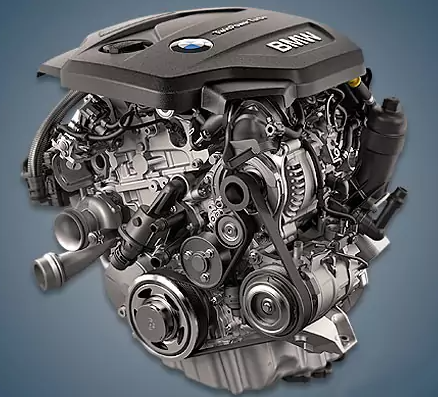
In 2014, the modular family of diesel three-cylinder B37 engines made its debut. An aluminum block with a closed cooling jacket, an aluminum 12-valve cylinder head with hydraulic lifters, a variable geometry turbine, and a contemporary Bosch Common Rail system with piezo injectors and a timing chain drive are all typical features for that era.
The engines in this series were upgraded in 2017 and are referred to as B37TU1 in the literature. The upgraded units had a more advanced fuel system with an injection pressure increase from 2000 to 2200 bar, an upgraded block of balancers that allowed for a significant reduction in vibrations, and an exhaust cleaning system with AdBlue injection.
Engine modifications for front-wheel drive:
- B37C15K0 (95 hp / 220 Nm) installed on BMW 2-Series F45 in 2015 – 2016, 2-Series F46 in 2015 – 2018;
- B37C15U0 (116 hp / 270 Nm) installed on BMW 1-Series F40 since 2019, X1 F48 since 2015, 2-Series F45 in 2014 – 2021, 2-Series F46 since 2015.
Rear-wheel drive engine modifications:
- B37D15K0 (95 hp / 240 Nm) installed on BMW 1-Series F20 in 2015 – 2019;
- B37D15U0 (116 hp / 270 Nm) installed on BMW 1-Series F20 in 2015 – 2019.
Specifications
| Production years | since 2014 |
| Displacement, cc | 1496 |
| Fuel system | Common Rail |
| Power output, hp | 95 – 116 |
| Torque output, Nm | 220 – 270 |
| Cylinder block | aluminum R3 |
| Block head | aluminum 12v |
| Cylinder bore, mm | 84 |
| Piston stroke, mm | 90 |
| Compression ratio | 16.5 |
| Hydraulic lifters | yes |
| Timing drive | chain |
| Phase regulator | no |
| Turbocharging | yes |
| Fuel type | diesel |
| Euro standards | EURO 6 |
| Engine lifespan, km | ~300 000 |
Disadvantages of the B37C15, B37D15 engine
Owners frequently only complain about vibrations with this very dependable diesel engine. The engine started to run more smoothly and there was less reprimand following the 2017 update.
The EGR system—here referred to as AGR—could clog up to 30,000 kilometers during the early stages of production. In order to replace a faulty valve, a recall campaign was launched in the European market.
Similar to other contemporary diesel engines, the turbine geometry change system, the intake manifold’s quick contamination, and the piezo injectors’ unpredictability cause a lot of problems. Additionally, there were instances where the crankshaft’s axial play destroyed the thrust bearing.