
Also referred to as the M67D39, the BMW M67D40 is the first engine in the M67 series. The 3.9-liter power unit was manufactured between 1999 and 2005 and came in three different versions.
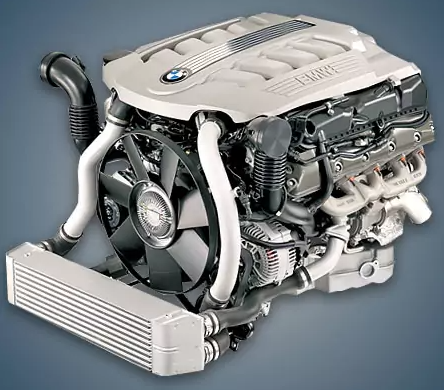
The E38 740d was equipped with the initial 238 horsepower version, which was manufactured between 1999 and 2000.
For the redesigned 740d E38 LCI, the second iteration of the M67D40O0, which had a 245 horsepower capacity, was manufactured between 2000 and 2001.
The most potent of the 4.0-liter M67 is the third version of the M67TUD39/D40, which debuted in September 2002 with 258 horsepower. The engine was mounted on the 740d E65 and manufactured until 2005. The M67D39TU has a modified turbocharger, the same pistons and connecting rods as the M47TU and M57TU, a belt drive with a mechanical tensioner, a modified engine mount, an entirely aluminum radiator and intake air cooler (as in the M57TU), a DDE 4.1 engine management system that has been upgraded to DDE 5.1, and a second-generation Common Rail injection system with a nominal pressure of 1600 bar.
The M67 family also includes: M67D44.
The engine was installed on:
- BMW 7-Series E38 in 1999 – 2001;
- BMW 7-Series E65 in 2001 – 2005.
Specifications
| Production years | 1999-2005 |
| Displacement, cc | 3901 |
| Fuel system | Common Rail |
| Power output, hp | 238 (M67D40) 245 (M67D40O0) 258 (M67D40TU) |
| Torque output, Nm | 560 (M67D40) 600 (M67D40TU) |
| Cylinder block | cast iron V8 |
| Block head | aluminum 32v |
| Cylinder bore, mm | 84 |
| Piston stroke, mm | 88 |
| Compression ratio | 18.0 |
| Features | no |
| Hydraulic lifters | yes |
| Timing drive | chain |
| Phase regulator | no |
| Turbocharging | biturbo |
| Recommended engine oil | 5W-30 |
| Engine oil capacity, liter | 8.75 |
| Fuel type | diesel |
| Euro standards | EURO 3 |
| Fuel consumption, L/100 km (for BMW 745d 2005) — city — highway — combined |
12.8 6.8 9.0 |
| Engine lifespan, km | ~350 000 |
Disadvantages of the M67D40 engine
Although this motor is highly dependable, it is challenging to locate a service station that will fix it;
The biggest issue is caused by turbines, which are very costly despite having a small resource;
Flow meters are another weakness of a diesel engine; they need to be replaced frequently.
AGR valve contamination may be indicated by loss of traction or unpredictable engine operation;
Additionally, the crankcase ventilation system and oil cup valves are frequently disrupted.