
Since 2012, the 2.0-liter Opel A20NFT or LTG engine has been installed on the redesigned Insignia and the charged Astra modification with the OPC index in place of the A20NHT engine. The Astra Touring Car Racing’s racing version’s power unit was increased to 330 horsepower and 420 Nm.
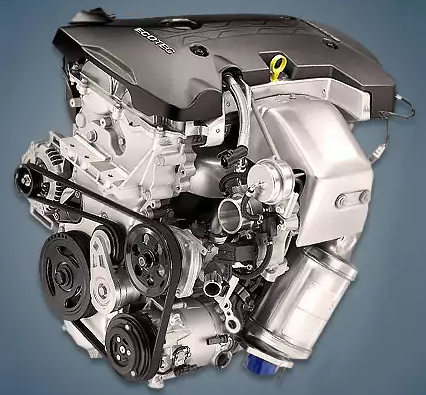
The engines A20NHT, A24XE, A28NET, and A30XH are also part of the A-series.
The engine was mounted on:
- Opel Astra J (P10) in 2012 – 2015;
- Opel Insignia A (G09) in 2013 – 2017.
Specifications
| Production years | since 2012 |
| Displacement, cc | 1998 |
| Fuel system | direct injection |
| Power output, hp | 250 – 280 |
| Torque output, Nm | 400 |
| Cylinder block | aluminum R4 |
| Block head | aluminum 16v |
| Cylinder bore, mm | 86 |
| Piston stroke, mm | 86 |
| Compression ratio | 9.5 |
| Features | no |
| Hydraulic lifters | no |
| Timing drive | chain |
| Phase regulator | DCVCP |
| Turbocharging | twin-scroll |
| Recommended engine oil | 5W-30 |
| Engine oil capacity, liter | 6.05 |
| Fuel type | petrol |
| Euro standards | EURO 5 |
| Fuel consumption, L/100 km (for Opel Insignia 2014) — city — highway — combined |
11.1 6.2 8.0 |
| Engine lifespan, km | ~250 000 |
| Weight, kg | 130 |
Disadvantages of the A20NFT engine
Although this engine is more dependable than its predecessor, it still causes a lot of problems;
Regular oil leaks from various sources are a problem for many owners;
The timing chain frequently extends up to 50,000 kilometers and has an unpredictable resource;
The electronic throttle and injection pump are among the motor’s weak points;
Even at low mileage, numerous instances of piston destruction are reported on specialized forums.