
From 2003 to 2010, a number of the company’s compact models, including the Astra, Corsa, Combo, and Meriva, were equipped with the 1.4-liter Opel Z14XEP or LJ2 engine, which was manufactured in Austria. One of the most well-liked low-volume engines with the Twinport system is this one.
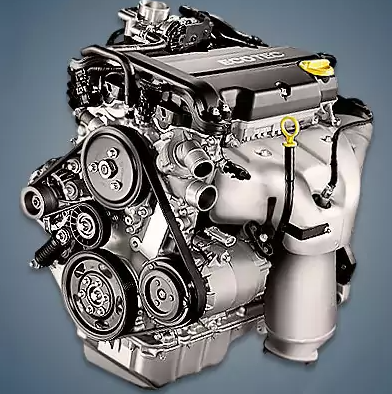
The Z10XE, Z10XEP, Z12XE, Z12XEP, and Z14XE engines are also part of the Z10 series.
The Z14XEP engine has an aluminum overhead camshaft head with two chain drives (DOHC) and four valves per cylinder, as well as a lightweight cast iron cylinder block with a cast iron crankshaft. This engine made use of TwinPort technology, which has two intake ports and a throttle that closes one of the ports at low revs to create a powerful air swirl that increases torque and improves fuel efficiency. Bosch ME7.6.1 and ME7.6.2 ECUs are used in the engine.
The engine was mounted on:
- Opel Astra G (T98) in 2003 – 2009; Astra H (A04) in 2004 – 2010;
- Opel Corsa C (X01) in 2003 – 2006; Corsa D (S07) in 2006 – 2009;
- Opel Combo C (F06) in 2004 – 2010;
- Opel Meriva A (X03) in 2004 – 2009.
Specifications
| Production years | 2003-2010 |
| Displacement, cc | 1364 |
| Fuel system | distributed injection |
| Power output, hp | 90 / 5600 rpm |
| Torque output, Nm | 125 / 4000 rpm |
| Cylinder block | cast iron R4 |
| Block head | aluminum 16v |
| Firing order | 1-3-4-2 |
| Cylinder bore, mm | 73.4 |
| Piston stroke, mm | 80.6 |
| Compression ratio | 10.5 |
| Features | Twinport |
| Hydraulic lifters | yes |
| Timing drive | single row chain |
| Phase regulator | no |
| Turbocharging | no |
| Recommended engine oil | 5W-30 |
| Engine oil capacity, liter | 3.50 |
| Fuel type | petrol |
| Euro standards | EURO 4 |
| Fuel consumption, L/100 km (for Opel Astra 2006) — city — highway — combined |
8.2 5.2 6.3 |
| Engine lifespan, km | ~275 000 |
| Weight, kg | 105 |
Explanation of Z14XEP marking
- Z – Euro 4 engine;
- 14 – 1.4 liters;
- X – Compression ratio from 10 to 11.5: 1;
- E – multi-point fuel injection system;
- P – increased power.
Disadvantages of the Z14XEP engine
The main issue here is the Twinport dampers that are always stuck; a single-row timing chain can stretch and begin to rattle after a run of up to 150,000 km; a clogged EGR valve is typically the cause of floating revolutions and a decrease in thrust; the oil pressure sensor and valve cover are typically the source of the lubricant leak; the oil pump, thermostat, and ECU control unit have limited resources.