
From 2003 until 2020, the Japanese plant produced the 2.5-liter V6 Toyota 4GR-FSE engine, which was fitted in numerous models with rear-wheel drive and all-wheel drive, including the Crown and Mark X. However, the Lexus IS250 and GS250 sedans are the vehicles for which this power unit is most well-known.
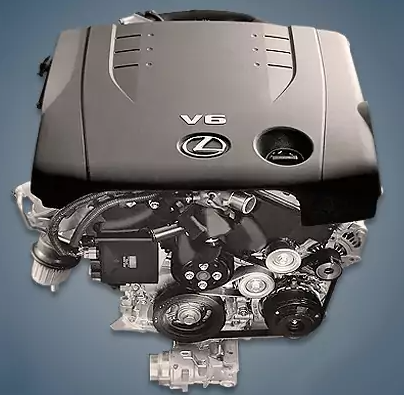
A new 2.5-liter power unit was added to the GR V6 engine lineup in 2003. This vintage V-6 has an aluminum block, a 60° camber angle, two DOHC cylinder heads with hydraulic lifters, D-4 direct fuel injection, VVT-i phase shifters on every camshaft, piston cooling oil jets, an intake manifold with ACIS change flap geometry, and timing chain drive.
The engine was mounted on:
- Toyota Crown 12 (S180) in 2003 – 2008; Crown 13 (S200) in 2008 – 2012; Crown 14 (S210) in 2012 – 2018;
- Toyota Mark X 1 (X120) in 2004 – 2009; Mark X 2 (X130) in 2009 – 2019;
- Lexus IS250 2 (XE20) in 2005 – 2013; IS250 3 (XE30) in 2013 – 2015;
- Lexus IS250C 2 (XE20) in 2008 – 2013;
- Lexus GS250 4 (L10) in 2011 – 2015.
Specifications
| Production years | 2003-2020 |
| Displacement, cc | 2499 |
| Fuel system | direct injection |
| Power output, hp | 205 – 215 |
| Torque output, Nm | 243 – 260 |
| Cylinder block | aluminum V6 |
| Block head | aluminum 24v |
| Cylinder bore, mm | 83 |
| Piston stroke, mm | 77 |
| Compression ratio | 12.0 |
| Hydraulic lifters | yes |
| Timing drive | chain |
| Phase regulator | VVT-i |
| Turbocharging | no |
| Recommended engine oil | 5W-20, 5W-30 |
| Engine oil capacity, liter | 6.3 |
| Fuel type | petrol |
| Euro standards | EURO 4/5 |
| Fuel consumption, L/100 km (for Lexus IS250 2011) — city — highway — combined |
12.7 7.0 9.1 |
| Engine lifespan, km | ~400 000 |
| Weight, kg | 180 |
Disadvantages of the 4GR-FSE engine
Scuffing in the fifth cylinder is a well-known issue with FSE units from the GR family. There are two possible explanations: either abrasive seeping directly into the combustion chambers through a slot in the air filter or local overheating brought on by a design flaw.
A recall campaign was implemented for engines manufactured between 2005 and 2008 to replace damaged valve springs that could easily burst because of metal impurities.
The phase regulators’ crackling during startup is the GR series units’ exclusive issue. Changing sprockets can sometimes get you by, but most of the time you need to purchase new clutches.
The engine’s short-lived AFS mixture sensors, lambda probes, ignition coils, and a pump are among its flaws. Additionally, because of the soot on the valves, engine speed frequently floats here. There were leaks at the cylinder head joints and fuel pipe corrosion on the first-year units.