
The company’s popular rear-wheel drive models, including the Supra, Crown, and Mark 2, were equipped with the 2.5-liter Toyota 1JZ-GTE turbo engine, which was manufactured at the Tahara Plant between 1990 and 2007. This engine comes in two generations: the 1990 model and the 1996 model with the VVT-i system.
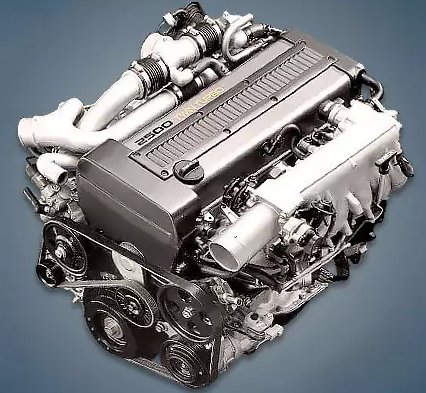
In 1990, Toyota introduced one of its most well-known turbochargers. This is more than just a traditional inline-six with an aluminum 24-valve head without hydraulic lifters and a cast-iron cylinder block. Here, the timing drive was a belt. Two CT12A turbines and an intercooler set this unit apart from its atmospheric counterpart. It also had a DIS-3 ignition system at first but lost it after the upgrade. An engine with distributed fuel injection could produce 280 horsepower and 360 Nm.
The 1JZ-GTE turbo engine’s second generation debuted in 1996 and featured several modifications, including a pair of CT12The compression ratio was increased from 8.5 to 9.0, a VVT-i phase regulator was mounted on the intake shaft, and one CT15B turbine was used in its place. The moment increased by 20 Nm while the power stayed constant.
The engines 1JZ-GE, 1JZ-GTE, 1JZ-FSE, 2JZ-GE, 2JZ-GTE, and 2JZ-FSE are also part of the JZ family.
The engine was mounted on:
- Toyota Chaser 4 (X80) in 1990 – 1992; Chaser 5 (X90) in 1992 – 1996; Chaser 6 (X100) in 1996 – 2001;
- Toyota Cresta 3 (X80) in 1990 – 1992; Cresta 4 (X90) in 1992 – 1996;
- Toyota Crown 11 (S170) in 1999 – 2007;
- Toyota Mark II 6 (X80) in 1990 – 1992; Mark II 7 (X90) in 1992 – 1996; Mark II 8 (X100) in 1996 – 2000; Mark II 9 (X110) in 2000 – 2007;
- Toyota Mark II Blit 1 (X110) in 2002 – 2007;
- Toyota Soarer 3 (Z30) in 1991 – 2000;
- Toyota Supra 3 (A70) in 1990 – 1993;
- Toyota Verossa 1 (X110) in 2001 – 2004.
Specifications
| Production years | 1990-2007 |
| Displacement, cc | 2492 |
| Fuel system | injector |
| Power output, hp | 280 |
| Torque output, Nm | 360 (non VVT-i, 1990) 380 (VVT-i, 1996) |
| Cylinder block | cast iron R6 |
| Block head | aluminum 24v |
| Cylinder bore, mm | 86 |
| Piston stroke, mm | 71.5 |
| Compression ratio | 8.5 (non VVT-i, 1990) 9.0 (VVT-i, 1996) |
| Hydraulic lifters | no |
| Timing drive | belt |
| Phase regulator | no (1990) VVT-i (1996) |
| Turbocharging | yes |
| Recommended engine oil | 5W-30, 5W-40 |
| Engine oil capacity, liter | 5.1-5.6 |
| Fuel type | petrol |
| Euro standards | EURO 2 (non VVT-i, 1990) EURO 3 (VVT-i, 1996) |
| Fuel consumption, L/100 km (for Toyota Mark II 2003) — city — highway — combined |
14.7 8.5 10.9 |
| Engine lifespan, km | ~500 000 |
| Weight, kg | 260 |
Disadvantages of the 1JZ-GTE engine
The owner is forced to make modifications because the engine’s sixth cylinder is not adequately cooled due to a design flaw. There are special kits available.
A turbine with a ceramic impeller on some models of this device has the potential to break apart at any time and destroy your engine with its debris.
Here, every mounted unit is suspended from a single belt with a single tensioner, and it cannot withstand driving in a torn style while braking and accelerating.
The VVT-i phase regulator, which debuted in 1996, has a short lifespan. It may leak or even crackle and need to be replaced even before 100,000 kilometers of use.
This motor’s weaknesses include an unreliable timing belt tensioner bracket, the lack of hydraulic lifters, and frequent pump and camshaft oil seal leaks.