
From 1990 until 2007, the Tahara Plant in Japan assembled the 2.5-liter Toyota 1JZ-GE engine, which was exclusively installed in rear-wheel drive models with automatic transmissions. The 1990 model and the 1995 model with the VVT-i system are the two versions of this motor.
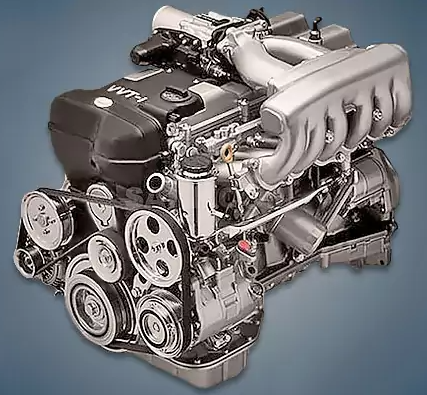
In 1990, the iconic inline 6-cylinder Toyota 1JZGE made its debut on the Mark II X80 sedan. With a timing belt, a distributor ignition system, a 24-valve cylinder head without hydraulic lifters, and a cast-iron 6-cylinder block, the design was strikingly similar to that of the 7M series’ predecessor. There were also enough changes: an ACIS intake geometry change system, another trochoid-type oil pump, and a single ribbed belt now powered all mounted units.
This engine underwent a significant upgrade in 1996, and the list of modifications is astounding. First, there was a DIS-3 type ignition system, a system for adjusting the intake shaft’s valve timing (VVT-i), and an increase in compression ratio from 10 to 10.5. All of this allowed for an increase in torque from 235 to 255 Nm and power from 180 to 200 horsepower.
The engines 1JZ-GE, 1JZ-GTE, 1JZ-FSE, 2JZ-GE, 2JZ-GTE, and 2JZ-FSE are also part of the JZ family.
The engine was mounted on:
- Toyota Chaser 4 (X80) in 1990 – 1992;
- Toyota Cresta 3 (X80) in 1990 – 1992; Cresta 4 (X90) in 1992 – 1996; Cresta 5 (X100) in 1996 – 2000;
- Toyota Crown 8 (S130) in 1990 – 1999; Crown 9 (S140) in 1991 – 1995; Crown 10 (S150) in 1995 – 2001; Crown 11 (S170) in 1999 – 2007;
- Toyota Mark II 6 (X80) in 1990 – 1992; Mark II 7 (X90) in 1992 – 1996; Mark II 8 (X100) in 1996 – 2000; Mark II 9 (X110) in 2000 – 2007;
- Toyota Mark II Blit 1 (X110) in 2002 – 2007;
- Toyota Progres 1 (G10) in 1998 – 2007.
Specifications
| Production years | 1990-2007 |
| Displacement, cc | 2492 |
| Fuel system | injector |
| Power output, hp | 180 (non VVT-i, 1990) 200 (VVT-i, 1996) |
| Torque output, Nm | 235 (non VVT-i, 1990) 255 (VVT-i, 1996) |
| Cylinder block | cast iron R6 |
| Block head | aluminum 24v |
| Cylinder bore, mm | 86 |
| Piston stroke, mm | 71.5 |
| Compression ratio | 10.0 (non VVT-i, 1990) 10.5 (VVT-i, 1996) |
| Hydraulic lifters | no |
| Timing drive | belt |
| Phase regulator | no (1990) VVT-i (1996) |
| Turbocharging | no |
| Recommended engine oil | 5W-30, 5W-40 |
| Engine oil capacity, liter | 4.2 – 5.1 |
| Fuel type | petrol |
| Euro standards | EURO 2 (non VVT-i, 1990) EURO 3 (VVT-i, 1996) |
| Fuel consumption, L/100 km (for Toyota Mark II 1999) — city — highway — combined |
14.2 8.3 10.5 |
| Engine lifespan, km | ~500 000 |
| Weight, kg | 210 |
Disadvantages of the 1JZ-GE engine
This motor is incredibly dependable and has no weak points or age-related issues. However, because of the wear on the rings and caps, it frequently uses oil during long runs.
A low-resource VVT-i phase regulator was introduced here following the 1996 update. Crackling at startup or floating engine speed are signs of its failure.
In contrast to the M-series’ predecessors, this engine was equipped with numerous sensors, many of which are prone to malfunction.
This power unit’s minor issues include a small water pump resource, an unreliable ribbed belt tensioner, and a water-phobic ignition system. Additionally, the engine prefers to fill in candles, and the valves’ thermal clearance needs to be adjusted.