
The 1KZ engine was developed and mass-produced in 1993. It is still regarded as the diesel engine’s most successful model. In a short period of time, this Toyota engine was able to replace 2L-TE diesel engines on the market.
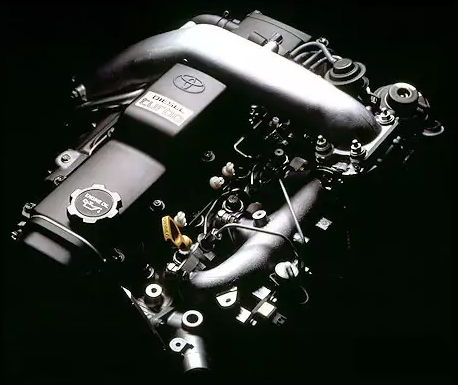
The 4-cylinder diesel engine 1KZ-T has a mechanical injection pump and water cooling. An electronic injection pump is a feature of the 1KZ-TE turbocharged diesel engine. Many of the built-in sensors’ data are used in this instance. Although 1KZ may appear complicated, it is actually easy for a specialist to fix. In a workshop, replacing the crankshaft or any attachment is simple.
Specifications
| Production years | 1992-2003 |
| Displacement, cc | 2982 |
| Fuel system | direct injection |
| Power output, hp | 125/3600 (1KZ-T) 130/3600 (1KZ-TE) 145/3600 (1KZ-TE) |
| Torque output, Nm | 287/2000 (1KZ-T) 332/2000 (1KZ-TE) 343/2000 (1KZ-TE) |
| Cylinder block | cast iron R4 |
| Block head | aluminum 8v |
| Cylinder bore, mm | 96 |
| Piston stroke, mm | 103 |
| Compression ratio | 21.2 |
| Features | no |
| Hydraulic lifters | no |
| Timing drive | belt and gears |
| Phase regulator | no |
| Turbocharging | Toyota CT12B |
| Recommended engine oil | 5W-30, 5W-40, 10W-30, 10W-40, 15W-40 |
| Engine oil capacity, liter | 7.7 (1KZ-T) 7.0 (1KZ-TE) |
| Fuel type | diesel |
| Euro standards | EURO 1/2 (1KZ-T) EURO 2/3 (1KZ-TE) |
| Fuel consumption, L/100 km (for Toyota 4Runner 1998) — city — highway — combined |
14.6 9.9 11.5 |
| Engine lifespan, km | ~350 000 |
| Weight, kg | 275 (1KZ-T) 280 (1KZ-TE) |
Frequent problems
The cylinder head issues are most pertinent for 1KZ. It is vital to keep an eye on the cooling system and the sensor indicators because the head itself does not have a propensity to crack and such issues can be brought on by temperature conditions.
Furthermore, it is important to remember that: сoolant tends to vanish, which can cause overheating; the timing belt’s resource typically doesn’t go beyond 100,000 kilometers; the valves bend in the event of a break; and the thermal clearances of the valves must be adjusted every 40,000 kilometers.