
From 1988 until 2015, the Japanese manufacturer produced the 2.8-liter Toyota 3L diesel engine, which was fitted to Hilux SUV pickups, Dyna delivery trucks, and HiAce minibuses. For a variety of commercial vehicles, copies of this power unit are still manufactured.
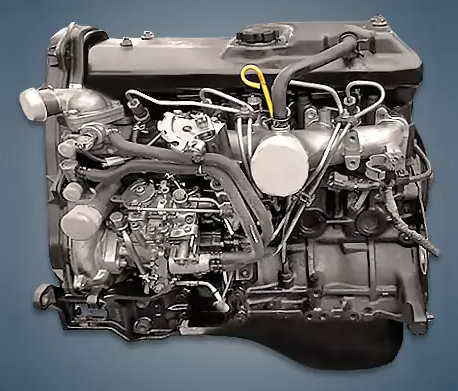
The Toyota 3L’s straightforward and dependable design are its primary benefits. The valve timing system’s lack of pushers and shafts allows for the safe filling of even mineral motor oil. Throughout the whole speed range, the crankshaft’s anti-vibrators guarantee steady and accurate operation free from jerks, vibrations, and amplitude fluctuations.
The 3L diesel engine is nearly impossible to overheat. You can drive to the repair shop safely even if the cooling pump isn’t working properly. The stated 100,000 km is far less than the valve timing belt’s endurance. The component will have a minimum service life of 150,000 to 170,000 kilometers if it is bought from a certified manufacturer.
The thermal clearances must be adjusted at least once every 30,000 kilometers because this diesel engine lacks hydraulic compensators.
Specifications
| Production years | 1988-2015 |
| Displacement, cc | 2779 |
| Fuel system | prechamber |
| Power output, hp | 78 – 91 |
| Torque output, Nm | 188 |
| Cylinder block | cast iron R4 |
| Block head | cast iron 8v |
| Cylinder bore, mm | 96 |
| Piston stroke, mm | 96 |
| Compression ratio | 22.2 |
| Features | SOHC |
| Hydraulic lifters | no |
| Timing drive | belt |
| Phase regulator | no |
| Turbocharging | no |
| Recommended engine oil | 5W-40 |
| Engine oil capacity, liter | 6.1 |
| Fuel type | diesel |
| Euro standards | EURO 1/2 |
| Fuel consumption, L/100 km (for Toyota Land Cruiser Prado 1997) — city — highway — combined |
13.5 8.6 10.7 |
| Engine lifespan, km | ~400 000 |
| Weight, kg | 230 |
The engine was installed on:
- Toyota 4Runner 2 (N120) in 1989 – 1995;
- Toyota HiAce 4 (H100) in 1989 – 2004;
- Toyota Hilux 5 (N80) in 1988 – 1997; Hilux 6 (N140) in 1997 – 2005;
- Toyota LC Prado J70 in 1990 – 1996; LC Prado 90 (J90) in 1996 – 2002.
Disadvantages of the Toyota 3L engine
These diesel engines are highly dependable, but they are noisy and vibration-intensive; they have no weak points; the only complaints on specialized forums are about leaks;
Fuel injectors may frequently need to be replaced after 200–300 thousand kilometers of driving;
In the event that the timing belt breaks, the camshaft will also break in addition to the valves;
The lack of hydraulic compensators necessitates adjusting valve clearances.