
From 2001 to 2010, the company produced the 1.8-liter 16-valve Hyundai G4GB engine, which was fitted to well-known Korean models like the Matrix, Elantra, and Cerato. The unit was modified in two different ways: 122 horsepower and 162 Nm and 132 horsepower and 166 Nm.
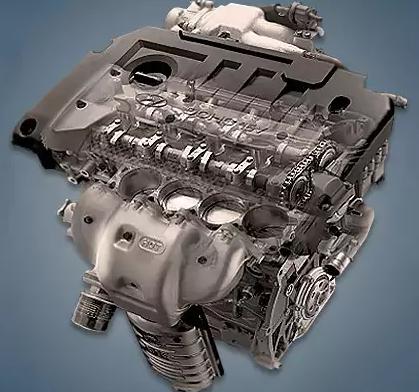
A 1.8-liter model that belonged to the Beta family’s second generation made its debut in 2001. With distributed fuel injection, an in-line cast-iron cylinder block, a 16-valve aluminum cylinder head without hydraulic lifters, and a combined timing drive from a belt and a short chain between two camshafts, it was a fairly standard engine for the time.
In contrast to its 2.0-liter sibling, this unit lacked a phase regulator and came in two power variations that were actually only differentiated by the control unit’s firmware.
The engines in the Beta family are G4GR, G4GB, G4GM, G4GC, and G4GF.
The engine was mounted on:
- Hyundai Matrix 1 (FC) in 2001 – 2010;
- Hyundai Elantra 3 (XD) in 2001 – 2006;
- Kia Cerato 1 (LD) in 2005 – 2008.
Specifications
| Production years | 2001-2010 |
| Displacement, cc | 1795 |
| Fuel system | distributed injection |
| Power output, hp | 122 – 132 |
| Torque output, Nm | 162 – 166 |
| Cylinder block | cast iron R4 |
| Block head | aluminum 16v |
| Cylinder bore, mm | 82 |
| Piston stroke, mm | 85 |
| Compression ratio | 10.0 |
| Hydraulic lifters | no |
| Timing drive | chain & belt |
| Phase regulator | no |
| Turbocharging | no |
| Recommended engine oil | 5W-30, 5W-40 |
| Engine oil capacity, liter | 4.5 |
| Fuel type | petrol |
| Euro standards | EURO 3/4 |
| Fuel consumption, L/100 km (for Hyundai Matrix 2007) — city — highway — combined |
11.5 6.9 8.5 |
| Engine lifespan, km | ~400 000 |
| Weight, kg | 146 |
Disadvantages of the Hyundai G4GB engine
The majority of the complaints are about the engine’s unstable operation, specifically floating idle speeds, despite this unit’s straightforward design and high level of dependability. A dirty throttle or idle speed controller is the primary cause, just like with many other motors.
This motor’s extremely erratic ignition system, which frequently changes ignition coils, high-voltage wires, and candle contacts, is another weakness.
The timing belt is supposed to change every 60,000 kilometers, according to the handbook. This short schedule makes sense because breaks at high mileage frequently result in valve bending.
Additionally, the engine mounts are ineffective and oil is continuously rising from beneath the valve cover. Additionally, since there are no hydraulic compensators, remember to modify the valves’ thermal clearance.