
Under license from Mitsubishi, the 1.3-liter Hyundai G4DG engine was manufactured between 1985 and 1995. It was essentially an exact replica of their well-liked 8-valve power unit under the 4G13 index. The G4AG is frequently modified with a carburetor in addition to the injection version.
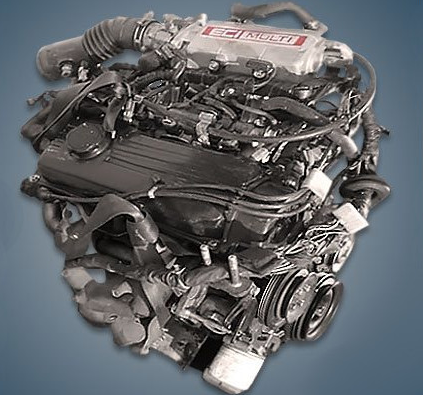
G4DJ engines are also part of the Orion family.
The engine was mounted on:
- Hyundai Excel 1 (X1) in 1985 – 1989; Excel 2 (X2) in 1989 – 1995;
- Hyundai Pony 3 (X1) in 1985 – 1989; Pony 4 (X2) in 1989 – 1994.
Specifications
| Production years | 1985-1995 |
| Displacement, cc | 1298 |
| Fuel system | injector |
| Power output, hp | 65 – 75 |
| Torque output, Nm | 100 – 120 |
| Cylinder block | cast iron R4 |
| Block head | aluminum 8v |
| Cylinder bore, mm | 71 |
| Piston stroke, mm | 82 |
| Compression ratio | 9.7 |
| Features | no |
| Hydraulic lifters | no |
| Timing drive | belt |
| Phase regulator | no |
| Turbocharging | no |
| Recommended engine oil | 10W-40 |
| Engine oil capacity, liter | 3.3 |
| Fuel type | petrol |
| Euro standards | EURO 1/2 |
| Fuel consumption, L/100 km (for Hyundai Pony 1993) — city — highway — combined |
8.5 5.7 7.7 |
| Engine lifespan, km | ~200 000 |
| Weight, kg | 112 (without attachments) |
Disadvantages of the Hyundai G4DG engine
The engine’s primary issue is oil consumption as a result of stuck piston rings;
Throttle wear is frequently the cause of floating engine speeds;
Keep an eye on the timing belt’s condition because the valves typically bend here when it breaks.
Many Hyundai owners who have one of these units lament how hard it is to start in the winter.
Additionally, weak engine mounts and an unreliable gas pump are frequently criticized on specialized forums.