
Since 2022, only long-wheelbase versions of second-generation Genesis G90 sedans have been equipped with the 3.5-liter Hyundai G6DV or Smartstream G3.5T e-S/C engine. This engine has an electric compressor in addition to twin turbocharging.
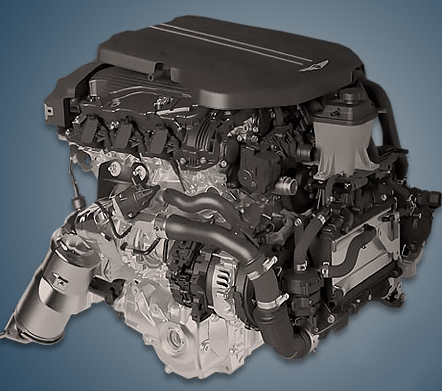
Lambda 3.5L family: G6DC, G6DS, G6DU, G6DT, and G6DV.
Specifications
| Production years | since 2022 |
| Displacement, cc | 3470 |
| Fuel system | GDi + MPi |
| Power output, hp | 415 |
| Torque output, Nm | 549 |
| Cylinder block | aluminum V6 |
| Block head | aluminum 24v |
| Cylinder bore, mm | 92 |
| Piston stroke, mm | 87 |
| Compression ratio | 11.0 |
| Features | ITM |
| Hydraulic lifters | yes |
| Timing drive | chain |
| Phase regulator | Dual CVVT |
| Turbocharging | TwinTurbo + e-S/C |
| Recommended engine oil | 0W-30 |
| Engine oil capacity, liter | 7.0 |
| Fuel type | petrol |
| Euro standards | EURO 6 |
| Fuel consumption, L/100 km (for Genesis G90 2022) — city — highway — combined |
13.1 9.0 11.2 |
| Engine lifespan, km | ~250 000 |
| Weight, kg | 225 |
The engine was installed on:
- Genesis G90 2 (RS4) since 2022.
Disadvantages of the Hyundai G6DV engine
Only individual electrical component failures are discussed on specialized forums.
Keep an eye on cooling because all of the aluminum V6s in this series are afraid of overheating.
Although there haven’t been any complaints about oil consumption thus far, this line’s engines are generally prone to it.
It is not necessary to adjust the valve clearance because hydraulic compensators are available here.