
Since 2016, South Korea has been producing the 1.6-liter 16-valve Hyundai G4LE engine, which powers hybrid versions of well-known models like the Ioniq, Niro, and Kona. There are two versions: Plug-in Hybrid with an 8.9 or 12.9 KWh battery and Hybrid with a 1.56 KWh battery.
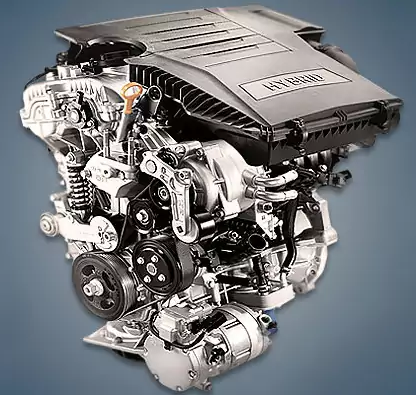
G4LA, G4LF, G4LC, G4LD, G4LG, G4LH, and G4LE make up the Kappa R4 family.
The engine was mounted on:
- Hyundai Elantra 7 (CN7) since 2020;
- Hyundai Ioniq 1 (AE) since 2016;
- Hyundai Kona 1 (OS) since 2019;
- Kia Cerato 4 (BD) since 2020;
- Kia Niro 1 (DE) since 2016.
Specifications
| Production years | since 2016 |
| Displacement, cc | 1579 |
| Fuel system | direct injection |
| Power output, hp | 105 (139 with electrical component) |
| Torque output, Nm | 148 (265 with electrical component) |
| Cylinder block | aluminum R4 |
| Block head | aluminum 16v |
| Cylinder bore, mm | 72 |
| Piston stroke, mm | 97 |
| Compression ratio | 13.0 |
| Features | Atkinson cycle |
| Hydraulic lifters | yes |
| Timing drive | chain |
| Phase regulator | Dual CVVT |
| Turbocharging | no |
| Recommended engine oil | 5W-30 |
| Engine oil capacity, liter | 3.8 |
| Fuel type | petrol |
| Euro standards | EURO 6 |
| Fuel consumption, L/100 km (for Hyundai Ioniq 2017) — city — highway — combined |
3.6 3.4 3.5 |
| Engine lifespan, km | ~300 000 |
Disadvantages of the Hyundai G4LE engine
First-year engines were recalled because antifreeze got on the EPCU board; like all direct injection engines, this one has carbon deposits on the intake valves; some owners had to replace the timing chain closer to 200,000 kilometers; however, the primary issue is the limited selection and expensive replacement parts.