
Many well-known crossovers, including the Sportage, Tucson, and Santa Fe, are equipped with the 2.0-liter Hyundai D4HA 2.0 CRDi diesel engine, which has been manufactured in Korea since 2009. This power unit can be modified to produce 136 or 185 horsepower.
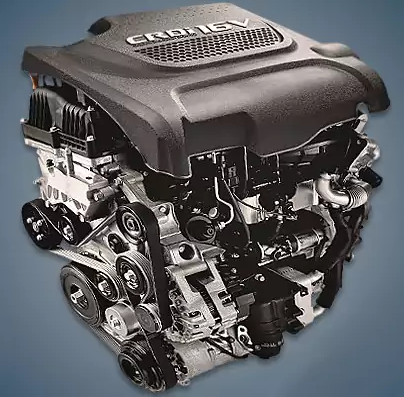
The R series diesels are Hyundai-Kia’sowncreation, having been developed at the company’s European research and development center in Ræelheim. 2.0 and 2.2-liter units made their debut on several well-liked crossovers in 2009. The structure consists of a timing chain drive, a Common Rail Bosch CP4 fuel system with 1800 bar piezo injectors, an aluminum 16-valve cylinder head with hydraulic lifters, and a cast-iron block.
A 136 horsepower version with a BorgWarner BV39 variable geometry turbocharger and a 184 horsepower version with a Garrett GTB1752VLK variable geometry turbocharger are the two powertrain options for this 2.0-liter engine.
Diesels D4HB, D4HC, D4HD, D4HE, and D4HF are also members of the R family.
The engine was mounted on:
- Hyundai Santa Fe 2 (CM) in 2009 – 2012; Santa Fe 3 (DM) in 2012 – 2018;
- Hyundai ix35 1 (LM) in 2010 – 2015;
- Hyundai Tucson 3 (TL) in 2015 – 2021;
- Kia Sorento 2 (XM) in 2011 – 2014; Sorento 3 (UM) in 2014 – 2017;
- Kia Sportage 3 (SL) in 2010 – 2016; Sportage 4 (QL) in 2015 – 2021.
Specifications
| Production years | since 2009 |
| Displacement, cc | 1995 |
| Fuel system | Common Rail |
| Power output, hp | 136 – 184 |
| Torque output, Nm | 320 – 400 |
| Cylinder block | cast iron R4 |
| Block head | aluminum 16v |
| Cylinder bore, mm | 84 |
| Piston stroke, mm | 90 |
| Compression ratio | 16 – 16.5 |
| Hydraulic lifters | yes |
| Timing drive | chain |
| Turbocharging | yes |
| Recommended engine oil | 5W-30, 5W-40 |
| Engine oil capacity, liter | 8.8 |
| Fuel type | diesel |
| Euro standards | EURO 5/6 |
| Fuel consumption, L/100 km (for Kia Sportage 2017) — city — highway — combined |
7.9 5.3 6.3 |
| Engine lifespan, km | ~400 000 |
| Weight, kg | 214.9 |
Disadvantages of the Hyundai D4HA engine
The fuel quality requirements of the Bosch CP4 common rail fuel system with piezo injectors are high, and the high-pressure fuel pump quickly fails due to poor diesel fuel. It starts driving chips right away, clogging every part of the system, including the nozzles.
A loud noise or clang is frequently heard from the timing side during a run of less than 100,000 kilometers. Stretched chains may occasionally rattle here because their hydraulic tensioner has already become loose, but this typically indicates that the crankshaft damper pulley has broken and needs to be replaced.
Similar to any contemporary diesel engine, the particulate filter has a short lifespan—it can occasionally run less than 200,000 kilometers—and the EGR valve becomes clogged with soot and becomes stuck. Additionally, glow plugs frequently malfunction, usually due to their wiring or relay rather than the plug itself.
The boost pressure sensor and the turbine geometry change rod are this unit’s weak points; the turbocharger itself, incidentally, is incredibly dependable and has a 300,000 km range. Additionally, the cylinder head gasket on the first-generation engines was occasionally punctured at low mileage.